

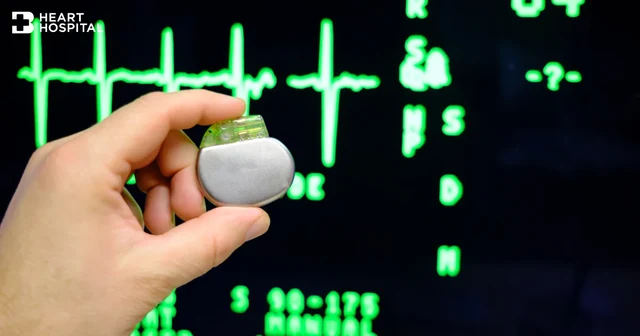
Pacemaker Implantation – A Comprehensive Guide
Comprehensive overview of pacemaker implantation, preparation, and procedure to help patients understand how it treats cardiac arrhythmia.

Translated by AI
Pulsed Field Ablation: Advanced AF Treatment with Quick Recovery
Atrial Fibrillation (AF) is a condition that can increase the risk of stroke and heart failure. Treatment using Pulsed Field Ablation (PFA) technology is a new option that helps in targeted therapy by using high-voltage electricity to ablate the heart tissue that causes the problem, without affecting the surrounding tissues. It offers quick recovery, reduces complications, and provides satisfactory clinical outcomes.

Translated by AI
How slow does the heart rate need to be before seeing a doctor?
The heart beating slower than usual can happen. It is important to monitor yourself, not ignore any abnormal symptoms occurring in the body, and promptly see a cardiologist for examination and treatment.

A rapid heartbeat – Warning sign of arrhythmia
A rapid heartbeat is a condition in which the heart beats faster than regular rates. Sometimes, it is normal for heart rates to temporarily rise during exercise, physical exertion or as a response to normal physiological stress or trauma.

IRREGULAR HEARTBEATS OR CARDIAC ARRHYTHMIA
The most common irregular heartbeats is caused by a conditon known as atrial filbrillation. This is when the heart’s upper chambers (the atria) beat chaotically. Patients with this condition are 10 – 15% at risk of stroke annually, as the irregular heartbeats can cause blood clots to form in the heart.

Women should not overlook cardiovascular disease.
Current researches have indicated that the most common health-related problems in women do not only include cervical cancer and breast cancer, but cardiovascular disease.

Translated by AI
What are the symptoms of cardiac arrhythmia? Check the causes and prevention methods
When talking about arrhythmia, many people may think it is something far from them, even though in reality this disease can occur at any age. The causes of the disease include both heart disease and coronary artery disease, and underlying conditions such as hyperthyroidism.

Atrial Fibrillation: Causes, Symptoms, and Treatment Options
Atrial Fibrillation (AF or A-Fib) is a condition that causes irregular heartbeats and can be found in 1-2% of the general population.

Translated by AI
Misconceptions about Arrhythmia
Discover the truth behind common misconceptions about arrhythmia, including its risk factors, age-related risks, and treatment options.
Translated by AI
Do not be careless about arrhythmia or rapid heartbeat.
Arrhythmia refers to a condition in which the heart beats faster or slower than normal. It may be caused by abnormalities in the generation of the heart’s electrical impulses, cardiac electrical conduction, or both together. If it occurs, you should seek prompt examination and treatment, because in addition to affecting quality of life, it can be serious, ranging from stroke to death.

Translated by AI
Arrhythmia is treatable
Arrhythmia is a condition where the heart beats too fast or too slow compared to normal. It may result from abnormalities in the generation of electrical impulses in the heart, the conduction of electrical impulses in the heart, or both.

Translated by AI
Surgery to correct abnormal heart rhythm caused by Atrial Fibrillation
Learn about surgical options to correct abnormal heart rhythms caused by atrial fibrillation, including minimally invasive and robotic-assisted procedures.