


A slow heart rate can happen. It is important to observe yourself, not ignore abnormal symptoms occurring in the body, and promptly consult a cardiologist for examination and treatment.
What is a slow heart rate?
Bradycardia refers to a condition where the heart rate is less than 60 beats per minute, or slower than it should be, such as in shock or low blood pressure 80/50 millimeters of mercury. When the pressure is low, the heart beats faster. If the heart beats slowly or normally, it shows that the heart is too slow, reducing the amount of blood being pumped out and insufficient oxygen being supplied to the body. It can be found in both children and adults, but especially in the elderly and patients need to be very cautious.
Why does the heart beat slowly?
The causes of bradycardia span class=”s1″> (Bradycardia) are divided into 2 main causes:
- Causes from within the heart’s electrical conduction system, such as:
- Degeneration with age (Degenerative)
- Ischemic heart disease
- Congenital heart disease
- Myocarditis or heart valve inflammation
- Post-cardiac surgery conditions
- Etc.
- External causes affecting the heart’s electrical system, such as:
- Regular exercise in athletes reduces the heart rate.
- Vagal Reflex response of the tenth cranial nerve, such as straining during urination or defecation, swallowing, coughing strongly, etc.
- Effects of some medications such as B-blocker, Verapamil, Diltiazem, Antiarrhythmic and Digitalis
- Drug use, such as marijuana, cocaine
- Hypothyroidism (Hypothyroidism)
- Hypothermia (Hypothermia)
- Brain conditions increasing intracranial pressure (Cushing Reflex) or brain tumors
- Obstructive sleep apnea (Obstructive Sleep Apnea: OSA)
What are the symptoms of a slow heart rate?
- Fainting
- Dizziness
- Lightheadedness
- Easy fatigue when exerting
- Syncope
- Heart failure, pulmonary edema
What does a slow heart rate indicate?
A slow heart rate can be divided according to the location of the electrical conduction abnormality in the heart into 2 main sites:
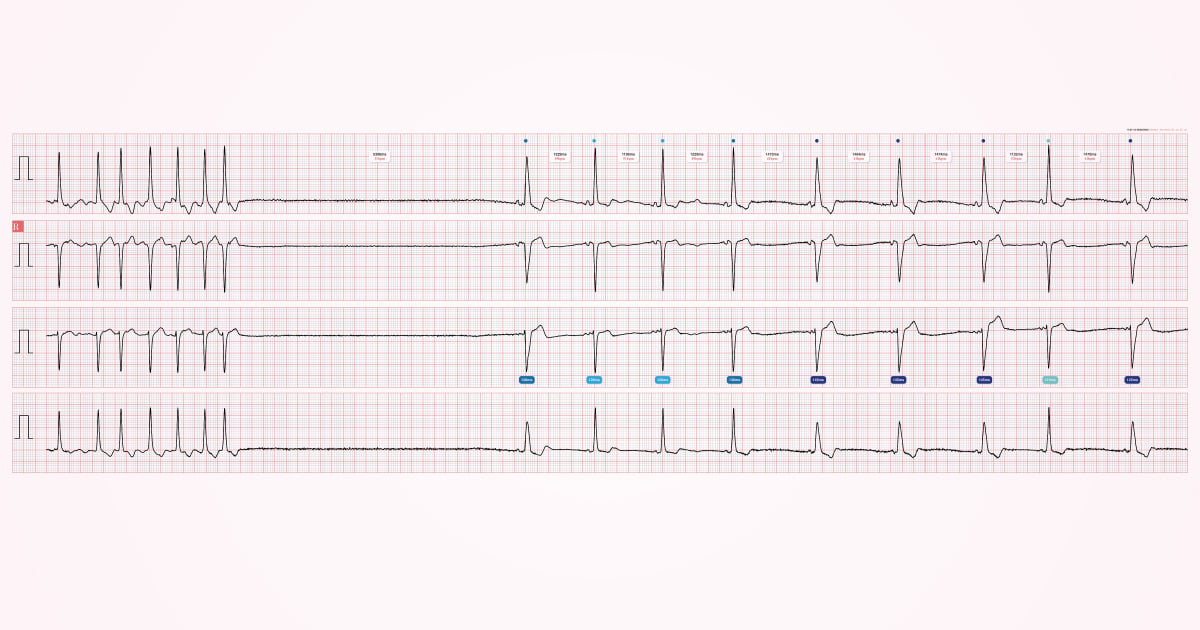
1) Sinus Node Dysfunction: SA Node is located at the right atrium, caused by abnormalities in the Sinus Node or its failure to generate electrical impulses or abnormalities in conducting the impulses from the Sinus Node to the atrium (Atrium) , also known as Sick Sinus Syndrome.
Additionally, several EKG abnormalities can be found, such as:
- Sinus Bradycardia : The heart beats slower than normal.
- Sinus Pause or Sinus Arrest : The SA Node suddenly stops working. The heart stops beating unexpectedly.
- Sinoatrial Exit Block : The SA Node generates an impulse, but the signal transmission to other heart muscles is blocked, causing a halt in the heartbeat, leading to a lack of blood supply to the brain.
- Tachycardia – Bradycardia Syndrome : Alternating rapid and slow heartbeats, often found in patients with Atrial Fibrillation, where the heart beats rapidly for a while before stopping for some time, then returning to a normal rhythm with a slower heart rate.
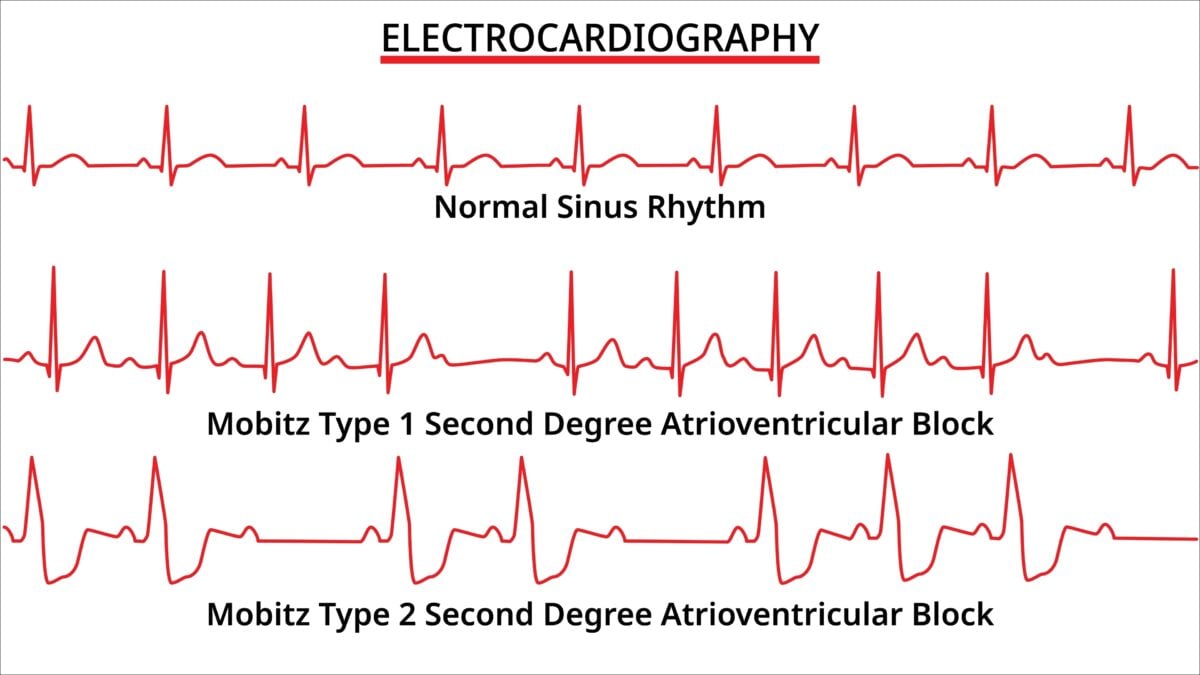
2) Atrioventricular Node: AV Node is located at the midpoint between the atrium and the ventricle, caused by a blockage of electrical impulses at the Atrioventricular Node preventing the electrical conduction from the atrium (Atrium) to the ventricle (Ventricle).
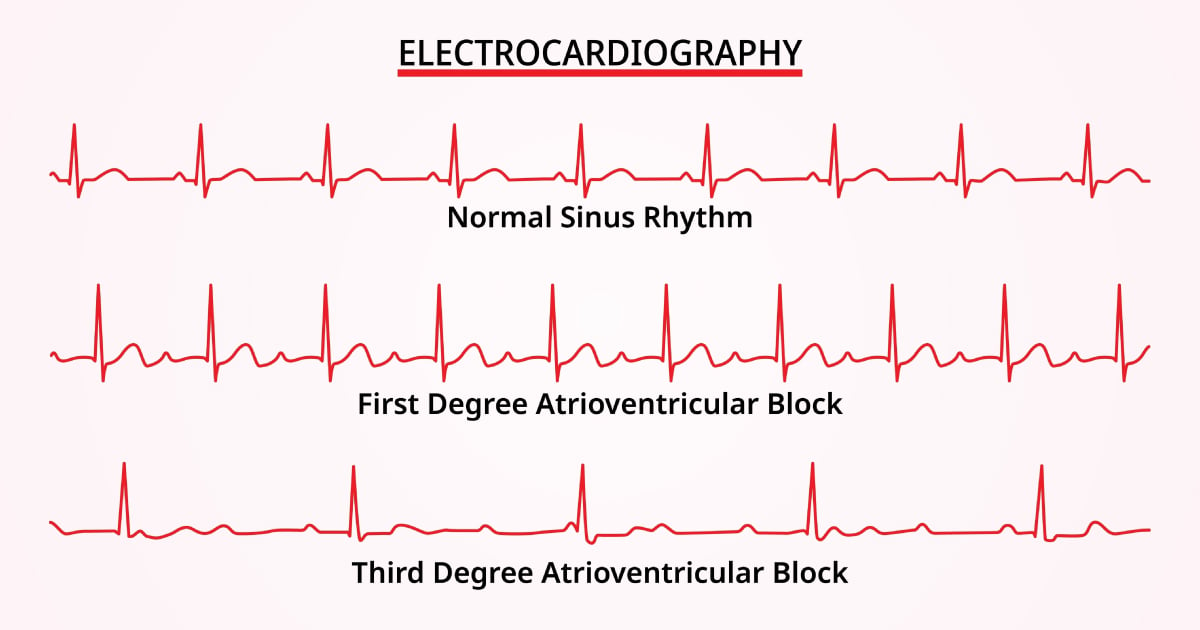
Abnormalities in the EKG (Electrocardiography or EKG) can be found as follows:
- First Degree AV Block : No symptoms may not require treatment.
- Second Degree AV Block : May require a pacemaker implant , divided into:
- Mobitz Type 1
- Mobitz Type 2
- 2:1 AV Block
- High Grade AV Block
- Third Degree AV Block : Also known as Complete Heart Block with a very slow heart rate, may require permanent pacemaker implantation.
When should you see a doctor for a slow heart rate?
Patients with a heart rate slower than 60 beats per minute along with symptoms, such as easy fatigue when exerting, weakness, fainting, lightheadedness, dizziness, syncope, or heart failure, pulmonary edema, or those with pre-existing heart disease should promptly consult a cardiologist. It is important that apart from a slow heart rate, there must be accompanying symptoms. If the heart rate is slow but without symptoms, it may be like athletes who have slower heart rates but are not in danger.
How to diagnose a slow heart rate
- 12-Lead EKG : Suitable for patients with slow heart rate symptoms, such as fainting, dizziness, syncope, for a sufficient time during the examination.
- 24 – 48 hr. Holter Monitor : Suitable for patients with symptoms every day or almost every day. The doctor will check for slow heart rate symptoms along with abnormal EKG.
- Event Recorder : Suitable for patients with infrequent symptoms , such as 1 – 2 times per month.
- Implantable Loop Recorder : Suitable for patients with rare symptoms, such as 1 – 2 times per year. It is a device implanted under the skin in the chest area, recording EKG for 12 – 18 months.
- Exercise Stress Test (EST) : Assesses the patient’s heart rate, which doesn’t increase up to 85% of Maximal Predicted Heart Rate (calculated from 220 – age) during Peak Exercise . The highest heart rate without taking drugs that suppress the function of the Sinus Node is abnormally low when combined with fatigue during the treadmill test. If taking drugs that suppress the Sinus Node , stop the medication 5 days before the test.
- Electrophysiology Study (EP Study) : Conducted when other methods cannot find the cause of the symptoms.
How to treat a slow heart rate
The treatment for bradycardia depends significantly on the cause. The doctor will perform a detailed assessment to determine the appropriate treatment and duration.
- Identify and treat the cause of the slow heart rate, such as if the patient is taking medications that suppress the Sinus Node or AV node , including medications like B – blocker, Diltiazem, Verapamil, Antiarrhythmic and Digitalis , these medications should be stopped immediately. Or if the patient has acute myocardial ischemia, coronary angiography might be conducted to place a stent to widen the coronary arteries.
- Administering heart stimulants intravenously, such as Atropine, Epinephrine, Dopamine , etc., to treat acute bradycardia.
- Transcutaneous Pacing External temporary cardiac pacing, effective in emergencies but not for long-term use, as the patient would be prone to twitching and pain from continuous shocks in the chest area.
- Transvenous Temporary Pacing Temporary cardiac pacing via veins, inserting a Lead through a vein (Jugular Vein) or subclavian vein (Subclavian Vein) with the end of the wire in the right ventricle
- Permanent Pacemaker Implantation Permanent automatic cardiac pacemaker implantation
- For patients with Sinus Node Dysfunction showing symptoms when the heart beats slowly
- For Advanced 2nd degree AVB or Complete Heart Block patients
What are the dangers of a slow heart rate?
- Syncope causing head injury and brain hemorrhage
- Severe shortness of breath from acute heart failure leading to pulmonary edema
- If caused by extensive myocardial ischemia, the mortality rate increases
How to care for yourself with a slow heart rate?
If the slow heart rate is paired with symptoms like weakness, fainting, lightheadedness, syncope, or easy fatigue when exerting, immediately consult a cardiologist for accurate diagnosis and timely treatment to reduce the risk of acute heart failure and sudden death.
Specialized doctors for treating bradycardia
Dr. Yossavee Ukkayagorn, a cardiologist and electrophysiologist, Bangkok Heart Hospital
You canclick here to schedule an appointment.
Hospitals specializing in bradycardia treatment
Bangkok Arrhythmia Clinic, Bangkok Heart Hospital provides care for bradycardia by specialized cardiologists and experienced multidisciplinary teams, along with modern medical equipment, to restore patients to good heart health.