





Treatments &
Services
Cornea and Refractive Surgery
See more

Refractive Lens Exchange (RLE) corrects vision problems for individuals aged 50 and older by replacing the natural lens with a customized intraocular lens.
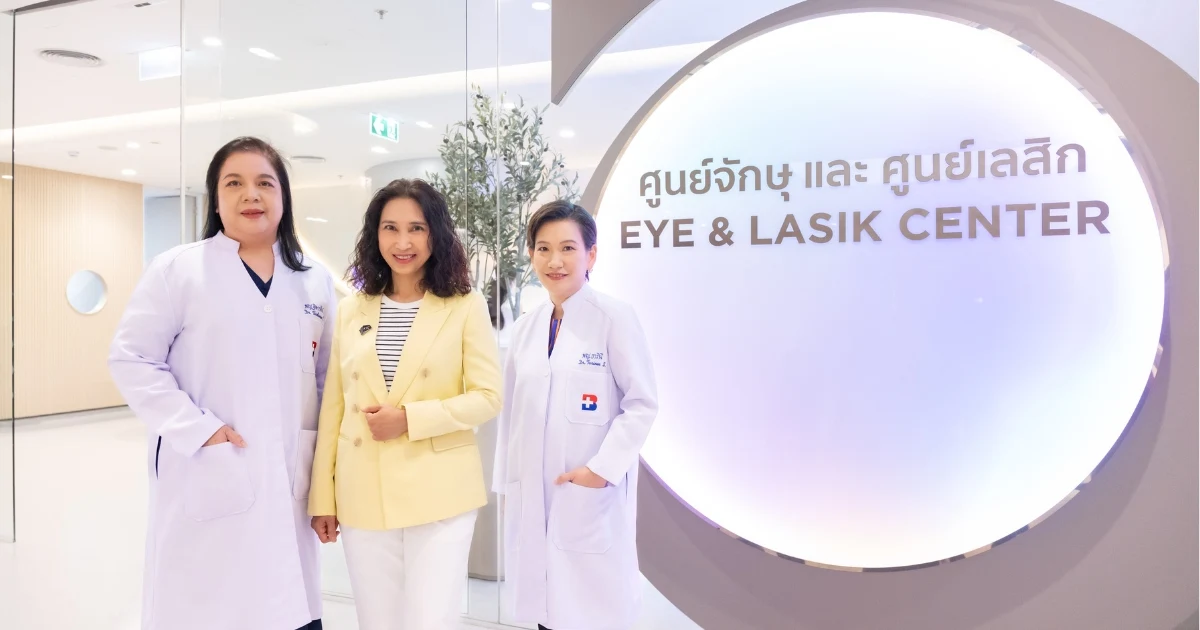
Knowledge-sharing seminar on the topic "Check for Deterioration: Know Before Risk, In-Depth Clarification on Eye Health" Understanding the dangers of eye problems, highlighting the trend of increasing eye health issues in children which can be corrected before it's too late, and unveiling the new Ophthalmology and LASIK Center.

Bangkok Hospital has launched 4 brand new centers with SMART services under the theme “Magic Land” to enhance service efficiency and readiness.
We must not forget that once the eyes are damaged, they cannot be repaired. Therefore, eye health examinations should be started early on, especially for those who are aged 40 years and above.

Eye disorders can be caused by various factors, resulting in various signs and symptoms. They can be as trivial as minor irritation or pain all the way to blurred vision or blindness. The four most common eye diseases, pterygium, pinguecula, cataract, and glaucoma, are worth knowing to keep your eyes safe.

Dry eye disease is a common and often chronic problem, affecting daily life and activity of people of all ages. Dry eyes develop when the tears are not able to provide adequate lubrication for the eyes.
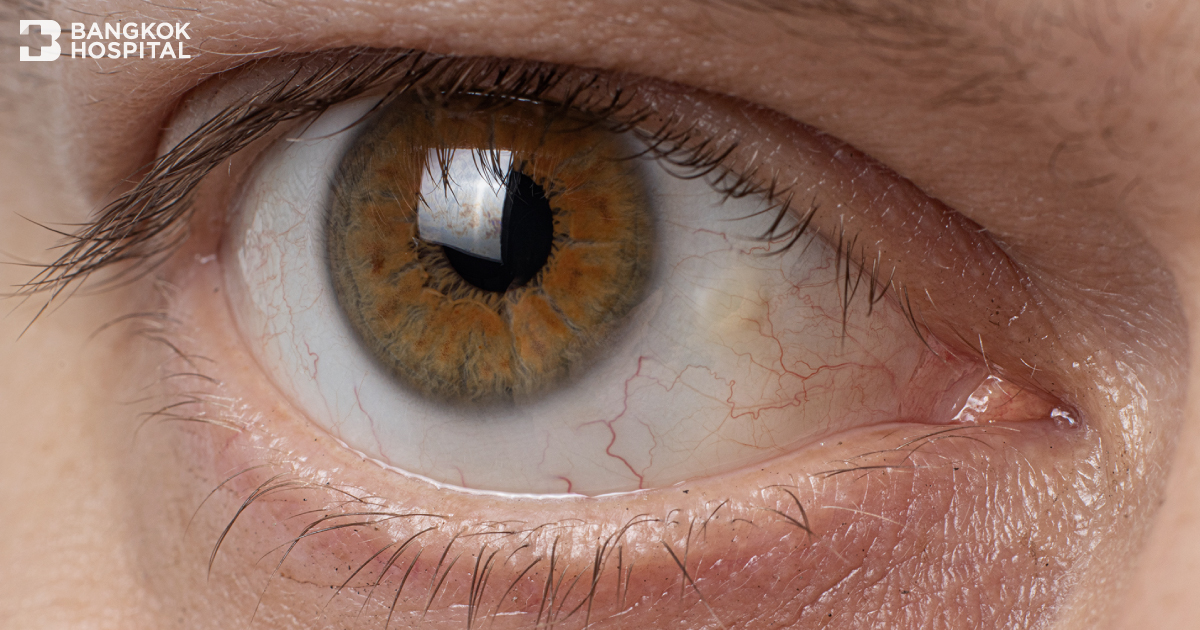
Pinguecula and pterygium are the common degenerations of the conjunctiva. A pinguecula is characterized by a yellowish raised growth on the conjunctiva typically at the nasal or temporal conjunctiva near the edge of cornea. Pterygium is the triangular shape of vascularized conjunctival tissue on the cornea and it invades the cornea (known as fibrovascular invasion of the cornea). Pterygium may start as a pinguecula that can remain small or grow large enough to cover some parts of the cornea. The body of a pterygium usually appears red with noticeable blood vessels. Redness depends on the growth of abnormal blood vessels. If it is left untreated, pterygium sometimes advances towards the center of the eye, affecting vision. They are not tumor. Generally, pinguecula and pterygium form in the corner of the eye near the nose. However, they may develop in the temporal of the eye and often both eyes are involved.

Do you realize that there can be different issues with the eyes at various ages? These include nearsightedness (myopia), farsightedness (hyperopia), or astigmatism that begins at an early age. There are even greater risks to the vision particularly as one stares at a mobile device too frequently.