
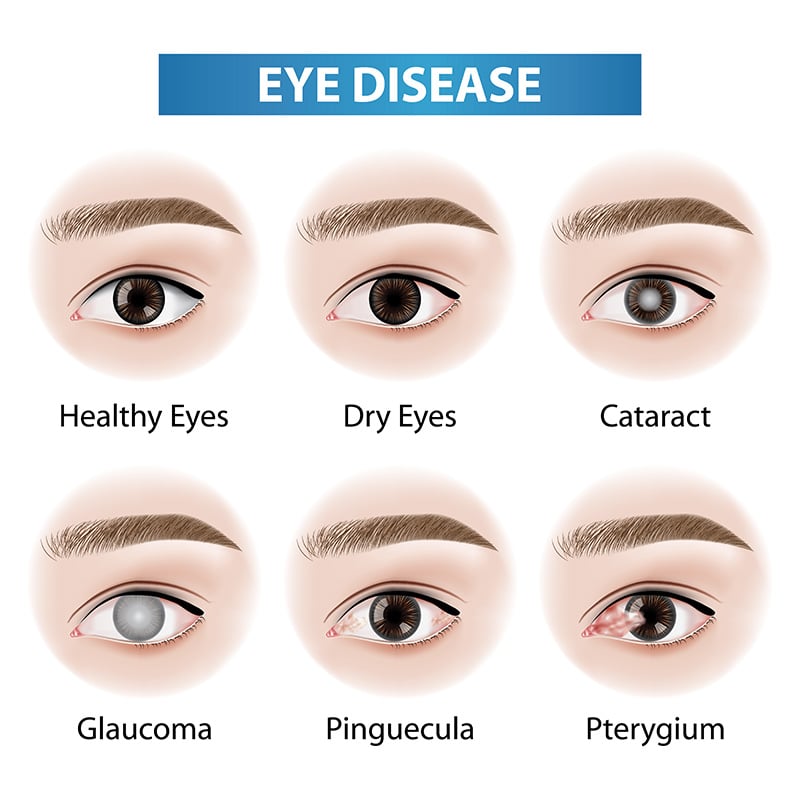
Eye disorders can be caused by various factors, resulting in various signs and symptoms. They can be as trivial as minor irritation or pain all the way to blurred vision or blindness. The four most common eye diseases, pterygium, pinguecula, cataract, and glaucoma, are worth knowing to keep your eyes safe.
Pinguecula
Pinguecula is the raised bump or abnormal growth on the conjunctiva, the clear membrane that covers the white of the eye, which usually adjacent to the border where the colored part of the eye meets the white part of the eye, although the tail end side has also been observed. When this occurs, it will cause extreme eye irritation. UV exposure from sunlight can lead to eye deterioration and pinguecula. Dust and dry eyes can aggravate the inflammation. Pinguecula is mostly found in people over the age of 30 and is common in tropical regions, which correlates with sunlight exposure. Symptoms include dry eyes, eye irritation and redness. Treatment depends on the severity of the condition. If the pinguecula is still small and the patient does not have any irritation, the doctor will recommend preventive measures to keep it from growing. Patients should wear sunglasses regularly during outdoor activities to protect the eyes from UV radiation. If there is eye irritation, inflammation or redness, the doctor will recommend eye drops to alleviate the condition.
For more information: https://www.bangkokhospital.com/en/bangkok/content/pinguecula-and-pterygium-degeneration-of-the-conjunctiva
Pterygium (Surfer’s Eye)
Pterygium is a triangle shape raised tissue with tiny blood vessels running into the cornea. The tissue can be large or small with varying degree of redness depending on the number of capillaries. Like pinguecula, pterygium is commonly found on the nasal side, but the tail side has also been observed. Prolonged exposure to UV light will lead to pterygium and it is not surprising to observe the condition in people who work outdoors in tropical regions or are exposed to excessive UV light.
If the size of the pterygium is large or invades a wide area of the cornea, it may cause chronic inflammation and blurred vision. The optometrist may recommend surgery to remove the outgrowth. The chance of recurrence is quite high, especially in younger patients and those who are continuously exposed to UV radiation. Hence, the treating physician tends to use a graft, either from the patient’s own tissue or from preserved amniotic membrane graft, which is the current standard of treatment. The graft can be secured into place either by sutures or fibrin glue.
Prevention of pterygium is the same as prevention of pinguecula, which is to avoid bright sunlight, especially from late morning until early afternoon. Sunglasses should be worn every time when outdoor activities are necessary. Moreover, avoid exposure to wind, dust, or smoke that may aggravate eye irritation.
For more information: https://www.bangkokhospital.com/en/bangkok/content/pinguecula-and-pterygium-degeneration-of-the-conjunctiva

Cataract
Cataract is the condition where the lens become clouded due to age-related degeneration. It usually affects people who are 50 years old or older. Other causes include congenital condition, eye injury, or steroid usage. Any one can develop cataract with age. Most common signs are clouded vision, distorted coloration, double vision, or blurred vision which tends to occur at nighttime more than during daylight. Cataract may cause hypersensitivity to daylight as well.
There is currently no ointment or medication that can treat cataract. If the patient’s vision gets worse and affect their quality of life, surgery may be considered. The modern method of treatment is phacoemulsification with intraocular lens, a technique where ultrasound is used to emulsify the clouded lens and removed from the patient. It usually involves local anesthesia with quick small incisions, leading to quick recovery without the need to stay overnight in the hospital. The patient may select from a wide array of intraocular lenses that will suit their condition. Choose monofocal, multifocal, or trifocal lens to improve eyesight without the need for glasses any longer. Patients can even correct astigmatism with the right lens choice.
To prevent cataract, it is recommended that sunglass should be worn every time when outdoors to prevent UV exposure. Avoid eye trauma or injury and unnecessary use of steroids. Lastly, an annual eye exam is recommended as patients get older.
For more information: https://www.bangkokhospital.com/en/bangkok/content/cataract-surgery-and-intraocular-lens
Glaucoma
Glaucoma is a condition where deteriorated optic nerve causes vision loss. Most patients will not realize that they have glaucoma because there are no tell-tale symptoms. It is usually discovered through abnormally high pressure in the eye, which is a risk factor for optic nerve damage, leading to permanent vision loss. Certain type of glaucoma is not associated with high eye pressure, but keeping the eye pressure within normal range will slow down the deterioration. If left untreated, the patient may have smaller field of vision leading to complete blindness. Glaucoma can be diagnosed at any age, but is commonly found in people over the age of 40. Acute glaucoma is associated with sudden eye pain and rainbow halos around lights. In contrast, chronic glaucoma is a silent danger which does not show any signs and can only be diagnosed during an eye exam and eye pressure determination.
The objective of glaucoma treatment is not to cure, but to control the deterioration. Most treatment involves controlling pressure in the eyes by using eye drops, oral medication, and laser treatment. Surgery is usually the last option when all else has failed and under the doctor’s discretion.
The best way to prevent glaucoma is to be vigilant and get an annual eye examination, especially for people at risk, such as people over the age of 40, family history of glaucoma, extreme nearsightedness or farsightedness, diabetics, or patients with cardiovascular conditions. Lastly, avoid unnecessary use of steroid eye drops which can lead to high pressure in the eyes.
An annual eye check up with ophthalmologist is recommended. A detailed assessment can catch any disorder that should be treated immediately before it can lead to loss of vision.