


When “blurred vision” or unclear vision begins, many people may think it is due to a change in their refractive error, or wait to see whether it improves on its own. However, blurred vision can be caused by abnormalities in many parts of the visual system—from the cornea, crystalline lens, vitreous, retina, and optic nerve, all the way to the brain.
Some causes may not be serious, while some diseases may permanently affect vision if treatment is delayed. Importantly, when vision changes, you should see an ophthalmologist to identify the cause, assess urgency, and receive appropriate treatment early.
- What is blurred vision?
- What causes blurred vision?
- What are blurred vision symptoms like?
- What should you observe when you have blurred vision?
- What types of blurred vision require urgent evaluation by an ophthalmologist?
- How is blurred vision diagnosed?
- How is blurred vision treated?
- How can blurred vision be prevented?
- Frequently asked questions (FAQ)
What is blurred vision?
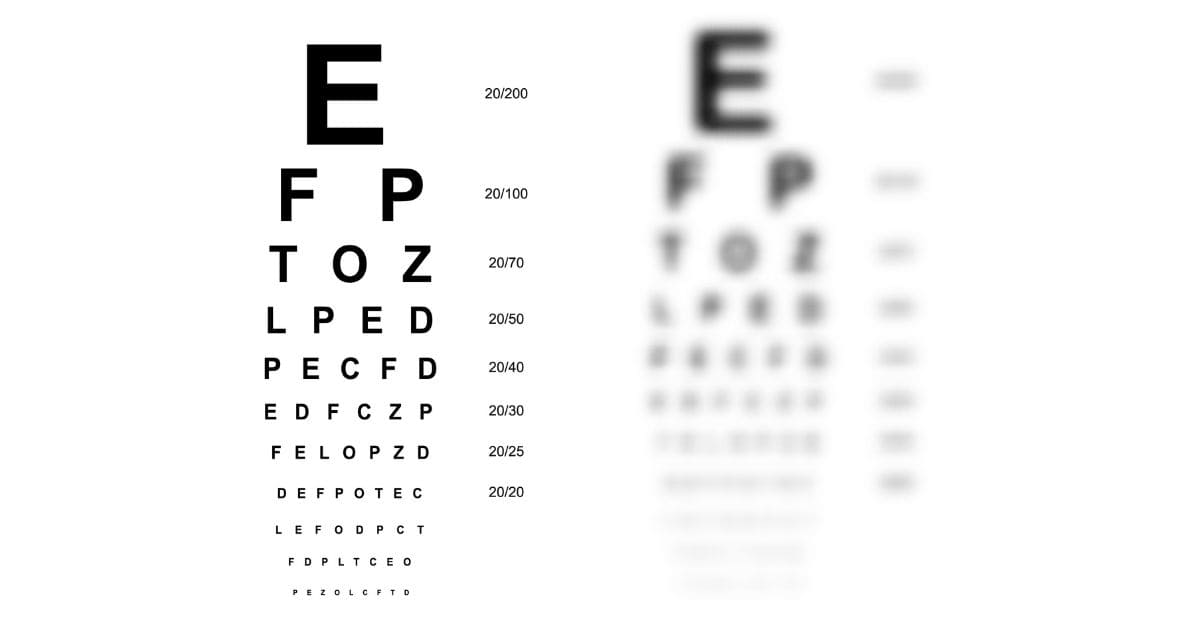
Blurred vision (Blurred Vision) is a symptom in which images are not sharp or fine details are reduced. The image may look blurry or hazy and may affect daily life, such as reading, seeing faces, or driving. Blurred vision can be caused by many reasons, ranging from refractive errors or dry eye to diseases of the eye, retina, optic nerve, or nervous system.
What causes blurred vision?
Blurred vision can be caused by many conditions, from common issues to diseases that require urgent treatment, such as:
- Refractive error and the ocular surface, such as refractive errors, dry eye, or corneal diseases
• Crystalline lens, such as cataracts - Vitreous and retina, such as vitreous disorders, retinal detachment, diabetic retinopathy, retinal degeneration, or macular disease
- Optic nerve, such as optic nerve disease or glaucoma
- Nervous system and brain, such as abnormalities of the visual pathway or the parts of the brain related to vision
Identifying the true cause requires history taking, an eye examination, and possibly additional tests as appropriate.

What are blurred vision symptoms like?
The term “blurred vision” that patients use to describe their symptoms may refer to several types of visual abnormalities, such as:
- Unsharp vision (Blurred Vision) Seeing images as blurry or lacking detail. It may be caused by refractive errors, dry eye, cataracts, retinal disease, or optic nerve disease.
- Distorted vision (Metamorphopsia) Straight lines may look wavy or curved, letters may appear distorted, or the shape of objects may look different from before. This symptom is often associated with abnormalities in the macula.
- Double vision (Diplopia) Seeing one object as two images, which is different from unsharp vision. A basic way to observe this is to cover one eye at a time.
- Binocular diplopia: Double vision disappears when either eye is covered. It may be associated with problems in coordination between both eyes, the extraocular muscles, the nerves controlling eye movement, or the nervous system.
- Monocular diplopia: Double vision persists in the affected eye even when the other eye is covered. It may be associated with abnormalities of the ocular surface, cornea, refractive error, or crystalline lens.

What should you observe when you have blurred vision?
When blurred vision begins, you should observe the initial characteristics of the symptoms. This helps the ophthalmologist assess the cause and urgency of treatment. This information helps the ophthalmologist diagnose and plan appropriate examinations and treatment more effectively.
- Did it occur suddenly or gradually? Acute blurred vision within seconds, minutes, or hours may have causes requiring prompt treatment, while symptoms that develop gradually over weeks, months, or years are found in many chronic diseases.
- Is it in one eye or both eyes? Try covering one eye at a time to compare vision, because sometimes you may not realize that vision has decreased in one eye.
- Is it constant or intermittent? If vision decreases or disappears temporarily, especially in one eye, it should be evaluated promptly.
- Where is it unclear? For example, the center of vision, the side, or with part of the image missing. The location of the abnormality may help indicate the cause.
- Are there other associated symptoms? Such as flashes of light, an increase in floaters, a dark curtain/shadow, distorted vision, eye pain, or red eye.
What types of blurred vision require urgent evaluation by an ophthalmologist?
You should see an ophthalmologist urgently if you have any of the following symptoms:
- Sudden blurred vision or a sudden decrease in vision
- New flashes of light or new floaters, or a rapid increase in floaters
- A shadow or dark curtain, or missing parts of the visual field
- New-onset distorted vision, such as straight lines looking wavy or curved
- Vision decreasing or temporarily disappearing, especially in one eye
- Blurred vision with eye pain, red eye, or light sensitivity
- Blurred vision with neurologic symptoms, such as weakness or numbness of the arms or legs, facial droop, or slurred speech
These symptoms may be signs of conditions that require prompt diagnosis and treatment. Therefore, you should not wait to see if symptoms improve or buy eye drops to use on your own.

How is blurred vision diagnosed?
An ophthalmologist will take a history and examine the eyes to determine the cause of blurred vision, which may include:
- Checking visual acuity and refraction
- Examining eye structures and measuring intraocular pressure
- Examining the vitreous, retina, macula, and optic nerve
- Additional tests as indicated, such as OCT, visual field testing, or retinal imaging
The appropriate examinations vary depending on each person’s symptoms and abnormalities.
How is blurred vision treated?
Treatment depends on the cause and severity of symptoms. The doctor may correct refractive errors, use artificial tears or medications, and may also treat with laser, intravitreal injections, or surgery. The ophthalmologist will identify the cause and choose the most appropriate treatment for each individual.
How can blurred vision be prevented?
Although not all causes of blurred vision can be prevented, taking care of eye health and reducing risk factors can help as follows:
- Have eye checkups according to age and risk factors
- Control underlying diseases such as diabetes, high blood pressure, and high blood lipids
- Wear sunglasses that block UVA and UVB when outdoors
- Rest your eyes periodically when using a computer or smartphone for a long time
- Maintain cleanliness and use contact lenses correctly
- Use eye protection when doing activities with a risk of injury
If your vision changes, you should see an ophthalmologist to determine the cause as soon as possible. Do not wait for symptoms to worsen.

Frequently asked questions
Q: What types of blurred vision require urgent evaluation by an ophthalmologist?
A: If blurred vision occurs suddenly, vision decreases significantly, or there are associated symptoms such as flashes of light, increasing floaters, a dark curtain over the eye, severe eye pain, red eye, or neurologic symptoms, you should see a doctor urgently.
Q: Is blurred vision in one eye more dangerous than in both eyes?
A: Not always. Both one-eye and two-eye blurred vision can have many causes. Urgency depends on the characteristics, duration, and associated symptoms.
Q: Why is my vision still not clear after changing glasses?
A: Because blurred vision may not be due to refractive error alone. It may be caused by abnormalities of the cornea, crystalline lens, macula, retina, or optic nerve. Therefore, further evaluation to determine the cause is recommended.
Q: How is double vision different from blurred vision?
A: Blurred vision is unclear or unsharp vision, while double vision is seeing one object as two images. If you have double vision, you should try covering one eye at a time and observe whether the double vision disappears to help differentiate the cause. Blurred vision can have many causes; what is important is to note when the symptom occurs, whether it is in one eye or both, and whether there are other associated abnormalities, to help ensure appropriate diagnosis and treatment.
Hospital specializing in eye disease treatment
Eye Center, Bangkok Hospital is ready to provide care for all eye problems and abnormalities, with specialized ophthalmologists with expertise, modern tools and equipment, and an experienced multidisciplinary team, ready to plan care and provide close consultation—from diagnosis and treatment to follow-up care—to ensure confidence in vision at every age.
Physician specializing in eye disease care and treatment
Dr. Weeraya Pimolrat Retina, vitreous, and ocular immunology specialist, Bangkok Hospital
You can click here to make an appointment yourself.