

Various organs in the body will deteriorate with age, including our eyes. Eyesight typically begins to deteriorate from the age of 40 and onwards. As we age, we are more likely to encounter eyesight deterioration and eye diseases. Thus, it is crucial to take care of our eye health, regularly check up at least once a year to know the condition of our eyes. Early detection of any abnormalities can help prevent or delay deterioration and avoid permanent vision loss
Eye Diseases and Problems in the Elderly
Common eye diseases and problems in the elderly include:
1) Presbyopia or age-related farsightedness
Presbyopia (Presbyopia) is a common misconception for long-sightedness, but it is actually an age-related condition that everyone at the age of approximately 40 will experience. This is due to the lens of the eye becoming less flexible and the muscles within the eye that adjust for near vision deteriorate, making it necessary to wear glasses for close work in order to adjust the eye’s focusing ability for near objects.
Presbyopia affects everyone, even those who originally had normal vision, nearsightedness, farsightedness, and astigmatism. It can be corrected by using lenses with increased power for those with normal sight but develop presbyopia with age, by using special reading glasses (not needed for distance vision), or by using progressive or bifocal lenses for those who already had existing vision conditions. In some cases, contact lenses or refractive surgery like FemtoLASIK can be used to correct presbyopia (FemtoLASIK with presbyond) if one does not wish to wear glasses or contact lenses.
Read more : Correcting age-related farsightedness with FemtoLASIK Presbyond
2) Cataract (Cataract)
Cataracts (Cataract) develop with age, causing the eye’s lens to harden and cloud, which blurs vision. The severity and pace of vision impairment depend on the level and location of the cloudiness within the lens. Early stages of cataract may not significantly affect vision, but as it progresses, it can greatly impair eyesight and necessitate surgical removal, where the clouded lens is replaced with an artificial one.
Most age-related cataracts worsen over time. Cataract surgery is a treatment option that can be performed relatively quickly and does not require hospitalization. Early detection through regular eye check-ups is recommended to treat conditions promptly.
Read more :
Cataracts: Causes and Important Factors to Be Aware Of
Cataract Surgery and Types of Intraocular Lenses
3) Glaucoma
Glaucoma (Glaucoma) results from the degeneration of the optic nerve, leading to eventual loss of vision. It’s mostly associated with high eye pressure. Symptoms can vary, and in acute cases, may include severe eye pain, blurred vision, seeing rainbow circles around lights, headache, nausea, and vomiting due to very high intraocular pressure. Early detection and treatment through regular eye exams are crucial to managing glaucoma and preventing severe vision loss.
Read more : Check for Glaucoma Before It’s Too Late
4) Vitreous Degeneration
Vitreous Floaters (Vitreous Floaters) occur as the gel-like vitreous inside the eye begins to liquefy with age, leading to floaters that may appear as black dots, lines, rings, or cobwebs moving in the field of vision. Although mainly related to aging, regular eye check-ups and prompt treatment by an ophthalmologist are essential for preventing potential serious complications such as retinal detachment and permanent vision loss.

5) Age-Related Macular Degeneration (AMD)
Age-Related Macular Degeneration (AMD) (Age – Related Macular Degeneration : AMD) is caused by the deterioration of the central portion of the retina, leading to blurred vision, distorted vision, and dark spots in the center of the field of vision. There’s currently no cure for AMD, but early detection and care can prevent or slow its progression.
Read more : Macular Degeneration in the Elderly
6) Diabetic Retinopathy
Diabetic Retinopathy (Diabetic Retinopathy) arises from diabetes and involves damage to the blood vessels and nerves of the retina, potentially leading to blurred vision and blindness. Regular eye examinations and good control of diabetes can reduce the risk and severity of diabetic retinopathy.
7) Dry Eyes
Dry Eyes (Dry Eyes) is a common condition among older adults and those in working age, characterized by discomfort, irritation, and possibly excessive tearing. It can result from several factors such as Meibomian Gland Dysfunction, long-term use of digital screens, hormonal changes, certain diseases, and medications. Treatment depends on the underlying cause and may include artificial tears, behavioral adjustments, and eyelid hygiene practices.
Read more : Blocked Meibomian Glands: One of the Causes of Dry Eye Syndrome
8) Pterygium and Pinguecula
Pterygium (Pterygium) is a condition where a pink, flesh-like tissue grows over the cornea. It can cause irritation, redness, and if it grows large enough, can impair vision. Pinguecula (Pinguecula) is similar but does not grow across the cornea. Both are related to sun exposure and can be more common in people working outdoors.
Read more : Pterygium
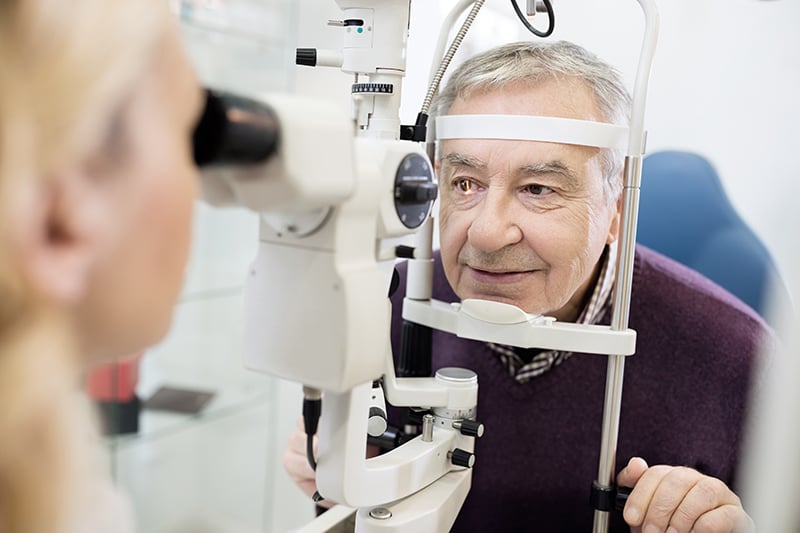
The eye diseases mentioned are those that commonly affect the elderly. Routine screening for eye conditions can facilitate timely treatment and prevent vision loss. It is recommended that older adults undergo regular eye exams annually to detect any abnormalities needing treatment. Comprehensive eye screening not only helps detect eye abnormalities at an early stage but also uncovers eye diseases that are still asymptomatic, especially in the elderly who are more prone to age-related eye deterioration
Besides, people of all ages may experience different eye abnormalities, such as eye problems in children like cross-eye or lazy eye, or issues in working-age adults like eyestrain, dry eyes, or abnormal vision such as nearsightedness, farsightedness, and astigmatism. For those over 40, age-related farsightedness (Presbyopia) is common. Maintaining eye health and regular check-ups can help detect and address issues before it’s too late, ensuring clear vision for longer.