

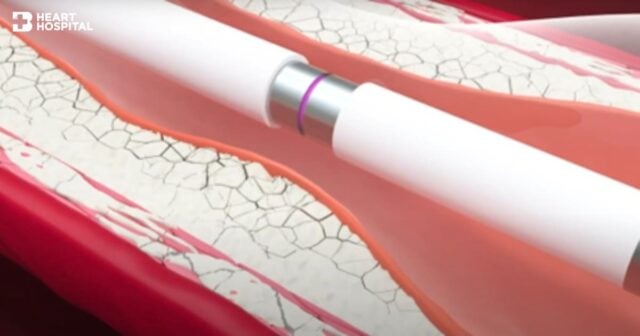

In the treatment of coronary arteries via catheterization, the presence of significant calcified plaque in lesions (Severe Coronary Calcification) is a major obstacle to the process and outcome of catheter and stent placement treatments. This condition can be found in up to 1 in 4 of heart disease patients, often seen in elderly, diabetic, and kidney disease patients.
Calcium in coronary arteries impedes equipment passage and prevents stents from fully expanding, which is associated with the risk of stent blockage, the need for repeat angiography, and rehospitalization.
How to treat plaque lesions with calcification
In the past, various devices have been developed to cut and expand calcium deposits in coronary arteries, starting with high-pressure balloons (High Pressure – Non Compliance Balloon), which may be effective in some lesions but have the risk of damaging softer areas of the artery, potentially causing injury or rupture. Next are balloons with blades or scoring wires (Cutting/Scoring Balloon) to create grooves in the calcified sheet, followed by expansion with a high-pressure balloon, increasing the success of artery dilation. However, they are usually ineffective for very thick lesions. Subsequently, diamond-tipped rotational atherectomy devices (Rotational Atherectomy) were invented to scrape or shave off the calcium on the inner surface of the artery, which is an efficient way to remove calcium from lesions (Ablation) and improve the success rate of stent placement and outcomes, though it involves procedural complexities, requiring the relationship between the guiding wire and calcium position, along with various complications.
However, all these methods only work well for calcium in the innermost layer (surface) of the artery and cannot deal with deep-layer calcification, which is a major cause of incomplete stent expansion, leading to the use of intravascular lithotripsy delivered through a catheter balloon (IntraVascular Lithotripsy: IVL).
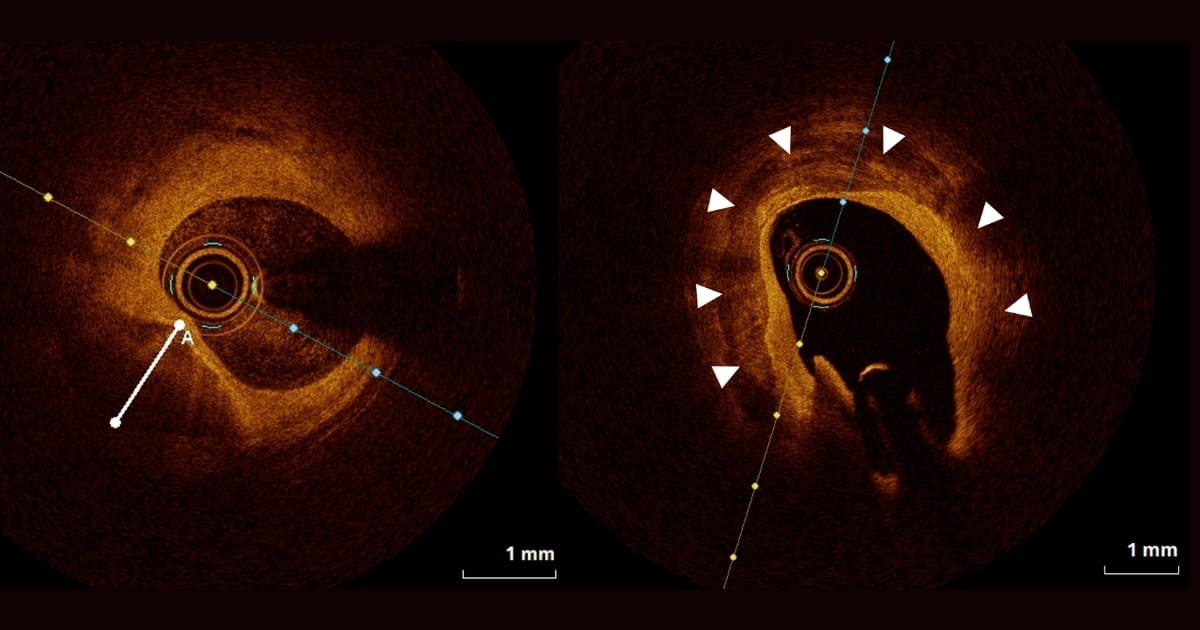
Optical Coherence Tomography (OCT) image showing calcium in coronary arteries, (left) deep calcium with significant thickness, (right) deep calcium that spreads more than half of the artery circumference (arrowhead)
What is IVL
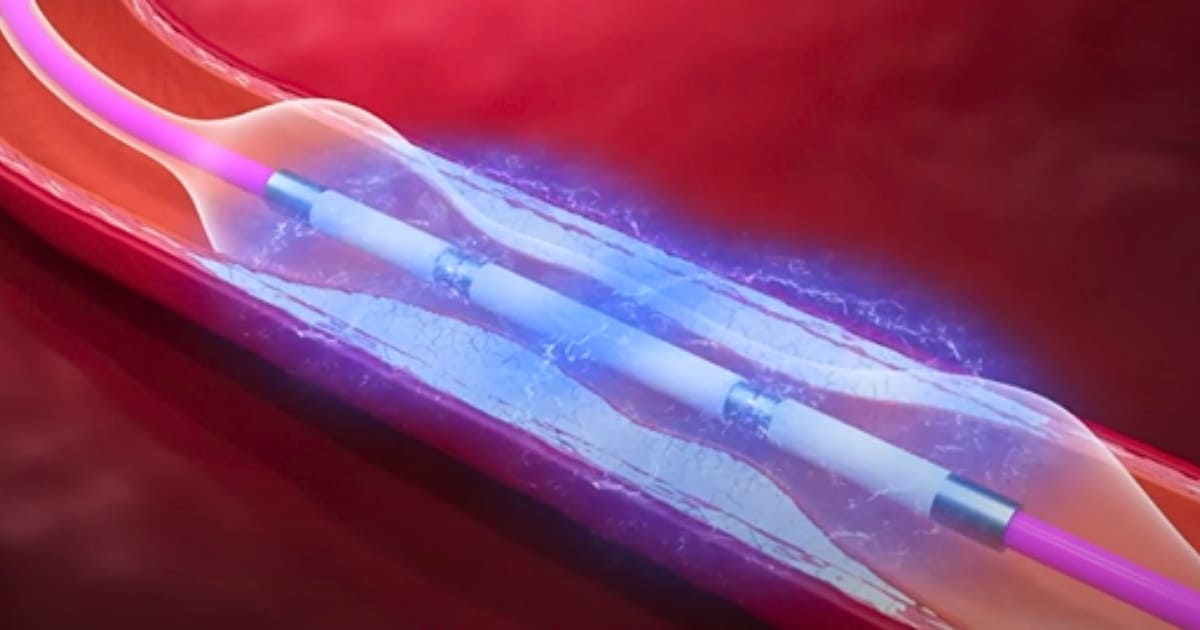
Intravascular Lithotripsy (IVL) is a catheterization technology for treating coronary artery disease by transmitting sound waves to the arterial wall through a balloon. When these sound waves contact the artery wall, they convert into physical forces directed towards areas with high resistance or stiffness in the artery (i.e., areas with calcium, causing the calcium to break into tiny particles), without affecting other tissues (unlike high-pressure balloons), increasing the elasticity of the artery, leading to better stent expansion and greater lumen area.
What are the benefits of IVL
- Can solve problems of deep-layer calcium
- Reduces injury to surrounding tissues compared to high-pressure balloons
- Increases the success of device passing and cross-sectional lumen size in the stent, reducing the risk of restenosis
- Quick recovery, shortens recovery time
Who is suitable for IVL treatment
- Patients with extensive calcium in coronary artery lesions
- Those with a stent (Stent) previously placed that did not expand well due to calcium
How to care after IVL treatment
- Recover in the hospital for about 1 – 2 days
- Strictly take medication as instructed by the doctor, such as anticoagulants
- Attend follow-up appointments with the doctor regularly
Why choose to treat coronary artery disease at Bangkok Heart Hospital
- The first specialized private heart disease hospital in Thailand, ranked as one of the “top heart disease treatment and surgery hospitals in the Asia-Pacific region for the year 2025” by Newsweek and Statista
- Team of doctors specialized in treating complex coronary artery disease via catheterization
- Up-to-date diagnosis and treatment technology for complex coronary artery disease, such as FFR/iFR, IVUS, OCT, Rotational Atherectomy, IVL.
- Tailored Treatment Planning by heart doctor team
- Modern Cardiac Catheterization Laboratory (Cath Lab)
- Internationally recognized standards and treatment outcomes
Hospital specializing in coronary artery disease treatment
Bangkok Heart Hospital has a team of specialized heart doctors with expertise in treating coronary artery disease, utilizing the proficiency and experience of the medical team alongside modern medical technology, ready to take care of every heart problem in every generation with care, aiming for a good quality of life once again.
If you have symptoms like chest pain, easily fatigued, or have a chronic illness, don’t wait until it’s too late,
because your heart is…too important to risk
Specialists in treating coronary artery disease
Dr. Vira Luvira Cardiologist, Bangkok Heart Hospital
You can click here to make an appointment by yourself.