


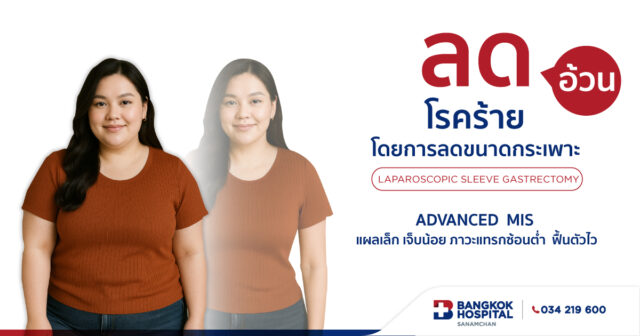
Sleeve Gastrectomy: Laparoscopic Gastric Sleeve Reduction, a Sustainable Obesity Treatment Option
Obesity not only impacts self-confidence but is also a risk factor for many serious diseases. Dietary control or medication may provide short-term results, but for those with severe obesity, surgery is an option with long-term results.
Bangkok Hospital Sanamchan introduces Laparoscopic Sleeve Gastrectomy, a highly accepted and effective obesity treatment.
What is Sleeve Gastrectomy?
Sleeve Gastrectomy is a surgical procedure to reduce the size of the stomach. The surgeon removes approximately 80% of the stomach, resulting in a smaller stomach, resembling a sleeve or banana. This laparoscopic procedure offers the advantages of a small incision, minimal pain, and a quick recovery.
Mechanism of Gastric Sleeve Reduction
Sleeve Gastrectomy aids in weight loss and obesity treatment through two main mechanisms:
* Gastric Sleeve Reduction: When the stomach is smaller, patients eat less and feel full faster.
* Reduces Hunger Hormones: The removed portion of the stomach is responsible for producing the hunger hormone ghrelin. When this hormone is reduced, Patients will experience significantly less hunger.
Different from other obesity treatments
There are many methods for treating obesity, each with its own advantages and disadvantages. Sleeve gastrectomy focuses on addressing the root cause and provides long-term results. This differs from other treatments, such as medications or satiety hormone injections, which may only help patients eat less in the short term.
However, choosing the most appropriate treatment depends on individual assessment and the discretion of a specialist.
Who is suitable for sleeve gastrectomy?
Gastrectomy for obesity is not for everyone. Eligibility criteria (according to international guidelines) are as follows:
* Those with a body mass index (BMI) of 32.5 kg/m2 or higher and comorbidities associated with obesity (e.g., diabetes, hypertension, hyperlipidemia, sleep apnea).
* Those with a BMI of 37.5 kg/m2 or higher (even if no comorbidities are present).
Safety and advantages of laparoscopic surgery
Because sleeve gastrectomy is a minimally invasive procedure, This has several advantages:
* Small surgical wound
* Less post-operative pain
* Fast recovery, reduced hospital stay
* Low risk (if performed by a skilled specialist, the risk rate is approximately 0.5-1%)
Obesity treatment requires the supervision of a specialist to assess and develop the most appropriate and safe treatment plan for each individual patient.