Fever is the body’s reaction to infection or inflammation, especially in young children. Fever can make parents feel anxious and uneasy because if the child has a high fever, it increases the concern that they might have seizures from the high fever. Taking care of a child with a fever is important to make them feel more comfortable and recover faster. This article provides advice and appropriate practices for taking care of a child with a fever.

1. Measuring Temperature
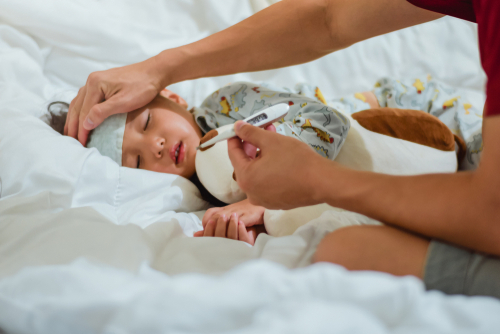
Measuring a child’s temperature is an important first step in assessing the severity of the fever. The normal body temperature is approximately 36.5-37.5 degrees Celsius. If the temperature exceeds 37.5 degrees Celsius orally, underarm, ear, or exceeds 38 degrees Celsius rectally, it is considered a fever.
2. Medication
- Fever reducer: Paracetamol or Ibuprofen are effective fever reducers for children. The medication should be given in the dosage prescribed by a doctor and at the specified times.
- Be cautious with high fever reducers or Ibuprofen in cases where it’s unknown whether the patient has dengue fever as it increases the risk of severe bleeding.
- Avoid combination drugs: Avoid using drugs with multiple active ingredients as this might cause overdosing in young children.

3. Body Care
- Hydration: Ensure the child drinks enough water to prevent dehydration. Drinking electrolyte solutions or mild soups is also a good option to compensate for additional water loss during fever.
- Warm bathing: Bathing in warm water or rubbing with warm clothes helps reduce fever. Cold water or alcohol should not be used as they can cause the child’s body to feel chilled and uncomfortable.
- Rest: Let the child rest in a quiet and comfortable place. Wear breathable and not too heavy clothing.

4. Body Wiping to Reduce Fever
Body wiping is a safe and effective method to reduce a child’s body temperature. The correct method for body wiping is as follows:
- Prepare Equipment
1. A basin with warm water (approximately 29-32 degrees Celsius, not exceeding 40 degrees Celsius)
2. 2-4 small towels
3. A large dry towel
- Wiping Method
1. Remove the child’s clothing in a room that is not too hot or cold.
2. Use a small towel soaked in water.
– Wipe key areas: Start at areas with many blood vessels, such as the forehead, face, and place it at the nape of the neck,
Wipe both arms and legs starting from the extremities towards the body to aid pore opening for heat release; leave the towel at the armpits, elbows, and knee folds.
Wipe the back by turning the child sideways and wiping from the buttocks to the neck.
3. Duration of wiping: Wipe for about 10-15 minutes or until the body temperature decreases.
4. Use a dry towel to pat dry and dress the child in breathable clothes.
5. Change water if the basin water cools down.
6. Recheck body temperature 30 minutes after wiping.
5. Monitoring Symptoms
Monitoring severe symptoms: If the child has other symptoms such as vomiting, diarrhea, difficulty breathing, rash, lethargy, poor appetite, reduced urination, or dark urine, they should be taken to see a doctor immediately.
Monitoring temperature: The child’s temperature should be checked at intervals to monitor fluctuations and respond as necessary.
6. Medical Consultation
If the child has a high fever after being well cared for over 48 hours and the fever does not subside or if there are worrying symptoms, consult a doctor or take the child to see a doctor for appropriate examination and treatment.
Summary
Providing care for a child with a fever requires careful attention and proper actions. Administering fever reducers, caring for the body, wiping, and monitoring symptoms are crucial steps in aiding the child’s faster recovery. Consulting a doctor should be considered if there are any doubts or if the child’s condition does not improve.
Health Information by
Dr. Minchaya Ruchirotajumpai
Specialty: Pediatrics