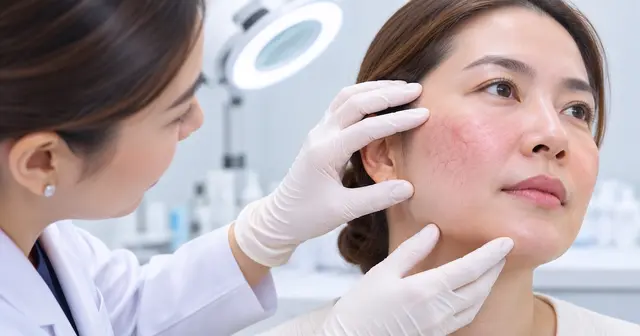
V-Beam Laser for Rosacea and Facial Redness: Treatment, Results and Aftercare
Persistent facial redness can have several causes. Some people have rosacea, some have visible small blood vessels, while others are left with flat red marks after inflammatory acne has healed.
Although these problems can look similar, they are not the same condition. Correct diagnosis matters because treatment should target the actual cause of the redness.
V-Beam is a pulsed-dye laser that targets blood vessels and vascular redness in the skin. It may be considered for persistent redness and visible blood vessels associated with rosacea, as well as selected cases of persistent post-acne redness. Laser treatment is usually only one part of rosacea management rather than a treatment for every rosacea symptom. American Academy of Dermatology
The aim is improvement rather than guaranteed or permanent clearance.
For patients in Phuket, treatment planning should also consider strong sun exposure, beach activities, swimming, exercise and travel plans during the recovery period.
What Causes Facial Redness?
Facial redness is a description rather than a diagnosis.
A red face can result from many different conditions, and the appropriate treatment depends on what is causing the color change.
Common causes include:
- rosacea;
- visible superficial blood vessels;
- persistent redness after acne;
- active inflammatory acne;
- seborrheic dermatitis;
- eczema or irritated skin;
- sun damage;
- reactions to skin-care products;
- inappropriate or prolonged use of certain topical medications; and
- other inflammatory skin conditions.
This is why a vascular laser should not automatically be used whenever someone has facial redness.
The first question should be:
Why is the skin red?
What Is Rosacea?
Rosacea is a chronic inflammatory skin condition that primarily affects the central face.
It can appear differently from person to person. Possible features include:
- persistent redness;
- episodes of flushing;
- visible small blood vessels;
- burning or stinging;
- sensitive skin;
- acne-like red bumps and pustules;
- skin thickening in some patients; and
- eye symptoms in some forms of rosacea.
Modern treatment is increasingly based on the individual features a patient has rather than treating every person with rosacea in exactly the same way. Rosacea.org – National Rosacea Society
This distinction is particularly important when considering V-Beam.
A patient whose main problem is persistent vascular redness and visible blood vessels may require a very different treatment plan from someone whose main problem is inflammatory bumps, pustules or eye symptoms.
Persistent Redness, Flushing and Visible Blood Vessels Are Not the Same
Patients often describe all three problems simply as “redness,” but they should be separated clinically.
Persistent facial redness
This is background redness that remains visible for much of the day.
It commonly affects the cheeks, nose, chin and central forehead in rosacea.
Vascular laser treatment can be considered as part of treatment for persistent erythema in appropriately selected patients. American Academy of Dermatology
Visible facial blood vessels
Small superficial vessels can become visible on the cheeks, nose and other areas of the face.
These vessels are often an appropriate target for vascular laser treatment. Pulsed-dye laser is among the treatments included in rosacea management recommendations for facial telangiectasia. Rosacea.org – National Rosacea Society
Flushing
Flushing is temporary redness that comes and goes.
It may be triggered by:
- heat;
- sunlight;
- hot environments;
- alcohol;
- spicy food;
- exercise;
- emotional stress; or
- other individual triggers.
Flushing involves complex vascular and nervous-system responses. Treating visible vessels does not necessarily prevent every future episode of flushing.
This is an important limitation to understand before laser treatment.
What Is Post-Acne Redness?
After an inflammatory acne lesion heals, some people are left with a flat red or pink mark.
This is different from an acne scar.
The medical term is post-inflammatory erythema.
It is particularly noticeable in lighter skin tones, although post-acne color changes can appear differently across different skin types.
Post-acne redness can gradually improve by itself, but persistent marks can remain visible for a prolonged period.
A systematic review found that laser and light-based treatments are among the most frequently studied approaches for post-acne erythema, with pulsed-dye lasers being the most commonly studied laser type. However, there is no single established treatment that is best for every patient, and stronger clinical trials are still needed. PubMed
Post-Acne Redness Is Not the Same as Acne Scarring
This distinction is extremely important.
After acne, a patient may have several different types of residual marks.
Red flat marks
These may represent post-inflammatory erythema.
A vascular laser may be considered because blood vessels contribute to the red appearance.
Brown or dark marks
These are more consistent with post-inflammatory hyperpigmentation.
They are caused primarily by increased pigment rather than vascular redness.
A vascular laser is therefore not automatically the correct treatment.
Depressed or indented scars
These are structural acne scars.
Examples include narrow deep scars, sharply edged depressed scars and rolling scars.
Because the problem is a change in skin structure rather than simply redness, treatment may require an entirely different approach.
Raised scars
Raised scars also require separate assessment and treatment.
A patient can have redness, pigmentation and true acne scars at the same time.
That is why the treatment should be based on examination rather than simply calling every post-acne mark an “acne scar.”
What Is V-Beam?
V-Beam is a type of pulsed-dye laser used to target vascular structures in the skin.
The laser energy is absorbed preferentially by hemoglobin within blood vessels.
This converts light energy into heat, allowing selected blood vessels to be treated while attempting to limit unnecessary injury to surrounding tissue.
Pulsed-dye laser has an established role in dermatology for several vascular conditions and is among the laser options used for rosacea-related visible blood vessels and persistent vascular redness. American Academy of Dermatology
What Types of Facial Redness May V-Beam Help?
Depending on clinical assessment, V-Beam may be considered for:
- persistent redness associated with rosacea;
- visible facial blood vessels;
- redness around the nose;
- diffuse vascular redness of the cheeks; and
- selected persistent red marks following inflammatory acne.
The best candidates are patients whose redness has a significant vascular component.
It is less useful to think:
“My face is red, so I need V-Beam.”
A better approach is:
“What is causing my redness, and is that cause something a vascular laser can treat?”
What Can V-Beam Not Treat?
V-Beam is not a universal treatment for every feature of rosacea or acne.
It does not directly correct every cause of:
- acne;
- blackheads and whiteheads;
- deep acne scars;
- brown post-acne pigmentation;
- facial dermatitis;
- skin sensitivity;
- every form of flushing; or
- eye symptoms associated with rosacea.
For rosacea patients with prominent inflammatory bumps and pustules, topical or oral medication may be required.
For patients with acne, controlling active acne may be more important than repeatedly treating red marks while new inflammatory lesions continue to appear.
This is why combination treatment is often more logical than trying to make one device treat every problem.
How Does V-Beam Help Rosacea?
Rosacea redness can involve dilated superficial blood vessels.
Pulsed-dye laser targets hemoglobin within these vessels. By treating the vascular component, it may reduce the appearance of:
persistent background redness → visible superficial vessels → vascular discoloration
Laser treatment does not remove the underlying tendency to develop rosacea.
Rosacea remains a chronic condition, so management may also include appropriate skin care, sun protection, trigger management and medication according to the patient’s symptoms. American Academy of Dermatology
How Does V-Beam Help Post-Acne Redness?
Inflammatory acne increases blood flow and vascular activity around affected areas.
After the acne lesion itself resolves, vascular redness can remain.
Because pulsed-dye laser targets hemoglobin, it has been studied as a treatment for persistent post-acne erythema.
Systematic reviews have found supportive evidence for laser and light-based treatment of post-acne redness, although available studies use different devices and treatment protocols, and there is not yet one universally accepted treatment protocol. PubMed
This means V-Beam can be a reasonable option in appropriately selected patients, but it should not be presented as a guaranteed or universally superior treatment.
Should Active Acne Be Treated Before Post-Acne Redness?
Often, yes.
If new inflammatory acne lesions continue to develop, they can create additional red marks even while existing marks are being treated.
For many patients, a sensible strategy is:
Control active acne → assess the remaining redness → treat persistent redness if necessary
This does not mean every patient must wait until absolutely every acne lesion disappears before considering vascular treatment.
Treatment sequencing should be individualized according to acne activity, severity of redness, current medication and the patient’s priorities.
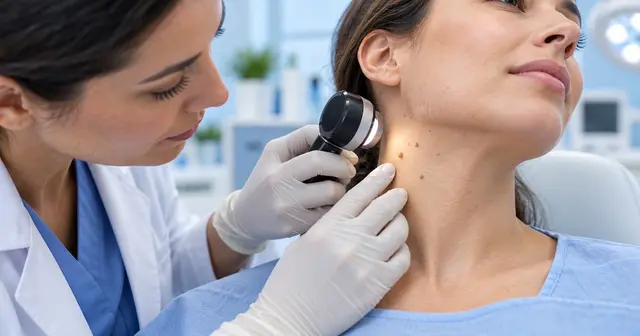
How Is Facial Redness Diagnosed Before V-Beam?
A dermatologist may examine:
- distribution of the redness;
- whether it is persistent or intermittent;
- visible blood vessels;
- acne lesions;
- post-acne marks;
- pigmentation;
- skin texture and scars;
- scaling;
- sensitivity;
- history of flushing;
- possible triggers;
- current skin-care products; and
- previous treatments.
For suspected rosacea, the doctor may also ask about burning, stinging, inflammatory bumps and eye symptoms.
Rosacea can sometimes resemble other conditions. The National Rosacea Society notes that the clinical assessment may need to distinguish it from conditions such as seborrheic dermatitis, steroid-related rosacea and lupus. Rosacea.org – National Rosacea Society
When Facial Redness May Not Be Rosacea
Not every red face is rosacea.
Medical evaluation is particularly important when redness is accompanied by:
- significant scaling;
- marked itching;
- a new rash;
- facial swelling;
- pain;
- blisters;
- crusting;
- photosensitivity;
- systemic symptoms;
- sudden unexplained onset; or
- symptoms involving the eyes.
Treating an undiagnosed inflammatory rash repeatedly with laser may delay the correct diagnosis.
Diagnosis first, treatment second.
What Happens During V-Beam Treatment?
Before treatment, the skin is assessed and the areas requiring treatment are identified.
Protective eyewear is used.
During treatment, laser pulses are delivered to the selected areas.
Patients commonly describe each pulse as a brief hot or snapping sensation.
The treatment parameters can be adjusted according to factors such as:
- indication;
- size and depth of visible vessels;
- degree of background redness;
- anatomical area;
- skin type; and
- desired treatment endpoint.
This is one reason treatment should not be reduced to simply counting laser shots.
Does V-Beam Treatment Hurt?
Discomfort varies.
Patients may feel a brief warm, stinging or snapping sensation with each pulse.
Sensitivity also varies by location and individual pain tolerance.
The face may feel warm or mildly tender immediately after treatment.
Patients should discuss pain-control options with their treating medical team if they are concerned about discomfort.
Will V-Beam Cause Bruising?
It can.
Pulsed-dye laser can be used with different treatment parameters and clinical endpoints.
Some treatments are performed with the intention of avoiding obvious purple discoloration, while other settings may result in purpura, which looks like temporary purple or bruise-like spots.
Whether this occurs depends on the treatment goal and parameters used.
Purple or red spots after laser treatment can take time to resolve. The American Academy of Dermatology notes that these temporary changes may persist for approximately one to two weeks in some patients. American Academy of Dermatology
Patients with an important social event, wedding, professional photography session or flight home should therefore tell the doctor before treatment.
What Will My Face Look Like Immediately After Treatment?
Temporary reactions can include:
- redness;
- warmth;
- mild swelling;
- tenderness;
- temporary darkening of treated vessels; and
- red or purple spots when treatment produces purpura.
Swelling may be more noticeable in some facial areas.
The appearance immediately after treatment does not represent the final result.
The treated vascular structures and surrounding inflammation require time to settle.
How Long Is the Recovery?
Recovery depends on treatment intensity and individual response.
A mild treatment may result mainly in temporary redness and swelling.
A treatment that produces purpura can be considerably more visible.
The American Academy of Dermatology notes that redness following laser/light treatment can persist temporarily and that red or purple spots may take around one to two weeks to resolve in some patients. American Academy of Dermatology
Patients should therefore discuss expected downtime before treatment, particularly when travelling.
Aftercare Following V-Beam
Aftercare should be individualized according to the treatment performed, but several principles are particularly important.
Keep skin care gentle
The skin may be temporarily sensitive.
Avoid aggressive scrubs, picking and unnecessary irritation while the skin is recovering.
Use moisturizer
A gentle moisturizer can help support the skin barrier when the skin feels dry or sensitive.
Rosacea-prone skin often benefits from a simple, non-irritating skin-care routine even outside the immediate recovery period. Rosacea.org – National Rosacea Society
Protect the skin from sunlight
Sun protection is particularly important after laser treatment.
The American Academy of Dermatology specifically emphasizes avoiding excessive sun exposure and protecting treated skin following laser or light therapy for rosacea. American Academy of Dermatology
Avoid unnecessary heat while the skin is reactive
Hot environments can worsen flushing in rosacea-prone skin.
Patients may be advised to temporarily limit activities that produce substantial heat or flushing depending on their post-treatment reaction.
Do not aggressively massage or rub the treated area
Allow temporary swelling and redness to settle naturally unless your treating clinician gives different instructions.
V-Beam Treatment During a Phuket Holiday
Treatment timing deserves extra consideration in Phuket.
Patients may have plans involving:
- beaches;
- island tours;
- swimming;
- snorkeling;
- scuba diving;
- outdoor sports;
- prolonged sun exposure; or
- travel shortly after treatment.
Strong sun exposure is particularly undesirable around vascular laser treatment, and rosacea itself is frequently aggravated by sunlight and heat. Sun protection is a standard part of rosacea management. American Academy of Dermatology
If your holiday involves several days on boats or beaches, discuss your itinerary before scheduling treatment.
Sometimes the most practical treatment date is after the sun-intensive portion of a holiday rather than immediately before it.
Can I Exercise After V-Beam?
Exercise can trigger flushing and heat.
Whether you need to modify exercise depends on the intensity of treatment and your skin’s reaction afterward.
If your face remains warm, swollen or highly reactive, strenuous exercise may temporarily make these symptoms more noticeable.
Follow the specific advice given after your treatment rather than applying a fixed rule to every patient.
When Will I See Results?
Vascular changes do not necessarily disappear immediately.
Temporary post-treatment redness or swelling may initially make it difficult to judge improvement.
The skin should be allowed to recover before the final response is assessed.
Visible vessels, diffuse redness and post-acne erythema may also respond differently.
This is why treatment should be evaluated over time rather than judging the result immediately after leaving the treatment room.
How Many V-Beam Sessions Are Needed?
There is no single number that applies to everyone.
The number of treatments can depend on:
- diagnosis;
- severity;
- number and size of vessels;
- diffuse versus localized redness;
- treatment parameters;
- skin type;
- response to previous sessions; and
- desired degree of improvement.
The AAD notes that vascular laser treatment for rosacea often involves more than one treatment, but outcomes vary substantially between patients and indications. American Academy of Dermatology
For post-acne erythema, studies have also used different treatment schedules, which is one reason there is no universal protocol. PubMed
A more medically appropriate approach is:
Treat → allow recovery → reassess → decide whether another session is worthwhile.
Are V-Beam Results Permanent?
Not necessarily.
A successfully treated visible vessel may remain reduced, but new vessels and new redness can develop over time.
This is especially relevant to rosacea because the underlying tendency toward facial vascular reactivity and inflammation remains.
The AAD notes that new blood vessels can develop even after previously treated vessels have cleared. American Academy of Dermatology
For post-acne redness, new marks can also appear if new inflammatory acne lesions continue to develop.
Long-term management therefore focuses on both improving existing redness and reducing the factors that create new redness.
Can Rosacea Return After V-Beam?
Yes.
V-Beam does not cure the underlying condition.
Rosacea is chronic and can fluctuate over time. Triggers and disease activity can lead to recurrent redness, flushing or new visible blood vessels.
Some patients may therefore require future treatment.
Long-term management may include:
appropriate skin care + sun protection + trigger management + medication when indicated + vascular treatment when appropriate
rather than relying on laser alone. Rosacea.org – National Rosacea Society
V-Beam Does Not Replace Rosacea Medication
This point is worth emphasizing.
Different rosacea features require different treatments.
For example, medications may be used for persistent redness, inflammatory papules and pustules, or other rosacea manifestations. Laser and light treatment can be added when vascular redness or visible vessels are important concerns. American Academy of Dermatology
A patient with both inflammation and visible vessels may therefore benefit from a combination strategy rather than choosing between “medicine or laser.”
What About Rosacea Skin Care?
Skin care is an important part of treatment.
Rosacea-prone skin is often sensitive and easily irritated.
A practical routine usually emphasizes:
- gentle cleansing;
- appropriate moisturizer;
- broad-spectrum sun protection;
- avoiding products that repeatedly sting or irritate the skin; and
- identifying individual triggers where possible.
Trigger management and gentle skin care are included in current rosacea management recommendations. Rosacea.org – National Rosacea Society
Laser treatment works better as part of an overall management plan than as an excuse to ignore the factors that repeatedly aggravate redness.
V-Beam vs IPL for Facial Redness
Both pulsed-dye laser and intense pulsed light can be used for vascular redness in selected patients.
They are not the same technology.
V-Beam uses a specific laser wavelength targeting vascular structures, while intense pulsed light produces a broader range of wavelengths.
Both are included among treatment options for persistent rosacea redness and visible vessels in appropriate patients. Rosacea.org – National Rosacea Society
The appropriate choice depends on:
- diagnosis;
- pattern of redness;
- vessel characteristics;
- skin type;
- other pigmentation concerns;
- treatment goals; and
- clinician assessment.
It is therefore more useful to ask which treatment fits the patient’s skin problem than to assume one device is universally superior.
V-Beam for Different Skin Tones
Skin tone matters in laser treatment.
Melanin—the pigment responsible for skin color—can interact with light-based treatments, and post-treatment pigment changes can occur.
The National Rosacea Society notes that redness can also look different in darker skin, sometimes appearing brown or purple rather than bright red. Rosacea.org – National Rosacea Society
A dermatologist should therefore assess skin type, the appearance of the vascular problem and the risk of pigmentary change before choosing treatment settings.
This is particularly relevant in Thailand, where patients have a wide range of skin tones.
Possible Side Effects of V-Beam
Temporary effects may include:
- redness;
- swelling;
- warmth;
- tenderness;
- itching;
- red or purple spots;
- temporary darkening of treated areas; and
- temporary pigment changes.
Less commonly, laser procedures can cause blistering, crusting, prolonged pigment changes or scarring.
The AAD emphasizes that outcomes and adverse effects depend partly on appropriate patient selection and the experience of the clinician performing treatment. American Academy of Dermatology
When Should You Contact a Doctor After Treatment?
Seek medical advice if you develop an unexpected or significant reaction such as:
- increasing pain rather than gradual improvement;
- marked blistering;
- an open wound;
- spreading redness;
- pus or other signs of infection;
- significant swelling that is worsening;
- persistent crusting; or
- another reaction that is substantially different from what you were advised to expect.
Do not assume that every reaction after laser treatment is normal simply because some redness is expected.
What to Expect During a Dermatology Consultation
A good consultation for facial redness should not begin with the assumption that every patient needs V-Beam.
The dermatologist first needs to determine:
What is causing the redness?
Assessment may include:
- location and pattern of redness;
- duration;
- persistent versus intermittent redness;
- flushing triggers;
- visible vessels;
- active acne;
- red post-acne marks;
- brown pigmentation;
- acne scarring;
- scaling or dermatitis;
- burning or sensitivity;
- eye symptoms;
- previous treatments;
- current medications;
- skin-care products; and
- previous reactions to laser or light treatment.
From there, the redness can be separated into components.
For example:
Rosacea with persistent redness and vessels → vascular treatment may help
Rosacea with inflammatory bumps → medication may also be necessary
Post-acne red marks → vascular treatment may be considered
Brown post-acne marks → pigment-focused management may be more appropriate
Indented acne scars → scar-directed treatment is required
This diagnostic separation is often more important than the laser itself.
V-Beam for Tourists and International Patients in Phuket
If you are visiting Phuket, tell the doctor about your travel schedule before treatment.
Important considerations include:
- when you are flying home;
- planned beach days;
- island trips;
- swimming or diving;
- outdoor activities;
- important social events;
- previous laser treatments; and
- medications or skin-care products you currently use.
If you are travelling soon after treatment, ask what degree of redness, swelling or bruising is realistic for the treatment being planned.
For patients who live abroad, photographs of previous reactions or records of previous laser settings can also be useful when available.
Frequently Asked Questions
Is V-Beam good for rosacea?
V-Beam may be useful when rosacea causes persistent vascular redness or visible facial blood vessels. It does not treat every rosacea symptom and is often used as one component of an overall treatment plan. American Academy of Dermatology
Can V-Beam remove facial redness completely?
Complete clearance cannot be guaranteed. The response depends on the cause and severity of redness, vessel characteristics, skin type and treatment parameters.
The appropriate goal is meaningful improvement rather than promising completely normal or permanently clear skin.
Does V-Beam help red acne marks?
Pulsed-dye laser has been studied for persistent post-acne erythema, and systematic reviews support a potential role for vascular laser and light-based treatments. However, there is no single established treatment protocol or universally best treatment for all patients. PubMed
Does V-Beam treat brown acne marks?
Not necessarily. Brown post-acne pigmentation is different from vascular redness and requires separate assessment.
Does V-Beam treat acne scars?
V-Beam may help vascular redness associated with acne, but depressed structural acne scars require different treatment approaches.
How many V-Beam treatments will I need?
There is no fixed number for every patient. Treatment depends on the diagnosis, severity, vascular pattern, response to previous treatment and treatment goals.
How long does V-Beam redness last?
Temporary redness and swelling are common. More visible red or purple spots can last longer, sometimes around one to two weeks. American Academy of Dermatology
Will V-Beam bruise my face?
It can. Some treatment parameters may produce temporary purple spots. Discuss acceptable downtime with your doctor before treatment.
Can I have V-Beam immediately before a beach holiday?
This may not be ideal because sun and heat can aggravate rosacea, and sun protection is particularly important after vascular laser treatment. Discuss your holiday schedule before booking the procedure. American Academy of Dermatology
Will rosacea return after laser treatment?
It can. Rosacea is chronic, and new redness or visible vessels may develop over time. Laser improves selected vascular features but does not eliminate the underlying tendency to rosacea. American Academy of Dermatology
Should I stop my rosacea medication before V-Beam?
Do not stop prescribed medication on your own. Tell the treating doctor about all medications and topical products you use so they can advise you appropriately.
Is V-Beam better than IPL?
Neither is universally better. Both can be useful for vascular redness in appropriately selected patients. The choice depends on the vascular pattern, skin type, other skin concerns and treatment goals. Rosacea.org – National Rosacea Society