
Translated by AI
Bright World with Bladeless LASIK by Khun Kulaya Duangmanee

Translated by AI
Real Experience of Undergoing ReLEx SMILE and Femto Lasik Procedures

Translated by AI
Bilateral muscle sparing hip replacement surgery
The syndrome of degenerative hip disease is increasingly causing suffering among patients nowadays. However, advancements in medical technology, along with the medical team's understanding of the disease, have resulted in more accurate and high-quality diagnosis and treatment of degenerative hip disease. These advancements can help patients return to their normal lives in a short period of time.

Translated by AI
A New Dimension of Movement: Innovative Hip Replacement Surgery Without Muscle Cutting
A renowned novelist shares their experience after deciding to undergo a new type of hip replacement surgery that does not involve cutting the muscles, known in English as Direct Anterior Approach Total Hip Replacement.

Patient’s experience who have undergone direct anterior approach cosmetic incision hip replacement
“During the past 4-5 years, whenever I moved or sat up, I had a hip pain down along my right leg. The more I walked or did any activities, the more painful it was. It was a hard and painful time in my life."

Emergency evacuation from Bhutan to Bangkok
In September 2017, Paul Croft, one of Australia’s most experienced Paralympians, embarked on what he hoped would be a care-free adventure in Bhutan.

Accident & Emergency at Royal Phnom Penh Hospital
In 2016, young Dutchwoman Josephine Rees completed an internship with Hope for Justice, an NGO in Phnom Penh that rescues young survivors of human trafficking.
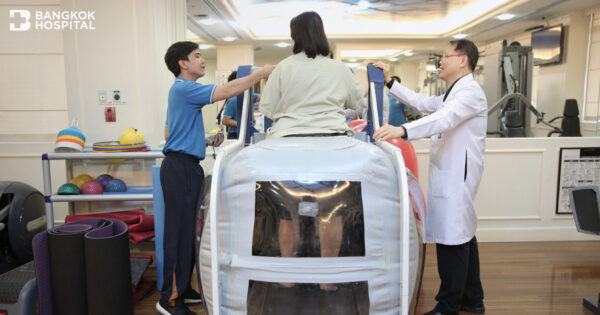
Minimal pain, faster recovery, walk again in 24 hours | effective pain management
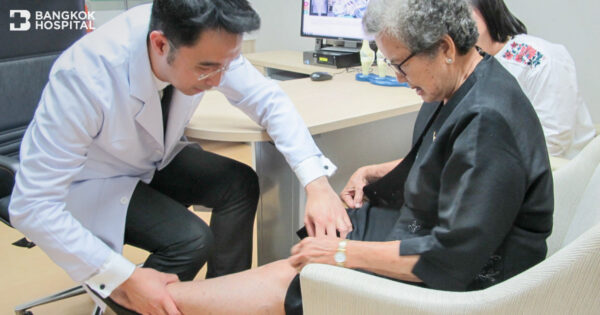
Minimal pain, faster recovery, walk again in 24 hours | don't worry
don't worry