
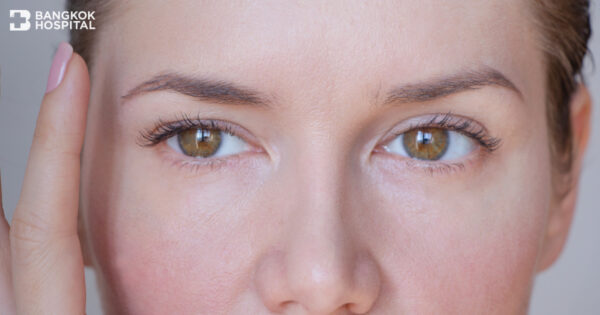
A wide range of eyelid problems can happen to anyone at any age. The severity degrees and symptoms widely vary among individuals. Eyelid problems occur on either one or both sides of the eyes. Without causing eye pain or other abnormal signs, eyelid problems might potentially affect vision or contribute to other issues. If any un usual symptom arises, immediate medical assistance provided by an expert ophthalmologist must be sought, allowing for accurate diagnosis and effective treatment conducted in a timely manner.
Eyelid problems
Common eyelid problems involve a drooping or falling of the upper eyelid. Depending on the severity, the eyelid may droop just a little which is often unnoticeable. If the eyelid severely droops, it can cover the pupil (the black dot at the center of the eye). Droopy or heavy eyelids can be broken down into two main categories: dermatochalasis (an excess upper eyelid skin that is overhanging) and ptosis defined as weakening of the upper eyelid muscle. Ptosis can sometimes limit or even completely block normal vision. More importantly, droopy eyelids can be cosmetically undesirable, giving people the appearance of a tired look.
Abnormal signs and symptoms that urge the patients to seek medical attention from an ophthalmologist are uneven eyelids when the upper eyelid creases do not line up evenly with each other and feeling heavy in the eyelids. In severe cases in which the pupil is fully covered, patients often experience impaired vision that largely interferes with daily life and activity.
Two main types of drooping eyelids:
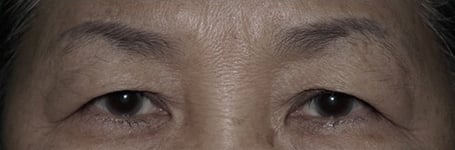
- Dermatochalasis: Dermatochalasis, sometimes referred to as baggy eyes, is redundancy and laxity of the eyelid skin and muscle. Dermatochalasis develops when the excess skin of the upper eyelid hangs down, over the front edge of the eyelid which remains in normal position. It is a common sign of aging often seen in middle-aged and elderly people. Besides an advancing age, sun exposure, frequent eye rubbing, eye infections and a loss of elasticity in the connective tissue are considered predisposing factors to dermatochalasis.
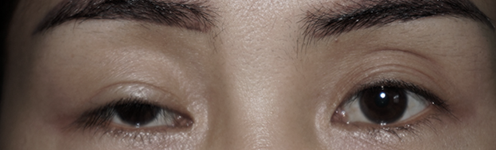
- Ptosis: Ptosis is when the upper eyelid droops over the eye. This condition can develop if the muscles or ligaments which normally raise the eyelid are weakened by certain causes, such as eye injuries or diseases. In some cases, the drooping is a result of damage to the nerves that control the eyelid muscles. Age-related dermatochalasis frequently presents along with upper eyelid ptosis.
Get to know dermatochalasis
Dermatochalasis, as normal aging change in the upper and lower lids, is characterized by loose skin and orbicularis muscle. Dermatochalasis develops when the excess skin of the upper eyelid hangs down, over the front edge of the eyelid. Apart from advancing age, other contributing factors to dermatochalasis are sun exposure, frequent eye rubbing, eye infections and some connective tissue disorders.
Signs and symptoms dermatochalasis
Redundant skin of the eyelid is often associated with fat herniation, descent of eyebrows and descent of mid-face. As the excess skin folds over itself and in some cases covers the eyelashes, loss of the skin crease on upper eyelid is often noticed. The excess skin can cause eye heaviness which sometimes obstructs the visual field, especially the superior visual field. In some cases, hanging skin of the eyelid can be manually pushed back, allowing a quick relief from heavy eyelid. The droopy skin can weigh down on the eyelash, causing discomfort when flowing tears or sweating.
Diagnosis of dermatochalasis
Dermatochalasis can be detected by a visual inspection of the eye and eyelid. Besides droopy upper eyelid, prolapsed orbital fat might exhibit. To rule out other diseases related to nervous system and dermatologic conditions, a thorough eye examination by an ophthalmologist is necessary.
Treatment of dermatochalasis
- Mild to moderate degree: If the patients only experience mild symptoms such as uneven eyelids, using temporary transparent eyelid tape can be applied to the upper eyelids to re-create the eyelid crease, enabling a more natural appearance.
- Severe degree: If the excess skin severely hangs down over the front edge of the eyelid and causes visual obstruction causing daily life disruption, blepharoplasty – a surgical approach to remove excess fat and skin while tightening eyelid muscles and tissue is usually necessary. Nevertheless, surgery can be also conducted if requested for cosmetic reasons. Using different surgical techniques, excessive redundant skin folds can be accessed through skin incisions on the natural folds of the eyelid, in the area above the eyebrow or below the eyebrow. Preferred technique for each individual is defined by an expert ophthalmologist, hinging upon the location and severity of drooping skin.
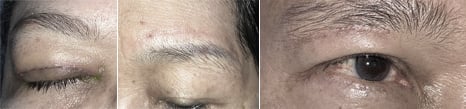
Get to know ptosis
Ptosis develops when the upper eyelid droops over the eye. Eyelid drooping can be caused by various reasons. As congenital abnormality, some babies are born with ptosis in one or both eyelids. Ptosis can occur later in life if the muscles or ligaments that usually raise the eyelid are weakened by injury or diseases. Potential causes of acquired ptosis often include muscular problems, nerve damage in the eye muscles, certain neurological conditions causing nerve or neurotransmitter malfunctions, eye trauma and eyelid tumor.

Congenital ptosis
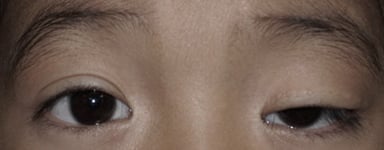
Congenital ptosis is characterized by the presence of a droopy eyelid or eyelids since birth. This can be caused by problems with the muscle that lifts the eyelid, called the levator muscle. Congenital maldevelopment of the levator muscle characterized by fibrosis and deficiency of striated muscle fibers results in congenital ptosis. Other possible causes include the abnormal function of nerves and certain genetic conditions. Nevertheless, some cases are idiopathic.
- Symptoms: unilateral or bilateral eyelid drooping, inability to fully open the eyes and uneven eyelids. Sagging of the lids hide the fold-line from appearing. In severe cases, crossed eye (strabismus) and lazy eye (amblyopia) might also develop.
- Diagnosis: Through a visual inspection, noticeable sign for congenital ptosis is when the upper eyelid creases do not line up evenly with each other. Besides having an impaired function of the levator muscle, kids with ptosis may tip their head back, lift up their chin or raise their eyebrows to see better.
- Treatment: In most cases, ophthalmologists recommend surgery to treat ptosis in children. When deciding the best treatment option to treat ptosis in children, the consideration is usually made upon the strength of the eyelid’s muscle, the child’s age and severity whether one or both eyelids are involved. Aiming at improving vision, surgery is intended to either tighten the levator muscle, in case that the muscle is still functioning well, or attach the eyelid to forehead muscles to assist in eyelid elevation through silicone rod or tendon graft under the skin. In severe cases when ptosis impedes vision, surgery should be performed in a timely manner in order to prevent lazy eye.
Acquired ptosis caused by the dislocation of the levator muscle
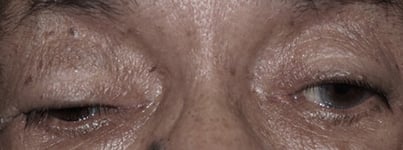
Most ptosis happens with ageing. As a person ages, the skin stretches and the levator muscle becomes dislocated and weakened. Apart from the natural aging process, predisposing factors for the levator muscle weakness are previous eyelid injury, frequent or excessive eye rubbing and prolonged contact lens wear.
- Symptoms: Difficulty closing the eye often accompanied with the feeling of heavy eyelid or eye fatigue which gradually progresses.
- Diagnosis: Through a visual inspection, noticeable signs are upper eyelid drooping or hanging down, multiple folds or an elevated eyelid crease while no abnormal function of the levator muscle is detected.
- Treatment: The most appropriate treatment is considered primarily based on the cause of acquired ptosis. Eye rubbing and other eyelid irritation must be avoided. If applicable, surgery to bring dislocated muscle back to its proper position might be recommended.
Traumatic ptosis
Traumatic ptosis is caused by an injury to the eyelid either due to an accident or other eye trauma. As a result, an eye injury compromises the levator muscle and damages levator tendons with scar formation in the eyelid.
- Symptoms: Inability to open the eyes when the upper lid height is decreased after an eye injury or traumatic event.
- Diagnosis: Through a visual inspection, visible wound in the upper eyelid is present often along with injured or torn levator muscle and tendon, resulting in an impaired retraction function of the levator muscle.
- Treatment: In most cases, surgery can be performed to repair injured levator muscle and/or tendon, allowing restored retraction function of the levator muscle while correcting eyelid symmetry. In severe cases that result in significant damages to the surrounding nerves, patients may require a full recovery which normally takes 6 months before considering surgical intervention.
Neurogenic ptosis
Neurogenic ptosis occurs when the nerve pathway that controls movement of the eyelid muscles becomes impaired. Decreased innervation to the muscles of the upper eyelid can stem from a number of potential etiologies, such as certain underlying diseases, tumor that compresses the affected nerve and neurotransmitter abnormalities. The symptoms of ptosis caused by neurotransmitter disorders are aggravated after prolonged use of the eye and alleviated after resting.
- Diagnosis: Impaired function of the levator muscle often accompanied by eye fatigue, crossed eye and double vision (diplopia) and problems with eye movement.
- Treatment: Causes of neurogenic ptosis must be addressed and corrected accordingly. These include keeping underlying conditions under control, surgical removal of tumor affecting the nerve and using certain medications to balance or regulate abnormal neurotransmitters. If eyelid drooping persists, patients may require a full recovery of damaged nerves which normally takes 6 months before considering surgical intervention.
Mechanical ptosis caused by lid of orbital tumors
Rarely, tumors in the upper eyelid or orbital can affect the eyelid muscle, causing ptosis. Surgical treatment appears to be the most appropriate to remove tumors, enabling restoration of the levator muscle and surrounding nerve and tendon.
A number of potential causative factors contribute to ptosis and dermatochalasis. When the upper eyelid droops downward, it might result in limited normal vision and raise cosmetic concerns. Even though eyelid drooping is unpreventable, regular eye examination conducted by an expert ophthalmologist substantially helps to detect the abnormalities at the earliest stages, allowing timely and effective treatment before the condition progresses.