

Injury while playing sports can occur any time, especially while playing volleyball. Whether you are playing recreationally or professionally, anyone can get hurt. So, it is important to know the most common types of injury from playing volleyball to try to prevent them from happening and handle them efficiently should the unthinkable occurs.
Sports Injuries
There are 3 types of sports-related injuries:
- Sports injuries can be divided into how long they last.
- Acute injury that heals within 3 weeks.
- Semi-acute injury that lasts more than 3 weeks and up to 3 months.
- Chronic injury that lasts 3 months or longer.
- Injuries due to trauma or macro trauma, such as sprained ankle, displaced joint, or broken bone.
- Chronic injuries. These micro traumata are caused by repeated injuries that are minor or from over usage of the muscles. They are considered to be chronic.
Types of Volleyball Injuries
An article published in Timisoara Physical Education and Rehabilitation Journal collected volleyball injuries from 1984 – 2015 and classified them into 5 most common injuries:
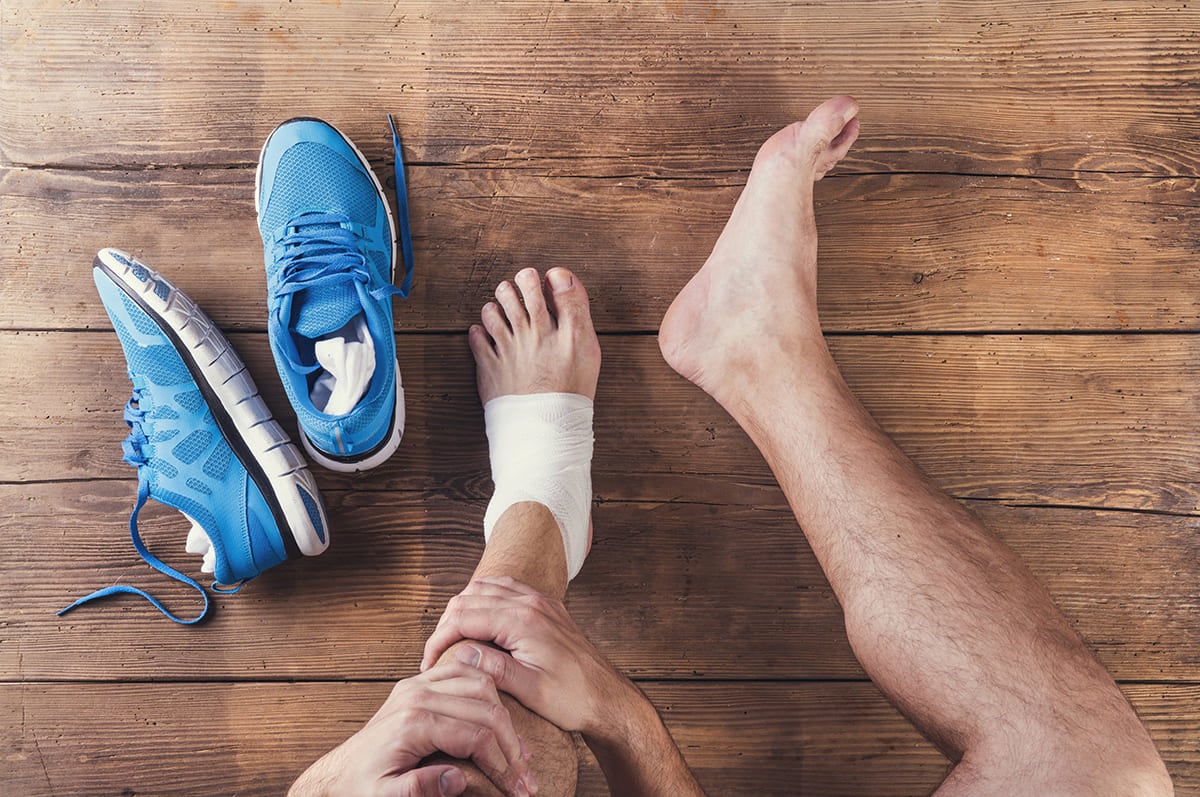
- Ankle sprain is the most common injury among volleyball players, accounting for 32% of all injuries. Most will occur during spiking or blocking in front of the net when players jump up and land on an opponent’s foot who overstepped the line or a teammate’s foot causing an ankle sprain.
- Knee sprain and strain occurs in 17% of cases. It is a chronic inflammation of the kneecap and ligaments. Studies of national team volleyball players showed that these athletes who have played for at least 10 years have jumped 2 million times, averaging 500 times per day! So it is not surprising that they will suffer leg injuries.
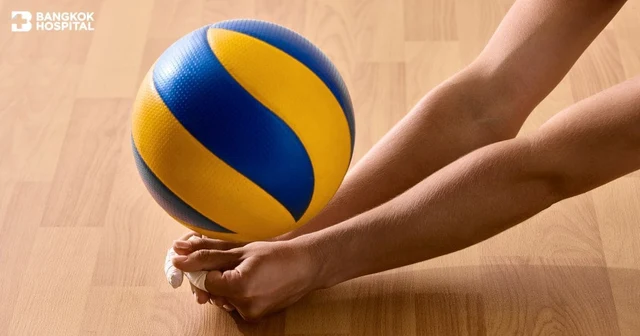
- Fingers joint sprain is found in 13% of cases from jumping up to catch ball spikes that are coming in at 100 kmph, including receiving balls from jump serves. If the fingers are not strong enough, they can become sprained or some may have dislocated fingers or torn ligaments. This type of injury is more common among new volleyball players more than professional players who already learned how to protect their fingers by using sports tapes and build up strengths in their finger muscles and ligaments so that they can handle incoming balls at over 100 kmph!
- Lower back pain affects 12% of the cases and can cause spine fractures. Excessive spine movement, especially in setters on the volleyball team can contribute to the pain due to the repeated motion to set up the ball for the spikers. Both setters and spikers need to jump and arch repeatedly, thereby displacing the spine or suffering from trauma should they fall down.
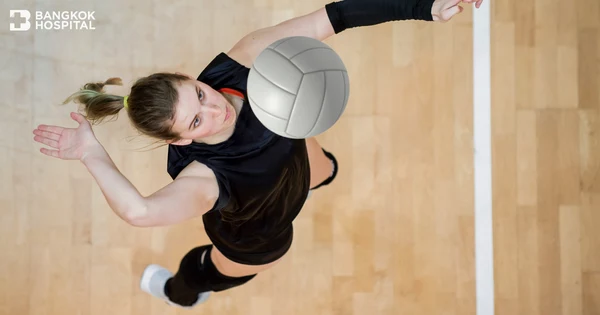
- Shoulder strain and sprain round up the top 5 by accounting for 12% of the cases because volleyball requires the use of the arm and hand to spike the ball. In one competitive season which lasts around 2 – 3 months, spikers will use either their left or right arm to repeat the motion 40,000 times! If they are not strong enough or if the ligaments around the shoulder is injured and they still need to spike, it may lead to injury or tear, and ultimately instability of the shoulder joint.
Treating Volleyball Injuries
Volleyball injuries can be treated based on the degree of injuries:
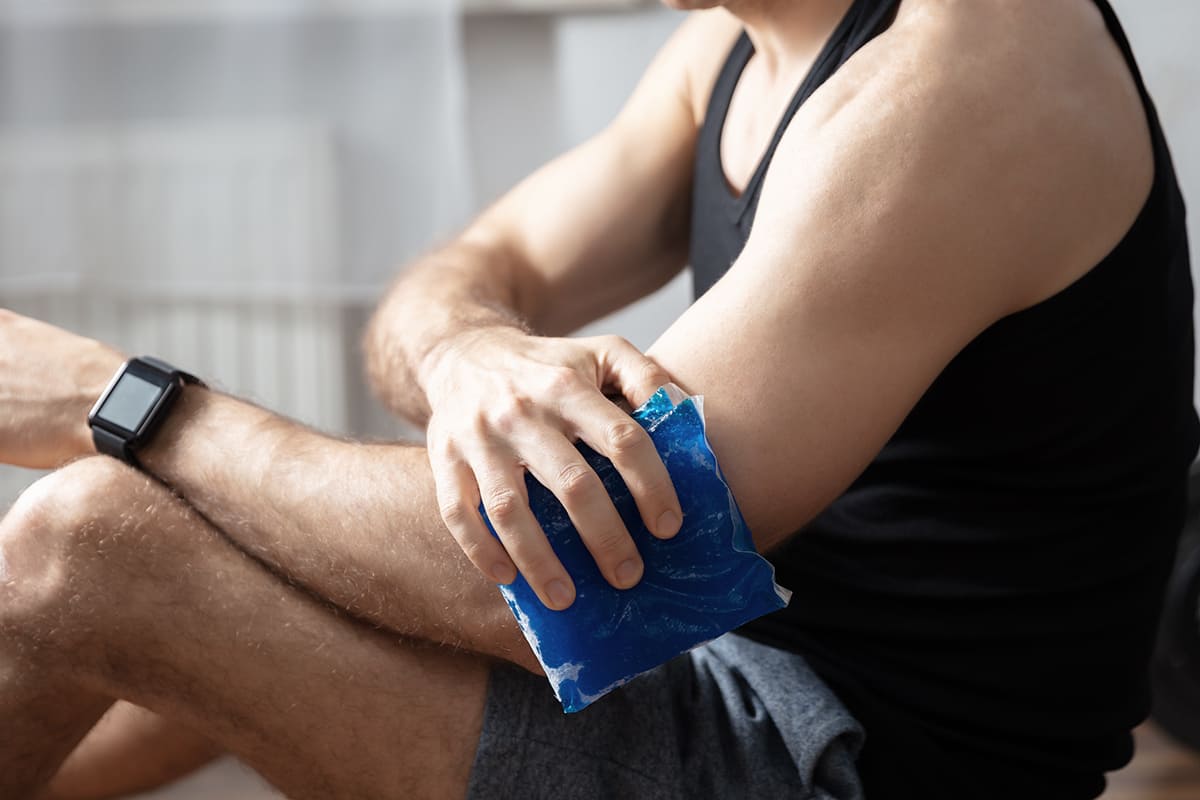
- Mild degree only requires cold compression, rest and medication.
- Moderate degree needs physical therapy and rest.
- Severe degree when there is a tear or inability to play may require additional diagnostic via ultrasounds to find the root cause. MRI may be necessary for more in-depth details and precision in diagnosis. Surgery may be considered for treatment.
First Aid for Injured Players
Frist aid for an injured recreational player can follow PRICE:
- P (Protection) against reinjury, such as a cast or a cane.
- R (Rest) the injured area so it will not get more injured.
- I (Ice) compression can reduce swelling, inflammation, and muscle tension
- C (Compression) by using elastic bandages to prevent swelling
- E (Elevation) keeps the injured area higher than the heart to reduce swelling
First Aid for Professional Athletes
First aid for injured professional athletes should consider the new concept known as POLICE:
- P (Protection) to the injured area so that it will not get worse.
- O/L (Optimal Loading). Consider mobilizing or putting some light weight on the injured area to stimulate tissue repair and rehabilitation, but not so much that it will get reinjured. This requires consultation with a sports medicine specialist, orthopedist, rehabilitation medicine specialist, and physical therapist so that they can plan a comprehensive treatment program. Medications to reduce pain and inflammation may also be required as well as laser and electromagnet treatments to induce quickest recovery.
- I (Ice) compression can reduce swelling and inflammation. However, prevent ice burn by not putting ice bags directly on the skin.
- C (Compression) by using elastic bandages to reduce swelling.
- E (Elevation) keeps the injured area higher than the heart to reduce swelling.
No matter what, it is recommended that an annual physical examination, warming up before and after playing will help prevent sports injuries. If there is any injury, please consult a doctor as soon as possible to get proper treatment.