


Care for Premature Babies
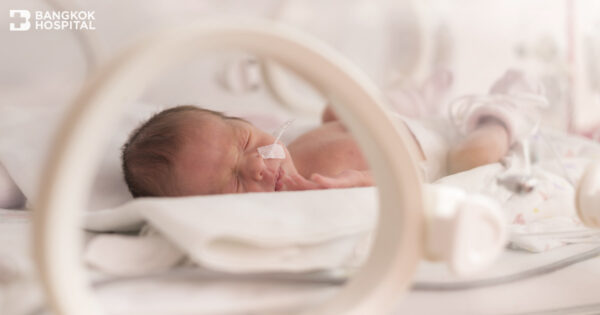
Caring for premature babies requires a team of medical and nursing staff who are specialists in neonatology. This is because these babies are not only small and light in weight, but their organs are also underdeveloped and do not function as well as those of full-term babies. Therefore, caregivers must understand the problems that may arise. The more premature the baby is, the more problems may be encountered.
Problems of Premature Babies
- Respiratory Issues
The first major problem for premature babies is respiratory issues, as the lungs of premature babies do not expand well due to the lack of surfactant, which coats the alveoli. This causes the alveoli to collapse, poor gas exchange, and inability to carry oxygen into the bloodstream, leading to a lack of oxygen which affects the function of other organs, especially the brain.
Therefore, these babies receive care from specialists from the moment of birth. Before these babies are born, equipment such as warmers, ventilators, and resuscitation devices must be prepared. Once the baby is born, they must be kept warm immediately, as premature babies have thin skin and less fat, losing heat quickly. Without proper care, the baby can become cold with low body temperature, which can lead to further problems. Then, the baby’s breathing will be assessed. If the baby’s breathing is inadequate, immediate breathing support will be provided to expand the lungs to allow air into the lungs. After that, if the baby cannot breathe sufficiently on their own, a ventilator will be used. Some may need surfactant administered directly into the lungs to help with lung expansion.


- Brain
Another critical organ that will affect the baby’s long-term developmental progress is the brain. The brain of a premature baby is quite delicate; the blood vessels in the brain are fragile and prone to rupture, especially in babies weighing less than 1,500 grams at birth. These babies need to be cared for gently with minimal disturbance. Their vital signs and oxygen are continuously monitored using monitors to maintain normal levels. These babies require brain ultrasound scans to check for any bleeding in the cerebral ventricles.
- Nutrition
Another important issue is how to ensure that the baby receives enough nutrients for growth. The digestive system of premature babies cannot digest and absorb breast milk as well as full-term babies. Feeding preterm babies must be done cautiously, starting with small amounts and gradually increasing. If fed too quickly, it can lead to necrotizing enterocolitis. In the early stages, nutrients might also be provided through IV. Mothers can help by expressing breast milk for the baby since it is easier to digest and contains immune-boosting properties, which is beneficial as premature babies are more prone to infections, which can be severe. Therefore, it is crucial to prevent infections by washing hands before and after touching the baby every time.
- Vision
Premature babies may have vision problems as the retina is not fully developed. Therefore, they must be examined by an ophthalmologist.

Generally, premature babies must stay in an incubator to maintain their temperature until they weigh about 1,800 grams before they can be exposed to room temperature. They can go home when they weigh about 2 kilograms, which depends on gestational age and birth weight as well as complications that occurred after birth. Before going home, every baby will be screened for hearing.
Long-term issues regarding growth and brain development need to be monitored periodically along with a pediatric developmental specialist, who will provide advice for stimulating and promoting development to the mother as well.
Caring for premature babies is not just about survival but also ensuring they grow and develop as normally as possible without becoming a burden to the family and society. This requires a team ready to care for these babies immediately after birth, around the clock, to provide assistance, solve problems promptly, and prevent complications.