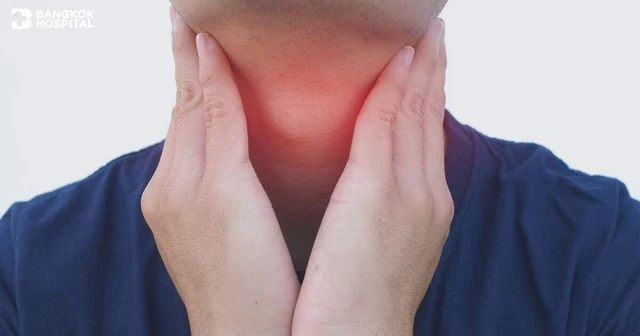



Thyroid testing is very important for indicating abnormalities of the thyroid gland, especially thyroid ultrasound (Thyroid Ultrasound) and thyroid FNA (Fine Needle Aspiration), which help assess risk and clearly diagnose thyroid nodules.
Why thyroid gland examination is important
Tumors or nodules in the thyroid gland are divided into 2 main types based on cell characteristics and severity, as follows:
- Benign tumors (Benign Thyroid Nodules) are common non-cancerous lumps, found most frequently in about 90 – 95% of people with thyroid nodules.
- Malignant tumors (Malignant Thyroid Nodules / Thyroid Cancer) are thyroid cancer, found in a small proportion (about 5-10% of all nodules), classified by the type of cells found.
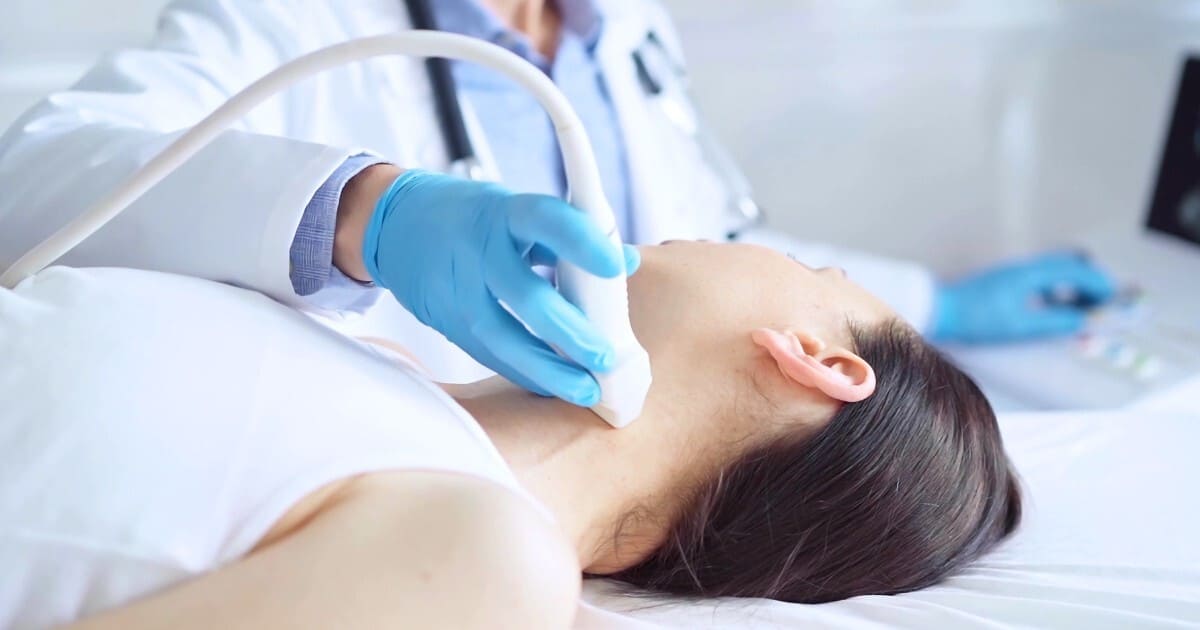
What is thyroid ultrasound
Thyroid ultrasound (Thyroid Ultrasound) is an examination of the thyroid gland using high-frequency sound waves to produce detailed images of the thyroid gland and tissues in the neck area, allowing visualization of the size, shape, and internal structure. It helps clearly detect lumps, cysts, or calcifications. It is painless and harmless to the body, enabling doctors to assess risk and make an accurate diagnosis.
What does thyroid ultrasound check
- Nodule characteristics
- Nodule size
- Nodule location
- Number of nodules
- Cyst or solid mass
- Nodules suspicious for cancer
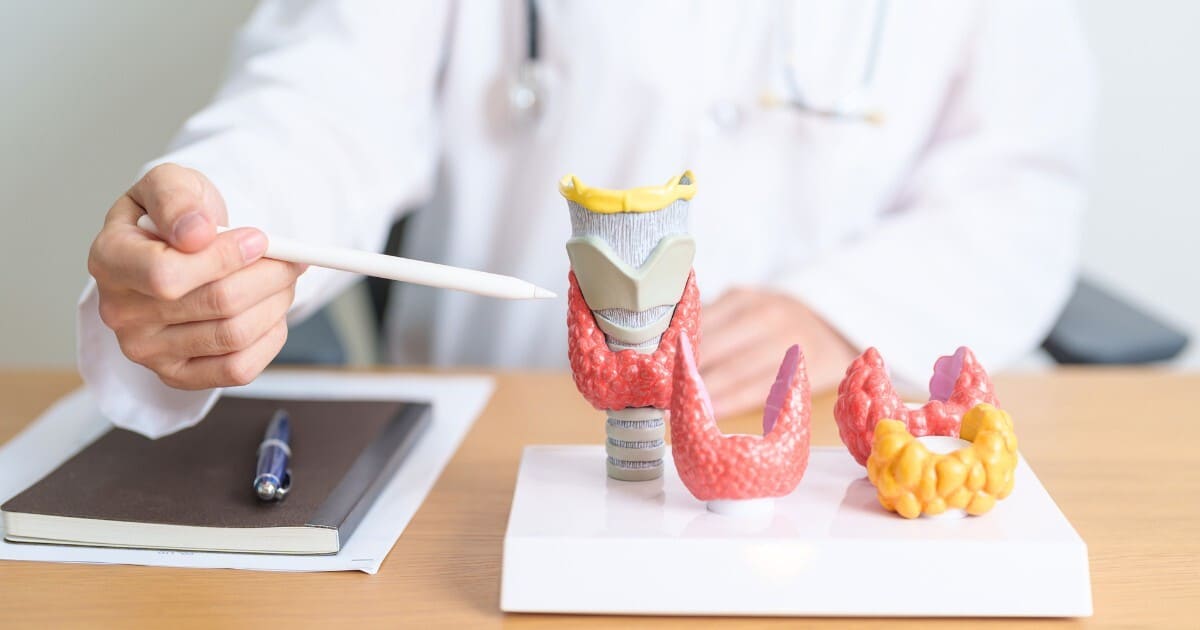
Who is thyroid ultrasound suitable for
- People who can feel a lump in the neck, a protruding lump, or an enlarged neck
- People with thyroid abnormalities, or those who had neck radiation in childhood
- People with a family history of thyroid disease or thyroid cancer
- People with chronic hoarseness, difficulty swallowing, or breathing difficulty without a known cause
- People found to have abnormally high or low thyroid hormone levels
- People who need follow-up monitoring of thyroid nodules
Advantages of thyroid ultrasound
- Detailed detection of abnormalities in thyroid nodules
- Painless
- Takes little time
- Can be repeated
- No need for local anesthesia injection or blood draw before the test
- Does not use harmful radiation
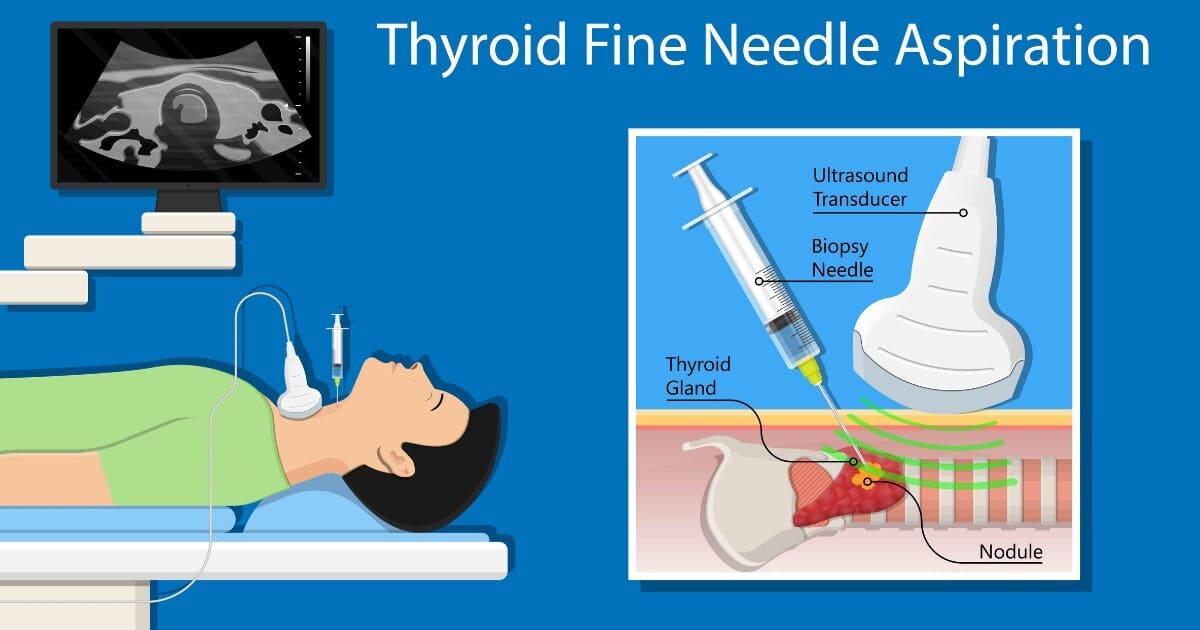
What is thyroid FNA (Fine Needle Aspiration)
Thyroid FNA (Fine Needle Aspiration) is a biopsy using a small needle to aspirate cells from a thyroid nodule. The cells are then examined under a microscope to diagnose whether it is a normal nodule or a nodule at risk of cancer. It takes little time and causes minimal pain. Doctors often order it together with thyroid ultrasound to make the diagnosis clearer
What does thyroid FNA check
- Thyroid nodules
- Thyroid cancer
Who is thyroid FNA suitable for
- People whose thyroid nodule grows abnormally fast
- People with thyroid nodules suspicious on ultrasound
- People whose thyroid nodule ultrasound results indicate risk, such as an irregular nodule or internal calcifications
- People with a family history of thyroid disease or thyroid cancer
- People who have had radiation to the neck area
Advantages of thyroid FNA
- Differentiates between a common thyroid nodule and thyroid cancer
- Minimal pain with a small needle mark
- Takes little time
- Helps plan treatment and reduces unnecessary surgery

Do people with thyroid nodules need an FNA test
People with thyroid nodules do not always need a thyroid FNA (Fine Needle Aspiration); it depends on assessment by a specialist physician, considering the nodule’s characteristics, size, changes, associated symptoms, and family history. If the risk is low, follow-up monitoring is possible because some nodules may change over time
Does thyroid nodule evaluation require both tests
Evaluation of thyroid nodules primarily depends on the severity assessment by a specialist. Thyroid ultrasound (Thyroid Ultrasound) and thyroid FNA (Fine Needle Aspiration) have different roles; performing them together helps doctors make a clearer diagnosis and choose an appropriate care and treatment approach for each patient.
Thyroid ultrasound VS thyroid FNA: What is the difference
|
Topic |
Thyroid ultrasound (Thyroid Ultrasound) |
Thyroid FNA (Fine Needle Aspiration) |
|
Purpose |
Performed when a neck lump is palpable or when the thyroid gland is abnormal; assesses characteristics, size, number, location, cancer risk, and is used for follow-up monitoring |
Performed when indicated for an abnormal thyroid nodule or suspected cancer risk, depending on a specialist’s assessment |
|
Test method |
Uses high-frequency sound waves to obtain detailed images of the thyroid gland and tissues in the neck area |
Uses a small needle to biopsy thyroid tissue for microscopic diagnosis; often performed together with thyroid ultrasound |
|
Diagnostic assessment |
Assesses nodule shape, nodule size, density, calcifications, blood flow, and neck lymph nodes, but this method cannot confirm cancer |
Assesses cellular characteristics within the nodule to classify cancer risk; provides a clearer diagnosis than ultrasound alone |
|
Advantages |
Detects abnormalities in thyroid nodules; painless; no radiation; no wounds; can be repeated to monitor nodules |
Differentiates thyroid cancer nodules; minimal pain; small needle mark; supports treatment planning and reduces unnecessary surgery |
|
Limitations |
Cannot confirm cell type or diagnose cancer |
Can diagnose thyroid cancer, but in some cases the cell sample may be insufficient and may require repeat testing |
Which conditions can be evaluated by thyroid ultrasound together with thyroid FNA
- Benign thyroid nodule (Benign Thyroid Nodule)
- Thyroid cyst (Thyroid Cyst)
- Thyroiditis (Thyroiditis)
- Thyroid nodules (Thyroid Nodules)
- Certain types of thyroid cancer (Thyroid Cancer)
A hospital specialized in thyroid disease care and treatment
THYROID COMPLETE CARE, Diabetes, Thyroid and Endocrine Center, Bangkok Hospital provides comprehensive thyroid care with a highly experienced multidisciplinary thyroid team, modern technology, and a multidisciplinary team ready to plan care and provide close consultation—from diagnosis with thyroid ultrasound (Thyroid Ultrasound) and thyroid FNA (Fine Needle Aspiration), to treatment planning and long-term follow-up—helping patients regain good quality of life and return to living confidently again
Physician specialized in thyroid disease care and treatment
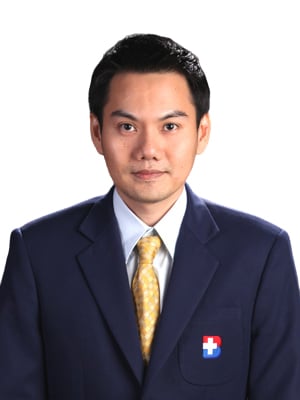
Dr. Natthanon Maneesathien Endocrinology and Metabolism Physician, Bangkok Hospital
You can click here to make an appointment yourself