


A hernia (Hernia) is a condition in which tissue or an internal organ—most commonly the intestines—moves out of its original position through a gap or weakened muscle wall. If left untreated without proper care, it may lead to life-threatening complications. Understanding the symptoms and treatment is therefore important so that patients can undergo hernia surgery in a timely manner, which helps reduce risks and enables a faster return to normal life.
What symptoms are warning signs that you needhernia surgery
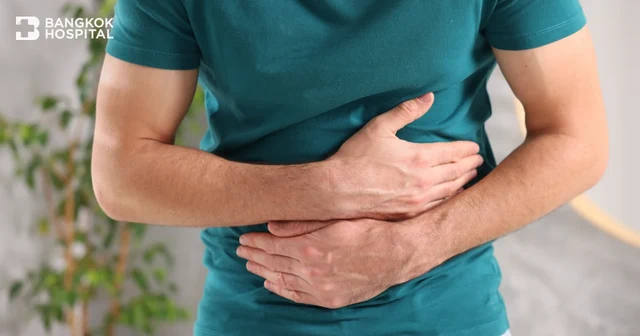
Most patients initially notice a bulge that can be pushed back in. However, if you have the following symptoms, you should consult a doctor to plan for hernia surgery.
- A bulge in the groin, scrotum, or abdomen that becomes more noticeable when coughing, sneezing, or lifting heavy objects
- A feeling of heaviness or pain at the bulge, especially during body movement
- Emergency symptoms: The bulge is severely painful, hard, cannot be pushed back in, with nausea, vomiting, and inability to pass stool—signs of bowel obstruction or loss of blood supply
How many methods ofhernia surgery are there?

A hernia cannot resolve on its own with medication. Doctors usually recommend surgery to close the defect and strengthen the abdominal wall to prevent recurrence.
Open hernia repair (Open Hernia Repair)
Open hernia repair is a standard technique in which the surgeon makes an incision in the skin over the hernia site, about 6–8 centimeters long, to return the organ to its place and suture-repair the muscle wall. Mesh is often used to reinforce the area and reduce the chance of recurrence.
With this method, patients may feel more wound pain because the incision goes through broader areas of muscle and tissue compared with minimally invasive surgery. Hospital recovery typically takes about 2–3 days, and overall recovery until returning to light work is about 1–2 weeks.
Laparoscopic hernia repair (Laparoscopic Hernia Repair)
This surgical technique allows the doctor to repair the hernia through three small openings in the abdomen, about 5–10 millimeters each. The incisions are therefore very small and spread across multiple sites, resulting in less pain and a lower risk of infection than the traditional approach.
A key advantage is much faster recovery. Most patients stay in the hospital only 1–2 days and can return to normal life or non-strenuous work within 1 week after surgery.
Robot-assisted hernia surgery (Da Vinci Xi)
This is Da Vinci robotic-assisted technology that helps surgeons perform hernia surgery in delicate and complex areas using high-resolution 3D imaging. The incisions are only 8 millimeters, with 3–4 sites, helping reduce tissue injury and blood loss compared with other methods.
Patients experience noticeably less pain and recover faster, typically staying in the hospital only 1 day and returning to normal life sooner than with traditional surgery, under the care of an expert surgical team.
How many days is the recovery after hernia surgery?

A common concern is: how many days of recovery after hernia surgery are needed to return to work as usual? Recovery time varies depending on the technique the surgeon chooses to best match each patient’s condition.
- Minimally invasive laparoscopic surgery or robot-assisted surgery: Patients usually stay in the hospital only 1–2 days and can return to work that does not require much physical exertion within 1 week because the incisions are very small and tissue trauma is minimal.
- Open hernia surgery: Patients may need about 2–3 days of hospital recovery and should rest at home for an additional 1–2 weeks before returning to light work, because the incision is larger than in laparoscopic surgery and may cause more tightness or pain in the early period.
How to take care of yourself afterhernia surgery
To achieve good results from hernia surgery and ensure complete wound healing, patients should strictly follow the doctor’s instructions during recovery as follows:
- During the first 4–6 weeks, avoid lifting heavy objects or exercising that requires intense abdominal muscle straining, so that tissues and the mesh can integrate well with the body and reduce the risk of recurrence.
- Avoid getting the surgical wound wet for the period specified by the doctor to prevent inflammation or infection at the wound site.
- Eat a high-fiber diet and drink enough clean water to prevent constipation, which can cause straining during bowel movements and affect the surgical wound.
- If abnormal symptoms occur, such as wound swelling/redness, fever, or severe abdominal pain, return to see a doctor for evaluation immediately.
- Avoid smoking while the body is repairing itself, because substances in cigarettes slow wound healing and may trigger coughing, which can negatively affect the hernia surgery wound.
Preparation and self-care to reduce the risk of hernia
Behavior adjustments both before and after hernia surgery play a major role in reducing risks and helping achieve good long-term treatment outcomes.
- Maintain an appropriate weight: To reduce intra-abdominal pressure, a main cause of weakened abdominal walls and easier hernia formation.
- Eat a high-fiber diet: Focus on vegetables and fruits and drink enough clean water to prevent constipation. This helps reduce abdominal straining during bowel movements that may affect the wound after hernia surgery
- Quit smoking completely: Because nicotine slows wound healing and is a major cause of chronic cough; the impact from coughing sharply increases intra-abdominal pressure and can increase the risk of recurrence.
- Avoid lifting heavy objects: For those at risk or after treatment, avoid activities that require excessive abdominal straining.
- Treat underlying conditions that increase intra-abdominal pressure: Such as enlarged prostate requiring straining to urinate, or chronic obstructive pulmonary disease; consult a doctor for close symptom control.
A hospital specialized in hernia surgery
The Surgery Center at Bangkok Hospital is ready to care for hernia patients with a team of expert surgeons and a multidisciplinary team under international JCI standards of care. We provide a systematic treatment experience from diagnosis through robotic-assisted surgery programs (da Vinci Xi), a technology that enables surgeons to operate in delicate and complex areas even more effectively.
The robotic arms operate under the surgeon’s control at all times, resulting in smaller incisions, less pain, and less blood loss. We have specialist physicians working together with a geriatric team for older patients to plan individualized treatment, ensuring that patients can return to normal life again within 5 days.
Article summary
Regularly observing abnormalities in your body is important. If you notice a bulge or aching/heaviness in the abdomen or groin, you should not leave it until it becomes an emergency. Seeing a doctor early to plan hernia surgery from the initial stage helps reduce the risk of incarcerated bowel or loss of blood supply. Today, medical technology has advanced greatly, making hernia repair less concerning than many think. Especially when choosing treatment appropriate for your physical condition, it can help you move confidently again.
For care at the Surgery Center, Bangkok Hospital, we are ready to provide services with international safety standards. Our expert surgeons will assess the most appropriate individualized treatment approach, whether open hernia repair or minimally invasive laparoscopic surgery, including robotic-assisted surgery technology that helps patients experience less pain, recover faster, and return to normal life with quality.
- Find a doctor: https://www.bangkokhospital.com/th/bangkok/doctor
- Make an appointment: https://www.bangkokhospital.com/th/bangkok/appointment/step1
- Contact us: https://www.bangkokhospital.com/th/bangkok/contact
Frequently asked questions about hernia (FAQ)
1. If a hernia is not operated on, is it dangerous?
If left untreated, the hernia may enlarge and increase the risk of an incarcerated hernia, in which the intestines are trapped and lose blood supply, causing intestinal necrosis and bloodstream infection.
2. After hernia surgery, how many days of recovery before you can exercise?
In general, you can walk lightly immediately after surgery. However, for strenuous exercise or weight lifting, you should consult your doctor, and it usually can be started about 6–8 weeks after hernia surgery.
3. Who is open hernia repair suitable for?
Open hernia repair is suitable for patients with very large hernias, or those with limitations regarding general anesthesia that make laparoscopic surgery unsuitable. An expert doctor will assess the most appropriate method for each patient.
4. After hernia surgery, is there a chance it can recur?
Recurrence is possible but relatively uncommon. Especially when mesh reinforcement is used and the doctor’s instructions are followed strictly, the chance of recurrence can be greatly reduced.
5. Is hernia surgery very painful?
Today, minimally invasive techniques and robot-assisted surgery, along with pain management programs, help patients feel less pain and get up and walk sooner after treatment.