


Endometrial polyps (Endometrial Polyp) are a major cause of abnormal vaginal bleeding in women or infertility. Treatment with hysteroscopic surgery therefore plays an important role in removing the tissue while causing less impact on surrounding tissue compared with traditional surgery. Early diagnostic evaluation to appropriately plan hysteroscopic endometrial polypectomy helps reduce concerns about gynecologic health and enables patients to return to normal daily life.
What is an endometrial polyp and is it dangerous?
An endometrial polyp (Endometrial Polyp) is endometrial tissue that grows abnormally into a protruding mass within the uterine cavity. There may be a single polyp or multiple polyps. Although in most cases this type of polyp is benign (non-cancerous),
if left untreated, the mass may enlarge and affect the reproductive system and daily life. Therefore, early diagnostic evaluation is important to assess risk and plan appropriate treatment.
Warning signs indicating you should see a doctor to check for polyps
If you have the following physical abnormalities, they may be signs of an endometrial polyp, and you should undergo diagnostic evaluation to consider treatment options or prepare for endometrial polyp removal surgery.
- Menstrual irregularities: Such as heavy periods (needing to change sanitary pads more often than usual) or menstruation lasting longer than 7 days.
- Abnormal bleeding: Spotting outside of your period or bleeding after intercourse.
- Menopausal warning sign: For those who have already gone through menopause but experience vaginal bleeding again, see a doctor immediately because the risk of a polyp developing into malignancy is higher than at other ages.
- Pregnancy-related problems: In women of reproductive age, an endometrial polyp may cause infertility or make miscarriage more likely because the mass can interfere with embryo implantation.
Treatment options for endometrial polyps
When an endometrial polyp is detected, the doctor will consider an appropriate treatment approach based on the polyp size, the patient’s symptoms, and future fertility plans, and recommend the most suitable method. The main options are as follows:
- Watchful waiting: If the polyp is very small and the patient has no abnormal symptoms, the doctor may recommend close monitoring, as some small polyps may shed on their own with the menstrual cycle.
- Medication: The doctor may prescribe hormonal medication to help reduce polyp size and control abnormal bleeding. However, this is often only temporary symptom relief, and the polyp may grow again after stopping the medication.
- Dilation and Curettage (D&C): A traditional method using instruments to scrape the endometrium to remove the polyp, but it has limitations because the doctor cannot directly see the polyp’s location.
- Hysteroscopic Polypectomy: The current international standard, allowing the doctor to clearly visualize the lesion and completely remove the polyp without damaging healthy tissue.
What is hysteroscopic endometrial polypectomy?
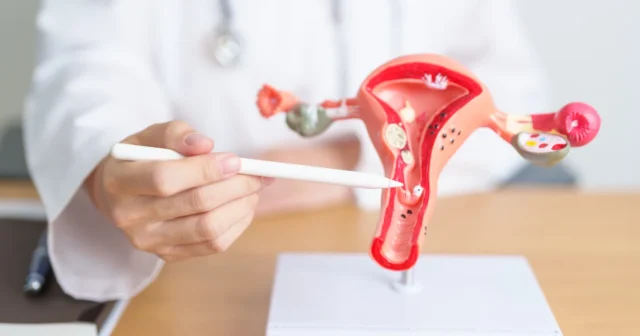
Hysteroscopic endometrial polypectomy (Hysteroscopic Polypectomy) is a technique for diagnosing and treating abnormalities inside the uterine cavity without an open abdominal incision. The surgeon uses a small hysteroscope with a diameter of only a few millimeters, inserted through the vagina and cervix directly into the uterine cavity.
The camera transmits high-resolution magnified images to a monitor, allowing the doctor to clearly and comprehensively see the polyp’s characteristics, abnormal locations, or other pathology within the uterine cavity. When a lesion is found, the doctor can use small instruments passed through the scope to perform endometrial polyp removal immediately and effectively, reducing the risk of injury to surrounding tissue.
Advantages of hysteroscopic endometrial polypectomy: technology that treats without an abdominal incision
Currently, hysteroscopic endometrial polypectomy is a standard method recommended by doctors because a small scope is inserted through the vagina directly into the uterine cavity, offering the following notable benefits:
- No abdominal surgical incision: Because the approach is through the vagina, a natural passage, the body does not have to bear an external wound.
- Improved treatment accuracy: The doctor can clearly see the polyp’s position and appearance on a high-resolution monitor, enabling complete removal.
- Less tissue injury: Unlike traditional D&C where the doctor cannot directly visualize the lesion, this helps preserve healthy tissue.
Comparison between hysteroscopic surgery and traditional D&C
In the past, abnormal bleeding was often treated with D&C, in which the doctor cannot directly see inside the uterine cavity. This increases the chance that a polyp may be missed or that injury may occur to areas of the uterine wall without lesions.
However, hysteroscopic endometrial polypectomy has clearly different advantages: it helps reduce the chance of intrauterine adhesions and allows complete removal of only the polyp without damaging the surrounding healthy endometrial tissue. This benefits patients who still desire pregnancy and reduces the risk of post-treatment complications.
Postoperative symptoms after endometrial polyp removal to watch for

After completing hysteroscopic endometrial polypectomy, the body enters its natural recovery process. Patients may experience various symptoms, most of which are normal, as follows:
- Lower abdominal cramping pain: Patients may feel a dull ache in the lower abdomen similar to menstrual cramps during the first 1–2 days, caused by uterine cavity dilation during the procedure. It can be relieved with pain medication as prescribed by the doctor.
- Light vaginal spotting: This is common after endometrial polyp removal. The blood is often light or brownish and gradually decreases within 1–2 weeks.
- Irritation from scope insertion: Because the procedure is performed through the vagina, there may be mild irritation at first, which typically resolves on its own in a short time.
- Fatigue from anesthesia: If general anesthesia is used, patients may feel drowsy or lightheaded for a few hours after surgery; therefore, a family member should assist with travel home.
Abnormal warning signs that require prompt return to the doctor
Although hysteroscopic endometrial polypectomy is highly safe, if you experience the following symptoms, contact the hospital or return to see a doctor immediately:
- Heavy abnormal vaginal bleeding or needing to change pads every hour
- High fever, chills
- Increasing severe abdominal pain that does not improve with pain medication
- Foul-smelling abnormal vaginal discharge
How long is recovery after endometrial polyp surgery?
As for the question of how long recovery takes after endometrial polyp surgery: generally, hysteroscopic surgery is typically a same-day procedure (depending on the doctor’s discretion) or requires only 1 night of observation to check readiness for discharge. After surgery, patients can start light walking and resume non-strenuous work within 5–7 days after treatment.
However, doctors often recommend avoiding sexual intercourse, swimming in a pool or the sea, or vaginal douching for about 3–4 weeks to prevent infection while the internal wound is healing.
Gynecologic diagnostic and hysteroscopic surgery services at Bangkok Hospital
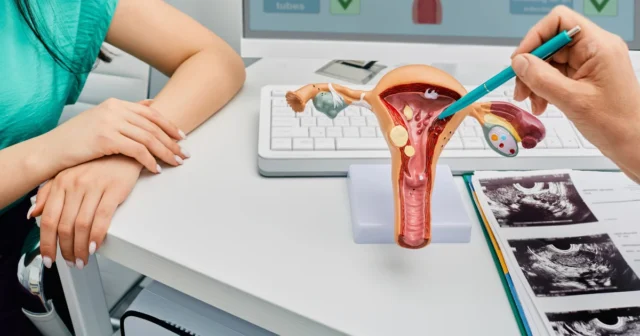
The Fertility Center at Bangkok Hospital provides systematic care for women of all ages, from diagnostic evaluation with high-resolution ultrasound to treatment with hysteroscopic technology that helps reduce pain and enables faster recovery. Care is delivered by a team of experienced obstetricians and gynecologists and a multidisciplinary team that specifically understands women’s needs, under JCI safety standards to ensure confidence at every step of treatment.
Article summary
Early detection of endometrial polyps helps make treatment more effective and reduces concerns about complications. If you have abnormal menstrual-related symptoms, consulting a doctor for endometrial polyp removal via hysteroscopy is an option that can help restore your quality of life.
At the Fertility Center, Bangkok Hospital, we have a team of specialist doctors ready to provide consultation and individualized treatment planning so you can undergo hysteroscopic endometrial polypectomy safely, with confidence in the results, and without worrying about prolonged recovery after endometrial polyp surgery—helping you return to your life bright and soon.
- Find a doctor: https://www.bangkokhospital.com/th/bangkok/doctor
- Make an appointment: https://www.bangkokhospital.com/th/bangkok/appointment/step1
- Contact us: https://www.bangkokhospital.com/th/bangkok/contact
Frequently asked questions about endometrial polyps (FAQ)
1. Is endometrial polyp removal painful?
Hysteroscopic surgery is usually performed under intravenous general anesthesia or spinal block, so the patient does not feel pain during the procedure. After surgery, there may be mild cramping similar to menstrual pain during the first 1–2 days, which can be relieved with common pain relievers as prescribed by the doctor.
2. How long will bleeding last after surgery?
Normally, there may be light vaginal spotting for about 1–2 weeks due to healing of the internal wound in the uterine cavity. However, if you notice unusually heavy bleeding or a foul odor, you should return to see a doctor immediately.
3. Can the polyp recur after surgery?
Recurrence is possible if triggering factors, such as hormonal imbalance, persist. Therefore, regular follow-up as scheduled by the doctor is important to monitor for recurrence.
4. How many nights do I need to stay in the hospital after surgery?
Because this is a minor hysteroscopic procedure via a natural orifice, most patients can go home on the day of surgery or stay just 1 night for observation after awakening from anesthesia. This depends on the doctor’s discretion and each patient’s condition.