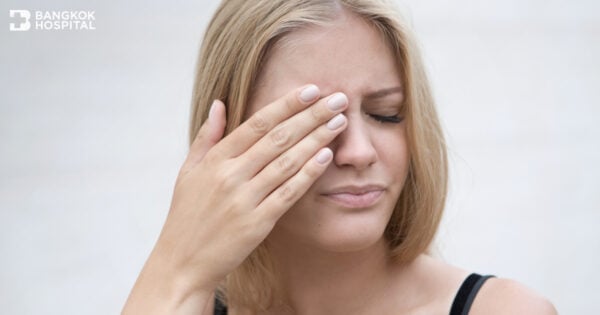
An eyelid twitch is when the eyelid muscles involuntarily spasm repetitively. Since an eyelid twitch is usually painless, people often overlook this condition and leave it undiagnosed. Nonetheless, an eyelid twitch can be uncomfortable and cause irritation. When experiencing severe twitching, immediate medical attention must be sought, enabling accurate diagnosis and effective treatment in a timely manner.
Get to know an eyelid twitch
An eyelid twitch is a repetitive, involuntary spasm of the orbicularis oculi muscle, an eyelid muscle which is responsible for eyelid closures. A twitch usually occurs in the upper lid, but it can affect both the upper and lower eyelids. The eye twitching widely ranges from barely noticeable to severe. When the eye twitching exhibits along with an involuntary spasm of the facial muscles, it can potentially be a warning sign, indicating certain conditions that urgently require medical assistance.
Causes of eye twitch
Eye twitches have different causes, including:
- Eyelid myokymia – described as continuous and fine contractions that mainly affect lower eyelid.
- Blepharospasm – a condition characterized by abnormal blinking or spasms of the eyelids, which is usually a bilateral condition.
- Hemifacial spasm – a neuromuscular disorder characterized by frequent involuntary contractions of the muscles on one side of the face.
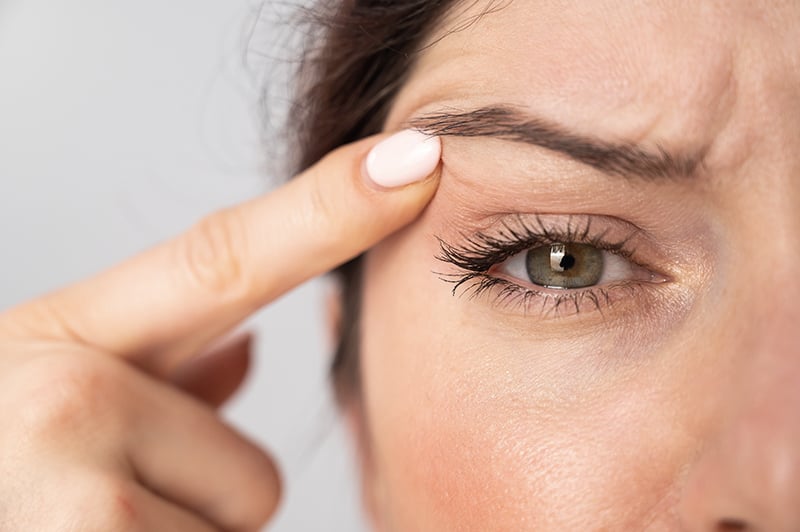
Eyelid myokymia
Eyelid myokymia is described as continuous and fine contractions that only affect the eyelid. This type of twitch is considerably common and happens to many people. Eyelid myokymia is typically unilateral, mainly affecting the lower eyelid. It spontaneously comes on and it can last for few seconds, minutes, hours or even weeks.
Trigger factors of eyelid myokymia
Despite the exact cause of eyelid myokymia remains unknown, eyelid myokymia may be triggered by:
- Fatigue or being overly tired
- Stress
- Anxiety
- Caffeine excess
- Alcohol intake
- Exercise
- Smoking
- Irritation of the eye surface or inner eyelids
- Bright light
- Wind or air pollution
- Certain medications, e.g. topiramate, clozapine, gold salts (sodium aurothiomalate) and flunarizine
In addition, some neurological diseases, e.g. demyelinating diseases, autoimmune diseases and brainstem pathology may cause eyelid twitching, which are often accompanied by other neurological manifestations.
When to seek medical attention
As a self-limiting condition, eye twitching usually goes away within a few days after avoiding trigger factors. Schedule an appointment with an ophthalmologist if:
- The twitching persists longer than 2-3 weeks
- Eyelid completely closes with each twitch having difficulty opening the eye
- Twitching happens in other parts of the face or body
- Red or swollen eye, eye discharge
- Drooping eyelid
Treatment of eyelid myokymia
- Most cases are self-limiting after trigger factors are fully eliminated.
- If eye twitching persists longer than 3 months with disrupted quality of life, the administration of a botulinum toxin injection into the muscles of the eyelids is often considered to help paralyze the contracting muscle.

Blepharospasm
Blepharospasm is caused by abnormal contraction of the eyelid muscles, resulting in involuntary blinking or spasms of the eyelids. It is usually a bilateral condition, affecting both eyes. Women, especially aged between 40-60, are more prone to have blepharospasm than men. The symptom may be mild at the beginning. However, the frequency of muscle contractions and spasms may increase, causing involuntary narrowing of the opening or closure of the eyelids. If it becomes progressive, it can potentially disrupt vision.
Causes of blepharospasm
The cause of blepharospasm is unknown although there are likely genetic involvements. In some cases, the dopamine deficit in the basal ganglia responsible primarily for motor control might play a critical role in developing blepharospasm.
Trigger factors of blepharospasm
Blepharospasm is often induced by the following factors:
- Previous head and face trauma
- Family history of movement disorders, e.g. dystonia and tremor
- Reflex blepharospasm due to certain eye conditions, e.g. dry eyes, blepharitis (an inflammation along the edges of the eyelids), intraocular inflammation and light sensitivity.
- Meningeal irritation
- Stress
- Certain medications, e.g. some antiparkinson drugs
- Smoking
- Movement disorders, e.g. Tardive Dyskinesia, Generalized Dystonia, Wilson Disease and Parkinsonian Syndromes.
Treatment of blepharospasm
- Eliminating contributing factors to reflex blepharospasm, including using artificial tear drops, treating blepharitis and wearing sunglasses, particular with FL-41 glasses to filter out specific wavelengths of light and prevent light sensitivity.
- Taking oral muscle relaxants or hypnotic drugs.
- Injection of botulinum toxin into the eyelid muscle.
- Surgical removal of the eyelid and brow-squeezing muscles can be considered in patients who did not respond to serial botulinum toxin injections.

Hemifacial spasm
Hemifacial spasm is a neuromuscular disorder characterized by frequent involuntary contractions or spasms of the muscles on one side of the face. Although this condition occurs in both men and women, it more frequently affects women aged 50-60. In initial stage, the first symptom of a hemifacial spasm is involuntarily twitching on only one side of the face. Muscle spasms often begin in the eyelid as mild twitching that may not be noticeably disruptive. Over time, the twitching becomes more pronounced and spreads to other areas of the same side of the face, such as cheek and lips. In severe cases as a condition worsens, involuntary muscle spasms can be uncontrollably persistent. Hemifacial spasm rarely involves both sides of the face, however the muscles on each side involuntarily contracts in unrelated timing.
Trigger factors of hemifacial spasm
The involuntary contractions of the muscle on the face are often triggered by a variety factors, such as:
- Facial movements
- Anxiety
- Stress
- Being overly tired
Types of hemifacial spasm
Categorized by its etiology, hemifacial spasm can be divided into 2 main types:
- Primary hemifacial spasm: Primary hemifacial spasm is attributed to vascular loops compressing the 7th cranial nerve at its exit zone from the brainstem. Neurovascular compression as a blood vessel pushing on the facial nerve leads to abnormal control over the facial muscles, causing involuntary contractions or spasms of the eyelid and facial muscles.
- Secondary hemifacial spasm: Secondary hemifacial spasm is less common than primary hemifacial spasm. Despite causes are unknown, it tends to run in the family. Potential risk factors are:
- Atherosclerosis
- Arteriovenous malformations
- Aneurysms
- Tumors of the parotid gland
- Cerebellopontine angle (CPA) tumor
- 7th cranial nerve injury
- Certain diseases related to brainstem, e.g. stroke, multiple sclerosis and Bell’s Palsy.
Diagnosis of hemifacial spasm
- Medical history and physical examination
- Imaging tests, e.g magnetic resonance imaging (MRI)
Treatment of hemifacial spasm
- Some patient might respond to certain oral antiepileptic drugs used for keeping muscles from twitching.
- Injection of botulinum toxin.
- A surgical approach, called microvascular decompression can be performed to relieve vascular compression of the 7th cranial nerve.
Most eyelid twitching goes away without treatment in a few days. Nonetheless, if the twitches become progressive and persistent up to weeks or months disrupting daily tasks, medical assistance from an ophthalmologist must be provided without delay.