



When an abnormality occurs in the digestive system—regardless of which organ—it inevitably affects daily life. Even if symptoms are not severe, they can interfere with life more than you might think. Endoscopic ultrasound of the stomach to check for abnormalities of the digestive system (Endoscopic Ultrasound – EUS) therefore not only helps diagnose disease, but also reduces disease severity before it is too late.
What is gastrointestinal endoscopic ultrasound (EUS)?
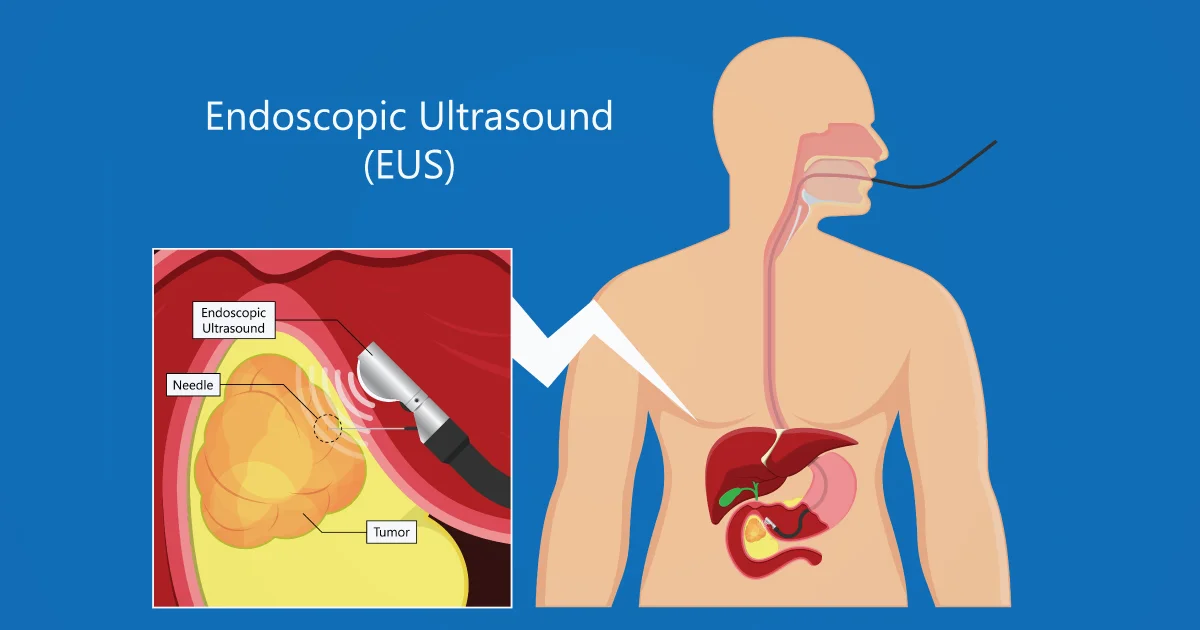
Gastrointestinal endoscopic ultrasound (Endoscopic Ultrasound – EUS) is a special medical procedure that combines endoscopy and ultrasound to create detailed images of the digestive tract and surrounding organs. It is commonly used for assessment, diagnosis, and to support treatment by providing important information that X-ray imaging or other examinations may not be able to show as clearly.
How is conventional stomach ultrasound different from EUS?
Although both methods use high-frequency sound waves to create images, there are key differences in the examination method and the level of detail obtained as follows:
|
Upper abdominal ultrasound (conventional) |
Endoscopic ultrasound (Endoscopic Ultrasound – EUS) |
|
|
Examination method |
A probe is placed on the abdominal skin (Transabdominal) |
An endoscope with an ultrasound probe is inserted through the mouth into the body (Endoscopic) |
|
Probe position |
Outside the body; examines through layers of skin, fat, and muscle |
Inside the digestive tract, directly close to the organ being examined. Only the thickness of the gastrointestinal wall lies between the scope and the target area, allowing additional details to be seen more clearly. |
|
Image resolution |
Moderate; if the abdominal wall is thick or there is a lot of intestinal gas, this may limit the examination |
Very high. Even if the area being examined is small or details are not clearly shown on CT/MRI, EUS can reveal additional details and can also assess lymph nodes or adjacent organs. |
|
Biopsy |
More difficult (may require puncture through the abdominal wall) |
Can be performed immediately through the endoscope with anatomical precision, with no abdominal wound; however, hospital admission is recommended for observation after the procedure. |
|
Sensation during the test |
Painless; no anesthesia required |
Sedation/anesthesia is required to help the patient relax |
|
Main purpose |
Initial screening, such as gallstones or liver evaluation |
Suitable for evaluating deep lesions such as submucosal tumors of the GI tract, tumors or cysts in the pancreas, enlarged abdominal lymph nodes, and cancer staging. |
Who should undergo endoscopic ultrasound to check the digestive system (EUS)?
Doctors often consider gastrointestinal endoscopic ultrasound when there is a need to assess deep abnormalities, including:
- Those who need diagnosis and cancer staging, especially cancers of the esophagus, stomach, pancreas, and rectum
- Those who need pancreatic evaluation for diagnosing cysts, chronic pancreatitis, or tumors
- Those who need bile duct evaluation, including assessment for bile duct stones or obstruction/stricture
- Those who need assessment of submucosal tumors, evaluating masses beneath the mucosal layer of the digestive tract
- Those who need lymph node assessment, especially lymph nodes in the chest or abdomen
What diseases can EUS stomach ultrasound detect?
Gastrointestinal endoscopic ultrasound (EUS) excels at evaluating abnormalities hidden deep beneath the gastrointestinal wall layers or small lesions that conventional ultrasound may not clearly detect. Conditions commonly assessed with EUS include:
- Gastrointestinal cancers Used to assess cancer staging, such as esophageal cancer, gastric cancer, pancreatic cancer, and rectal cancer, to determine how deeply the tumor has invaded the bowel wall layers or whether it has spread to nearby lymph nodes—key information for treatment planning.
- Subepithelial lesions of the gastrointestinal tract (Subepithelial lesions) Helps evaluate masses hidden beneath the mucosal layer in the esophagus, stomach, or intestines—whether they are lipomas, cysts, or tumors that may develop into malignancy.
- Pancreatic diseases Provides clear images of the pancreas, aiding in diagnosis of chronic pancreatitis, pancreatic cysts (Pancreatic Cysts), and pancreatic tumors.
- Bile duct and gallbladder diseases Can detect small bile duct stones that other tools may miss, and assess bile duct obstruction/stricture or bile duct tumors.
- Lymph node abnormalities Used to assess abnormally enlarged lymph nodes in the chest or abdomen, and a small needle can be used to obtain tissue from lymph nodes for pathological examination.
Advantages of endoscopic ultrasound for checking the digestive system (EUS)
- High-resolution images of the digestive tract and surrounding organs
- In addition to diagnosis, it can also be used for treatment and for taking biopsies from suspicious areas for further evaluation and planning the next step of treatment.
- Accurate staging, important for determining the stage of certain cancers to plan treatment
- Used for treatment, helping to drain cysts or abscesses; place drainage tubes such as bile drainage from an obstructed site comparable to surgical bypass but without an abdominal wound; it can also relieve upper gastrointestinal obstruction.
How to prepare before endoscopic ultrasound to check the digestive system (EUS)
Proper preparation is important for endoscopic stomach ultrasound (EUS) to proceed smoothly and safely.
- Fasting: Patients must refrain from food and water for at least 6–8 hours before the examination to obtain clear images and reduce the risk of aspiration during sedation/anesthesia.
- Medication review: Consult your doctor about all medications you are taking. Anticoagulants, diabetes medications, and certain supplements may need adjustment or temporary discontinuation.
- Allergy information: Inform your doctor about any allergies, especially to medications and anesthetics.
- Health assessment: A pre-exam assessment will be performed to review medical history and any prior reactions to sedatives or anesthetics.
- Consent: Patients must provide consent before undergoing the procedure, acknowledging the benefits and potential risks.
What happens during endoscopic ultrasound to check the digestive system (EUS)?
- Sedation/anesthesia: The patient will receive sedation/anesthesia to feel comfortable and relaxed. This may be conscious sedation or general anesthesia.
- Positioning: Most patients are positioned lying on their left side.
- Endoscope insertion: The doctor inserts the scope through the mouth and gently passes it through the esophagus and stomach
to the first part of the small intestine (duodenum).
- Ultrasound imaging: The ultrasound component creates detailed images of the gastrointestinal organs and surrounding tissues.
- Biopsy (if necessary): If an abnormality is found, the doctor may aspirate tissue or cell samples for further analysis.
How to care after endoscopic ultrasound to check the digestive system (EUS)
- Recovery time: Patients will be monitored until the sedative/anesthetic wears off, which typically takes about 1–2 hours.
- Food: If no biopsy is taken, you can eat normally after recovery from sedation/anesthesia. If a biopsy is taken, an overnight hospital stay is recommended for observation, and you may start with clear liquids and gradually return to a normal diet as tolerated.
- Activity: Avoid strenuous activities that day.
- Follow-up: You will receive specific instructions about when to resume your usual medications and follow-up appointments.
- Warning signs: Contact your doctor if you have severe abdominal pain, fever, or vomiting.
Risks and complications of endoscopic stomach ultrasound (EUS)
Although endoscopic stomach ultrasound is a safe procedure, in some cases the following risks may occur:
- Bleeding: Bleeding may occur, especially if a biopsy is performed.
- Perforation: The scope may cause a leak or perforation in the digestive tract, but this is rare.
- Pancreatitis: Inflammation of the pancreas can occur, especially if tissue is taken from the pancreas for testing.
- Infection: There is a small risk of infection, especially at the biopsy site.
- Risks related to sedation/anesthesia: Including respiratory problems or allergic reactions to sedatives/anesthetics.
The doctor will assess risks and provide close monitoring to prevent potential complications.
Physicians skilled in endoscopic ultrasound for checking the digestive system (EUS)
- Dr. Aroon Siripun Therapeutic endoscopy physician, Digestive Disease and Liver Center, Bangkok Hospital
- Dr. Issaree Laopeamthong Therapeutic endoscopic surgeon for gastrointestinal tract, liver, and pancreas, Digestive Disease and Liver Center, Bangkok Hospital
Hospital specializing in endoscopic ultrasound for checking the digestive system (EUS)
The Digestive Disease and Liver Center, Bangkok Hospital, is ready to provide diagnosis and care for digestive system abnormalities through endoscopic ultrasound examinations, delivered by specialized expert physicians, nurses, and a multidisciplinary team, supported by modern equipment and technology so you can return to life with confidence.
Article summary
Endoscopic stomach ultrasound (EUS) provides important deep images and information for diagnosing various abnormalities of the digestive tract that conventional ultrasound may not reach. Proper preparation and understanding of the procedure help patients receive effective and safe treatment.
Frequently asked questions (FAQ) about endoscopic stomach ultrasound
1. How long does an EUS examination take?
It generally takes about 30 to 60 minutes, depending on the complexity of the lesion and any additional procedures.
2. Is endoscopic ultrasound painful?
Patients will not feel pain due to sedation/anesthesia, but may feel mild throat irritation after the medication wears off, which usually resolves on its own shortly.
3. Can a conventional abdominal ultrasound clearly examine the stomach?
It can to some extent, but gas in the stomach and the abdominal fat layer are often major obstacles that make small lesions difficult to see clearly. Doctors therefore often recommend EUS when deeper detail is needed.
4. Can elderly people undergo EUS?
Yes. The doctor will always carefully assess overall health and physical readiness in detail beforehand to ensure safety during sedation/anesthesia.