

No one expects to find themselves in a situation so crowded they can’t breathe, let alone imagine it could be lethal. Therefore, it’s essential to understand and know how to take care of oneself to survive should you one day find yourself in such a situation
6 Things you need to know if you find yourself in a situation where you are so crowded you can’t breathe
1) Death due to crowd compression (Crowd Crush or Crowd Surge)
Occurs when a large number of people are tightly packed in a small area, causing chest compression that makes it hard to breathe, even in a well-ventilated area, leading to unconsciousness and possibly death. Trampling deaths (Stampede) occur when many people move and someone falls, causing others to trample over them, leading to death. The risk increases in situations of panic and attempts to escape.
2) Oxygen deprivation caused by compression (Compressive Asphyxia)
Occurs when the body is externally compressed, preventing normal breathing and causing abnormal blood circulation leading to unconsciousness. Oxygen deprivation for more than 3 – 5 minutes can be life-threatening, leading to cardiac arrest.
3) Evaluating crowd density
It’s crucial to pay attention to when in an area with a large number of people. Evaluate the crowd density as follows:
- No physical contact with people around you indicates low density and a normal situation.
- Accidental contact with 1 – 2 people around you indicates it is beginning to get crowded but not yet dangerous. It is advisable to find a way out of the area.
- Close contact to the point where you can’t move your hands or touch your forehead indicates very high density and a dangerous situation. Stay calm and try to exit as quickly as possible.
4) How to survive a lethal crowding event
- Aim to exit the area as fast as possible. Don’t hesitate, stay alert and calm, and always look for an escape route.
- Estimate the most crowded spots and try to move towards less crowded areas or climb higher if possible.
- If unable to exit, try to maintain a stable posture to keep balance and prevent falling at all costs.
- Lift both arms to guard the chest and face, keeping a 2 – 3 centimeters distance, to preserve breathing space when compressed more forcefully.
- Stay calm and control your breathing, breathe in and out.
- When in a moving crowd, move with it without rushing or pushing as it could lead to losing balance and being trampled.
- Stay away from obstacles you cannot climb, such as fences, walls, or hard objects, to prevent being crushed.
- Be careful not to lose balance and fall, watch out for slippery surfaces, slopes, debris on the ground, and tripping hazards.
- If you fall, try to get up quickly or immediately ask for help.
 5) Basic assistance and CPR
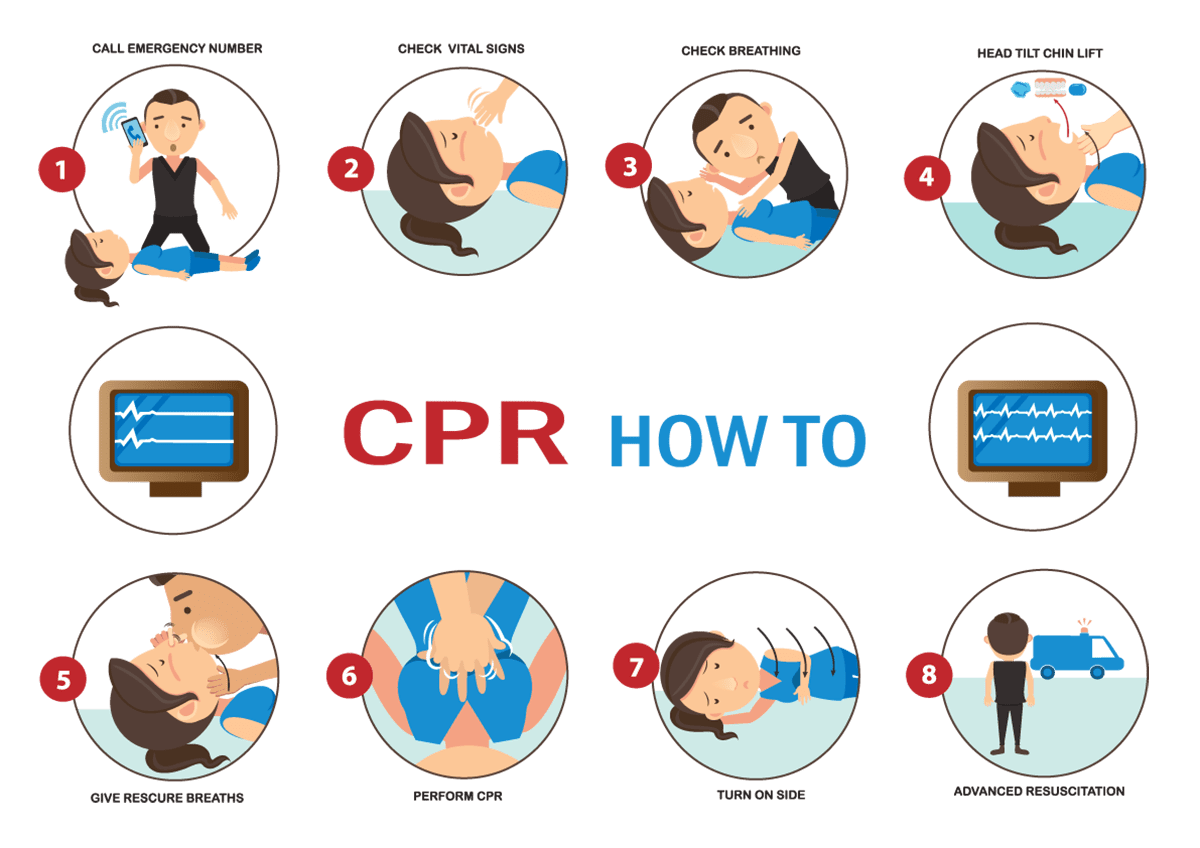
To save lives when someone is unconscious includes:
- Call. 1669 or 1724 or shout for nearby people to call for help.
- Move the unconscious to a safe area, place them flat on their back on a level surface.
- Check responsiveness by calling out to them and gently slapping their shoulder while observing their chest and abdomen for breathing.
- If there’s no response and they are not breathing within ten seconds, they may have suffered a cardiac arrest.
- Open the airway by tilting the head back and lifting the chin.
- If the person is still not breathing, give two rescue breaths or start chest compressions immediately if rescue breaths are not possible.
- Perform chest compressions by placing one hand in the center of the patient’s chest with the other hand on top, and compress at least 2 inches deep at a rate of 100 – 120 compressions/minute, such as to the rhythm of the song Baby Shark.
- Alternate 30 chest compressions with 2 rescue breaths.
- Continue until the person regains consciousness or medical help arrives.
6) Being prepared when entering an event with many people
- Avoid entering an area where people are densely packed.
- If the area is assessed to be too crowded, exit immediately.
- Wear snug-fitting clothes, avoid long garments that might cause tripping or be stepped on.
- Wear comfortable shoes securely tied to avoid being trampled if they come off.
- Plan your journey to avoid rushing when entering or exiting the area, to prevent crowding.