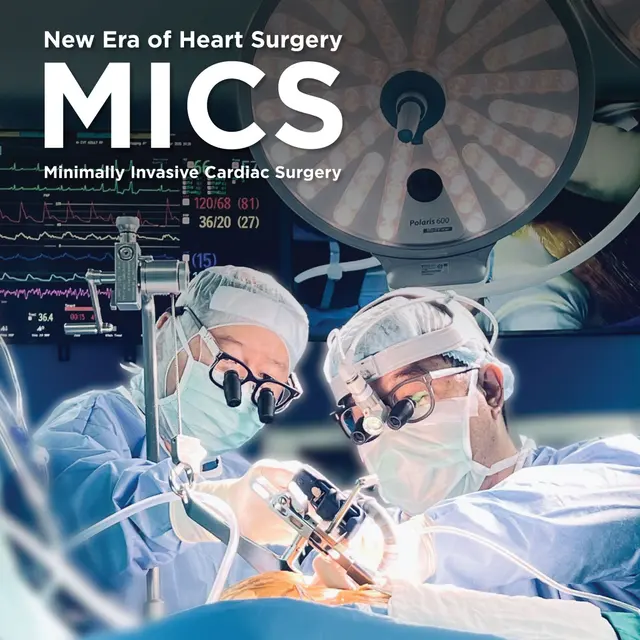





Heart surgery is a treatment for heart disease that helps reduce severity and restore the heart’s normal function. Surgical techniques have been continuously developed; one of them is minimally invasive cardiac surgery (MICS). In this approach, cardiac surgeons treat the heart without having to make an incision through the breastbone at the center of the chest (Non – Median Sternotomy). In addition, the incision is small, causing patients to experience less pain than with conventional surgery, recover faster, reduce complications, and reduce mortality.
What is minimally invasive heart surgery (MICS)?
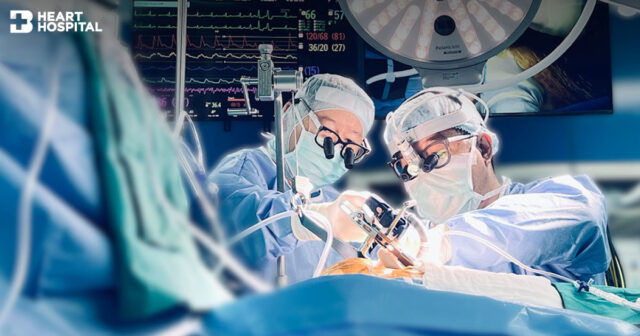
Minimally invasive cardiac surgery (MICS) is a technique used to perform heart surgery without needing to cut the breastbone as in the traditional approach. The procedure is performed by a specialized medical team skilled in using special instruments specifically for minimally invasive heart surgery. A cardiothoracic surgeon makes a small incision on the side of the chest, beneath the breast crease or between the ribs, instead of a large midline chest incision measuring 15 – 30 centimeters. This helps patients experience less pain, less blood loss, and a smaller incision of about 3 – 5 centimeters, reducing injury to tissues and internal organs and decreasing the severity of postoperative infection. Patients experience less wound pain than with conventional surgery that requires cutting the breastbone, recover faster, have a shorter hospital stay, and return to a better quality of life sooner.
What types of heart disease can minimally invasive heart surgery (MICS) treat?
Minimally invasive surgical techniques can be applied to treat a variety of heart diseases as follows:
- Coronary artery disease (narrowed coronary arteries)
- Heart valve stenosis or regurgitation
- Cardiac arrhythmias
- Congenital heart disease, such as atrial septal defect (ASD)
- Cardiac tumors
Minimally invasive heart surgery techniques
There are several minimally invasive heart surgery techniques, depending on the type of heart disease, for example:
Minimally invasive coronary artery bypass surgery (MICS CABG)
Minimally invasive coronary artery bypass surgery, or Minimally Invasive Cardiac Surgery Coronary Artery Bypass Grafting (MICS CABG), is a new option for treating coronary artery disease. Special instruments are used to make a small incision on the left side of the chest at the ribs or beneath the breast crease, approximately 7 – 10 centimeters, instead of the conventional approach of opening the breastbone, to bypass narrowed or blocked coronary arteries so that blood can circulate again. Click here

Minimally invasive heart valve repair or replacement with 3D endoscopy
Minimally invasive heart valve repair or replacement with 3D endoscopy, or Totally 3D Endoscopic Valve Surgery, is one of the most advanced treatment techniques for patients with valvular regurgitation or stenosis—especially those with limitations for open-chest surgery, such as older adults or patients with complex comorbidities. It uses a small, high-resolution endoscope with a 3D imaging display system and can be used for both valve repair and valve replacement through small incisions, without opening the breastbone. Click here

Who is minimally invasive heart surgery (MICS) suitable for?
- Patients with medical indications
- Patients who do not want breastbone-opening surgery
- Older patients who want to reduce the risks associated with major surgery
- Patients with valve regurgitation or localized heart conditions that can be accessed via a small incision
- Patients without complex comorbidities who can undergo minimally invasive heart surgery, such as chest wall deformities or severe chronic obstructive pulmonary disease (COPD)
However, heart disease patients who wish to undergo minimally invasive heart surgery (MICS) must be evaluated by a thoracic surgeon who specializes in minimally invasive cardiac surgery.

Advantages of minimally invasive heart surgery (MICS)
|
Open heart valve surgery via midline sternotomy |
Minimally invasive cardiac surgery |
|
|
|
|
|
|
|
|
|
|
|
|
How to care for yourself after minimally invasive heart surgery (MICS)
- Follow up on heart health as scheduled by the doctor
- Take medications as prescribed
- Eat a heart-healthy diet
- Exercise regularly
- Manage stress appropriately
- Avoid smoking and alcohol consumption
Why choose minimally invasive heart surgery (MICS) at Bangkok Heart Hospital
- Thailand’s first private specialty hospital for heart disease
- An MICS minimally invasive cardiac surgery team with experience in more than 400 MICS cases
- Advanced technology and equipment for diagnosis and minimally invasive heart surgery (MICS), including modern operating rooms
- Assessment, planning, and surgical design for heart disease treatment by a cardiology team
- Internationally recognized standards and treatment outcomes
Minimally invasive cardiac surgery (MICS) is a modern option with good outcomes for patients. It also shortens recovery time and reduces the risk of complications compared with open heart surgery.
View all additional promotions
Hospital specializing in minimally invasive heart surgery (MICS)
Cardiothoracic Surgery Center, Bangkok Heart Hospital has a team of specialist heart doctors with expertise in treatment, including both minimally invasive surgery and conventional open surgery through the breastbone, catheter-based treatment or non-surgical options, together with a highly experienced multidisciplinary team and comprehensive medical technology. We provide attentive care for every generation to help patients return to a good quality of life again.
If you or someone you love is facing heart disease… don’t wait until the heart stops beating – because MICS may be the right option for you.
Doctors specializing in minimally invasive heart surgery (MICS)
- Dr. Nuttapon Arayawudhikul Cardiac, vascular, and thoracic surgeon; minimally invasive coronary artery bypass surgery (Minimal Invasive Cardiac Surgery CABG), Bangkok Heart Hospital
- Dr. Paradorn Jetwanna Cardiac, vascular, and thoracic surgeon; minimally invasive valve surgery via endoscopy (Minimally Invasive Valve Surgery), Bangkok Heart Hospital
- Dr. Permyos Ruengsakulrach Cardiac, vascular, and thoracic surgeon; minimally invasive coronary artery bypass surgery (Minimal Invasive Cardiac Surgery CABG) and minimally invasive valve surgery via endoscopy (Minimally Invasive Valve Surgery); coronary artery bypass surgery using the off-pump technique, Bangkok Heart Hospital
Article summary
Minimally invasive heart surgery (MICS) is an option for treating certain types of heart disease, such as coronary artery disease and valvular regurgitation or stenosis. For patients with indications and who have been assessed as suitable for minimally invasive surgery, the surgical incision is small on the side of the chest or beneath the breast crease, without opening the breastbone. This helps reduce injury to tissues and blood vessels, reduces postoperative pain, and helps patients recover faster compared with surgery that opens the breastbone. The choice of surgical method depends on the type of disease, physical condition, and assessment by the specialist medical team.
Frequently asked questions (FAQ) about minimally invasive heart surgery
1. How long is the recovery period after minimally invasive heart surgery?
In general, patients typically stay in the hospital for about 1 week and recover faster compared with surgery that opens the breastbone, and may begin returning to light daily activities. This depends on the type of surgery, physical condition, and the doctor’s assessment.
2. How large is the incision and where is it located?
The incision size depends on the type of surgery. For example, endoscopic valve surgery may involve an incision of about 3–5 centimeters, while minimally invasive coronary bypass surgery (MICS CABG) involves an incision of about 7–10 centimeters. The incision is located on the side of the chest or beneath the breast crease, making the scar much less visible in the center of the chest compared with conventional surgery.
3. Can older adults undergo minimally invasive heart surgery?
Some older adults can undergo minimally invasive heart surgery if they pass evaluation by the medical team. The doctor will consider overall health, comorbidities, and the suitability of the heart condition in each case.
4. If I have multiple chronic conditions, can I have minimally invasive surgery?
Patients with underlying conditions such as diabetes, high blood pressure, or kidney disease may be able to undergo minimally invasive heart surgery if they pass evaluation by the medical team. However, some patients—for example, those with severe chronic obstructive pulmonary disease or chest wall deformities—may not be suitable for this technique. The doctor will therefore determine the most appropriate treatment approach for each case.
5. With minimally invasive heart surgery, is there a chance of complete recovery and returning to normal?
Minimally invasive heart surgery is a technique that provides treatment outcomes comparable to standard surgery in appropriately selected patients. Most patients can recover and return to daily life or activities close to normal. However, outcomes depend on the type and severity of the disease, comorbidities, the surgery, and ongoing post-treatment health care.