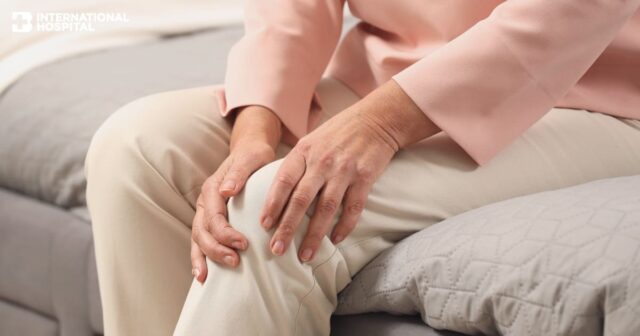


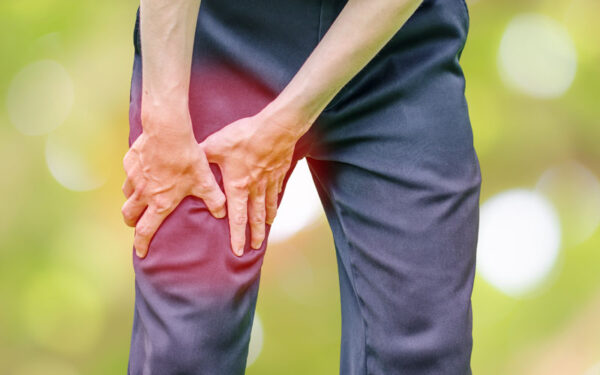

Osteoarthritis of the Knee refers to a condition arising from the degradation of the cartilage covering the joint surfaces including changes in shape, structure, and function of the joint bones and the bones near the joint. These changes cannot be reversed and may progress in severity over time.

Causes of Knee Degeneration
- Primary or idiopathic degeneration is a condition that occurs due to the age-related wear and tear of the cartilage.
Key factors affecting knee degeneration include:
- Age: Degeneration starts at the age of 40, and by the age of 60, 40% may have osteoarthritis.
- Gender: Women are 2 – 3 times more likely to have it, which may be related to the function of the body’s endocrine system.
- Being overweight: There is a significant correlation between weight and knee degeneration. An increase in weight by 0.5 kilogram can increase the load on the knee joint by 1 – 1.5 kilograms. Additionally, excess fat cells can impact cartilage cells and bone cells, leading to faster joint degeneration.
- Usage, posture, activities putting excessive pressure on the knees, such as squatting, kneeling, meditating, frequently climbing stairs, etc.
- Imperfections in the joint components, like loose knee joints or weak thigh muscles.
- Genetics: Osteoarthritis of the knee has less genetic evidence than degeneration of the finger joints.
- Secondary degeneration is a degeneration with a known cause, such as previous injuries to the joint, tendons, chronic injuries from work or sports activities, rheumatoid arthritis, gout, infectious arthritis, and diseases of the endocrine glands, such as obesity.
Symptoms of Osteoarthritis of the Knee

- Early stage symptoms include knee pain when moving, like walking or climbing stairs, or sitting with knees bent. The symptoms improve with rest. Additionally, there may be stiffness, especially after being still for a long time. When moving the joint, there might be a feeling of bone rubbing or noise in the joint.
- Symptoms when degeneration is severe include increased pain, sometimes at night, palpable bone growth at the sides of the joint, pain or tingling in the hip bone when the thigh muscles are fully tensed, joint swelling, warmth, and fluid in the joint space can be detected. If there is long-term degeneration, the ability to straighten or bend the knee may be limited, thigh muscles may be atrophied, and the knee may become bent, loose, or deformed, making walking and daily activities difficult, including pain when walking or moving.
Diagnostic Criteria for Osteoarthritis of the Knee
- Presence of knee pain.
- X-rays show bone growth.
- At least one of the following supportive signs:
– Over 50 years old.
– Morning stiffness lasting less than 30 minutes.
– Crepitus during knee movement due to friction of the synovial membrane.
How to Care for Artificial Knee Joints
- Avoid postures that put pressure on the joint such as:
- Sitting cross-legged, kneeling, in meditation postures, squatting, sitting on low chairs, sitting with legs crossed, twisting the knee.
- Unnecessary climbing of stairs.
- Lifting or carrying heavy objects.
- Using a pillow under the knee for a long time while lying down can affect blood circulation in the knee area and may tighten leg tendons, as well as increase the roughness of the cartilage at the bone ends.
- Adjusting the home environment such as:
- Keep home areas clear and bright without obstacles on walkways to prevent tripping.
- If necessary to use stairs, have handrails on both sides.
- Toilet should be the flush type.
- Inside the bathroom, use non-slip materials and have handrails.
- Use a chair for showering to increase safety and comfort during showering.
- Avoid bathing in bathtubs as it may increase the risk of slipping.