




Many people think that hip osteoarthritis is an issue of older adults. But in reality, there is a silent threat that often strikes working-age adults and young adults aged 30–50 called avascular necrosis of the femoral head. If left untreated, the bone tissue will progressively deteriorate, become severe, and may ultimately require total hip replacement surgery.
What is avascular necrosis of the femoral head?
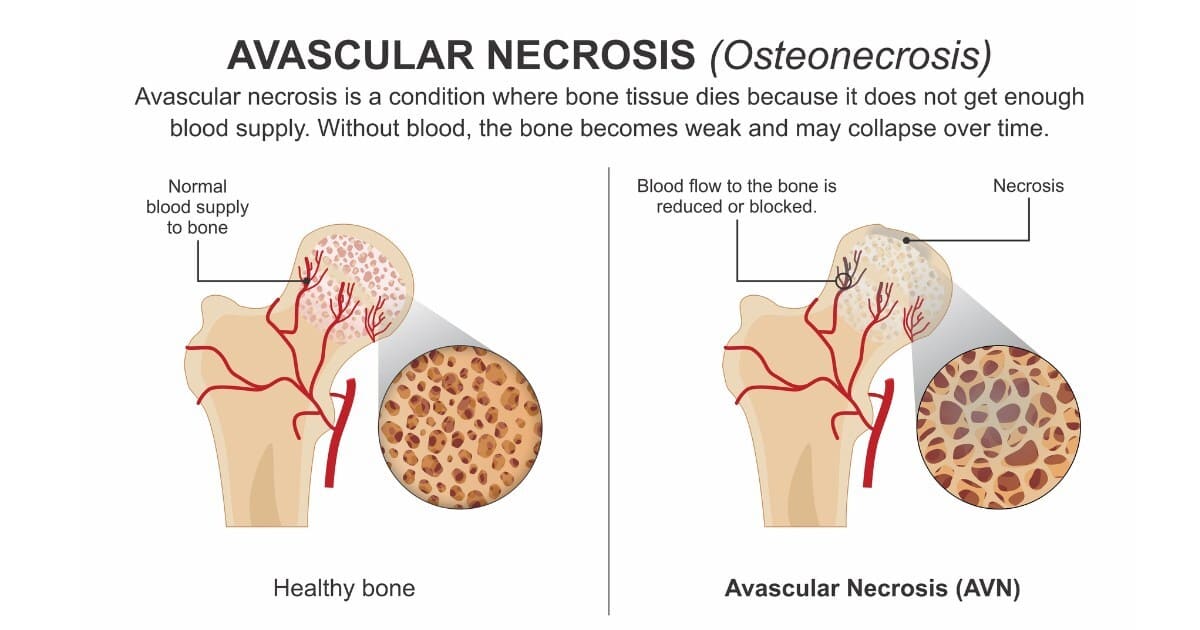
Avascular necrosis of the femoral head (Avascular Necrosis or AVN) occurs due to disruption of the peripheral blood circulation that supplies the femoral head, causing bone cells to lack oxygen and die. When bone cells die, the subchondral structure beneath the joint cartilage becomes fragile, loses its ability to bear weight, and can lead to permanent collapse of the hip joint surface if not treated properly.
How dangerous is avascular necrosis of the femoral head?
The danger of avascular necrosis of the femoral head is that the blood vessels supplying most of the femoral head are terminal branch vessels with little collateral circulation. If blockage or tearing occurs, the bone tissue can undergo necrosis immediately. Therefore, symptoms should be monitored and treatment sought as soon as possible.
Why are younger people and working-age adults at risk of avascular necrosis of the femoral head?
- Steroid use (both from medical treatment and hidden steroids) Use of corticosteroids is the No. 1 cause among non-traumatic cases. It is often found in patients who need steroids to treat underlying diseases such as autoimmune disease
(SLE), or in patients previously treated for severe COVID-19 (COVID-19) infection, who required high-dose steroids. It is also common in people exposed to hidden steroids from consuming herbal medicines, traditional pills, or non-standard medication sets. These accumulated steroids act as catalysts that enlarge fat cells in the bone, increasing pressure within the hip bone marrow cavity and obstructing blood flow. - Heavy alcohol consumption Consuming large amounts of alcohol continuously for many years interferes with fat metabolism, leading to fat emboli obstructing capillaries
. - Severe trauma such as femoral neck fracture or hip dislocation from traffic accidents, which can tear blood vessels around the femoral neck.
- Hematologic diseases and other disorders seen in patients with sickle cell disease (Sickle Cell Disease), Gaucher disease
(Gaucher’s Disease), or hypercoagulable states, which can cause blood clots to obstruct small vessels that supply the hip. In addition, behaviors such as heavy smoking can constrict blood vessels and reduce oxygen delivery to bone tissue. - No identifiable cause (Idiopathic) Even without the risk history mentioned above, medically there is still a group of patients—about 10–20%—who develop avascular necrosis of the femoral head without a clearly identifiable cause.

Warning symptoms of avascular necrosis of the femoral head
In the early stage when the bone begins to lose blood supply, patients often have no pain, so many do not receive joint-preserving treatment. However, as the condition becomes more severe and progresses, the following warning signs can be observed:
- Anterior groin pain This is the most common early symptom. The pain usually starts slowly and subtly in the anterior groin area. However, due to nerve pathways, it often radiates down the front of the thigh and concentrates at the knee. This leads many patients to mistakenly believe they have knee osteoarthritis or muscle inflammation. But when the knee is treated, the pain does not improve. By the time they realize the true source is the hip joint, the bone may have already collapsed, unfortunately missing the opportunity for core decompression. Pain becomes more severe when the hip must bear weight, such as when walking, standing up from a chair, or going up and down stairs.
- Joint stiffness and difficulty moving Difficulty and pain when abducting the leg or rotating the hip inward, affecting daily life such as sitting cross-legged or bending to put on shoes and socks.
- Severe pain at night or at rest A serious warning sign indicating advanced joint degeneration. If pain disrupts sleep or causes sharp pain whenever turning over, you should see a specialist as soon as possible.

Diagnosis of avascular necrosis of the femoral head
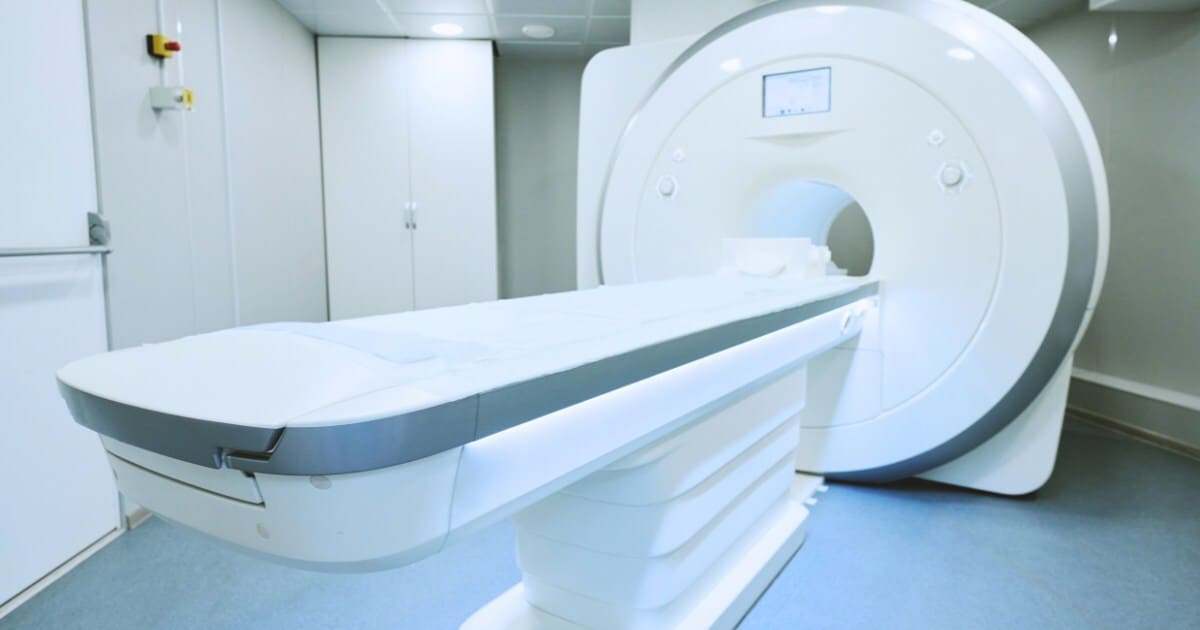
Standard X-rays may not detect abnormalities in the early stage, and may only show changes when the bone has already lost significant blood supply, causing patients to miss the opportunity for early treatment. MRI is therefore the current gold standard for diagnosing avascular necrosis of the femoral head because it can reveal necrotic lesions or bone marrow edema before the bone collapses. In addition, even if a patient has hip pain on only one side, doctors will always recommend MRI of both hips because avascular necrosis has a high chance of occurring in both hips at the same time. MRI can detect early abnormalities in the other hip before symptoms appear.
How can avascular necrosis of the femoral head be treated?
The earlier avascular necrosis of the femoral head is detected—while the lesion is still small and the bone has not yet collapsed—the more likely doctors can treat it with core decompression surgery to reduce pressure within the bone marrow cavity. This relieves abnormally high pressure and creates channels for new blood vessels to enter and repair the area, helping revive bone cells and preserve the original femoral head without the need for artificial joint replacement surgery.
Does everyone with avascular necrosis of the femoral head need total hip replacement surgery?
Treatment for avascular necrosis of the femoral head depends on the stage of the disease and the size of the ischemic area. Medically, treatment approaches are divided into 2 main groups:
- Stage before bone collapse (Pre – Collapse) The femoral head still maintains a round shape. Treatment is primarily assessed based on the extent of the ischemic area.
- When the ischemic area is not very large Doctors often recommend core decompression surgery (Core Decompression) to relieve abnormally high pressure and create channels for blood flow and new bone-forming cells to enter and repair the area, with the hope of preserving the patient’s original femoral head.
- When the ischemic area is very large Current research and medical statistics show that if the lesion is medium to large, core decompression often has limited effectiveness and a high chance of failure because the bone structure has already lost significant strength . Ultimately, when weight-bearing resumes, it will still crack and collapse. As a result, the patient may end up undergoing 2 surgeries: first core decompression that fails, followed by repeat surgery for total hip replacement. Therefore, when necrosis involves a large area, doctors often recommend considering total hip replacement from the outset for a more predictable outcome, a single surgery, and faster recovery back to daily life.
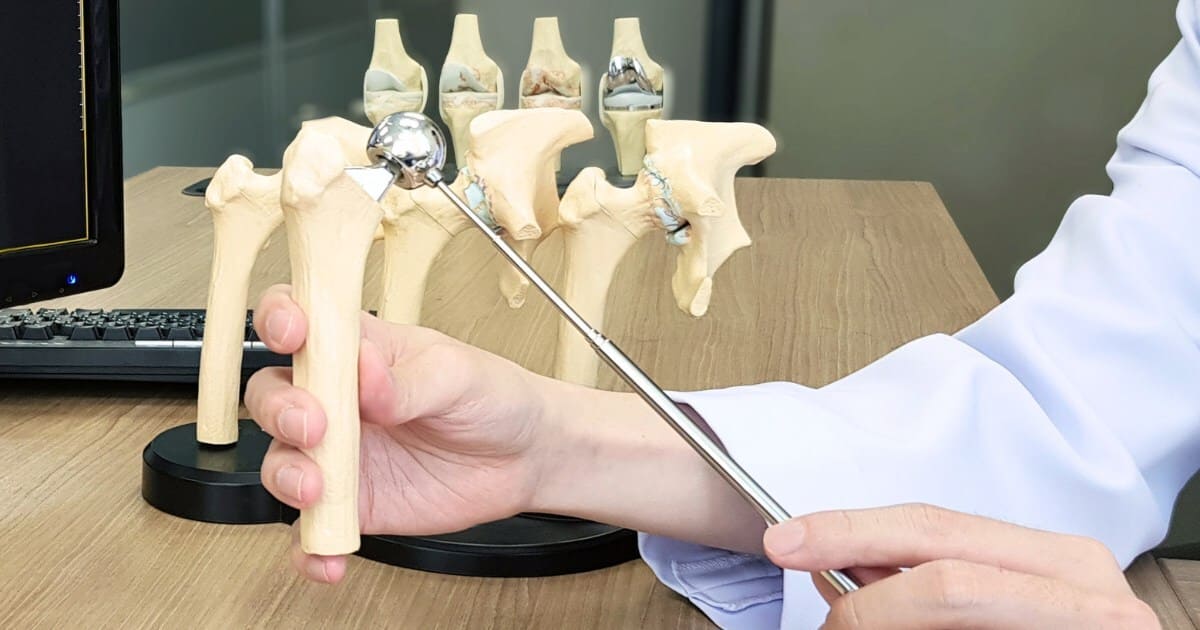
- Stage with bone collapse or established osteoarthritis (Stages 3 – 4) When the disease reaches this stage, the structure of the femoral head has collapsed and the joint surface has been completely destroyed. Core decompression or physical therapy cannot restore the damaged structure. The single most effective treatment to relieve pain and restore normal walking function is total hip replacement surgery (Total Hip Arthroplasty).
What are the challenges of total hip replacement in younger patients?
Total hip replacement in younger patients poses challenges regarding implant longevity because patients in this age group typically have higher physical activity levels and greater impact forces than older adults. Therefore, innovations that meet treatment needs should be selected, including:
- Highly durable implant material innovations (Ceramic-on-Polyethylene / Ceramic-on-Ceramic) Choosing high-performance bearing surfaces such as “a ceramic head with a special plastic cup” (Highly Cross-linked Polyethylene) or “a ceramic head with a ceramic cup” is notable for its smooth surface, reduced wear from friction, and excellent impact resistance. This helps extend implant longevity to 20–30 years, meeting the demanding lifestyle of working-age adults with confidence.
- Muscle-sparing anterior approach surgery (Direct Anterior Approach: DAA) The surgeon operates through the front of the thigh, using instruments to separate the natural intervals between muscle groups, without cutting or damaging muscles and tendons. The result is high hip stability, less pain, and faster recovery. Patients can stand within the first 6–24 hours after surgery, and with only 2–4 weeks of rehabilitation can return to daily activities and work as normal.
When is total hip replacement needed for avascular necrosis of the femoral head?
The ultimate goal of total hip replacement is surgery to improve quality of life (Improve Quality of Life). If patients can still carry out daily life and work normally and their symptoms are not causing suffering, there is no need to rush surgery. Doctors will recommend surgery when the patient begins to feel that the condition is destroying quality of life—for example, severe pain that limits basic activities, pain even at rest or during sleep that disrupts rest, inability to live as before, and feeling unhappy with life. This is the clearest sign that it is time for total hip replacement to restore quality of life.
Receiving proper treatment and rehabilitation not only helps relieve suffering from pain, but also restores mobility, enabling working-age patients to return to life with confidence and work at full potential again. If you have risk behaviors or chronic hip pain, you should consult a specialist promptly to assess risk as early as possible.
Hospital specializing in treatment of avascular necrosis of the femoral head
Hip and Knee Center, Bangkok Hospital International, a hospital for bones and brain, is ready to provide diagnosis and treatment of avascular necrosis of the femoral head, as well as revision total hip replacement surgery, by a team of expert physicians who are ready to provide appropriate consultation and treatment, together with modern technology to restore hip strength so you can live life with confidence.
Physician specializing in total hip replacement surgery
Dr. Natapha Kiriyapong, female orthopedic surgeon specializing in personalized robotic-assisted knee replacement surgery with the VELYS system and muscle-sparing hip replacement, Bangkok Hospital International, a hospital for bones and brain.
You can click here to make an appointment yourself.