


Robotic-assisted partial knee replacement surgery (Robotic – Assisted Unicompartmental Knee Arthroplasty) is a new alternative for precisely positioned knee replacement surgery, with a smaller incision, less pain, faster recovery, and a more natural feel. It helps reduce anxiety and delivers satisfactory surgical outcomes.
What is knee osteoarthritis?
Knee osteoarthritis is an abnormality of the knee caused by degeneration of the articular cartilage, resulting in changes in shape, structure, and function that progressively worsen. This leads to a loss of good quality of life. It is not only older adults who develop this condition; younger people who have knee injuries, overuse the knee, or are overweight may also develop knee osteoarthritis.
Signs of knee osteoarthritis
Knee osteoarthritis is a silent threat that gradually changes life. Warning signs to look for in older adults or people close to you include:
- Bow legs / knock knees
- Able to walk less
- Difficulty standing up and sitting down
- Frequent knee pain
This disease has many stages, ranging from mild pain when walking long distances to pain while sleeping or in the middle of the night.
Risk factors for knee osteoarthritis
- Genetics
- Overweight
- Heavy use of the knee joint over a long period
- Past accidents or injuries
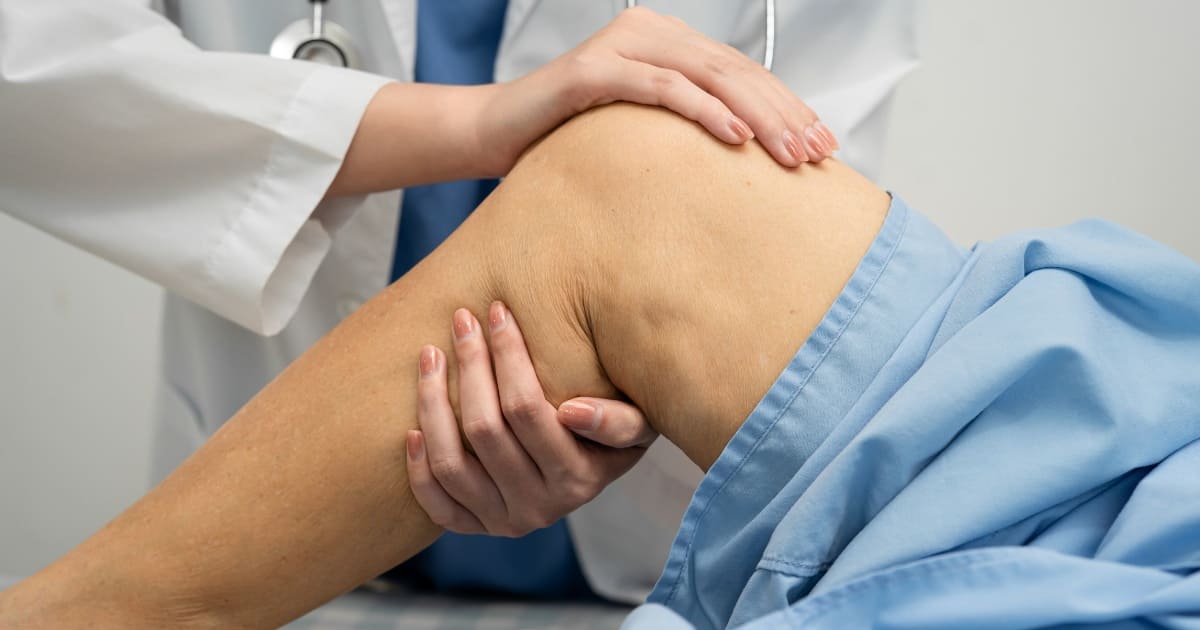
Treatment approaches for knee osteoarthritis
Treatment for knee osteoarthritis depends on severity, starting from non-surgical methods to surgery.
- Behavior modification; avoid postures that place pressure on the knee, such as squatting, kneeling, or sitting with legs folded to the side
- Exercise to strengthen muscles around the knee
- Weight control
- Use pain-relieving medication
- Intra-articular injections in some cases
- Surgery to treat knee osteoarthritis
When is surgery needed for knee osteoarthritis?
Although many patients can control knee osteoarthritis symptoms, when pain interferes with daily life to the point that you can no longer do what you used to, it is a sign that it is time for knee replacement surgery so you can return to living as close to normal as possible, such as:
- Unable to walk far without needing to stop and rest
- Difficulty getting up from a chair
- Poor sleep due to knee pain
- Noticeably reduced quality of life
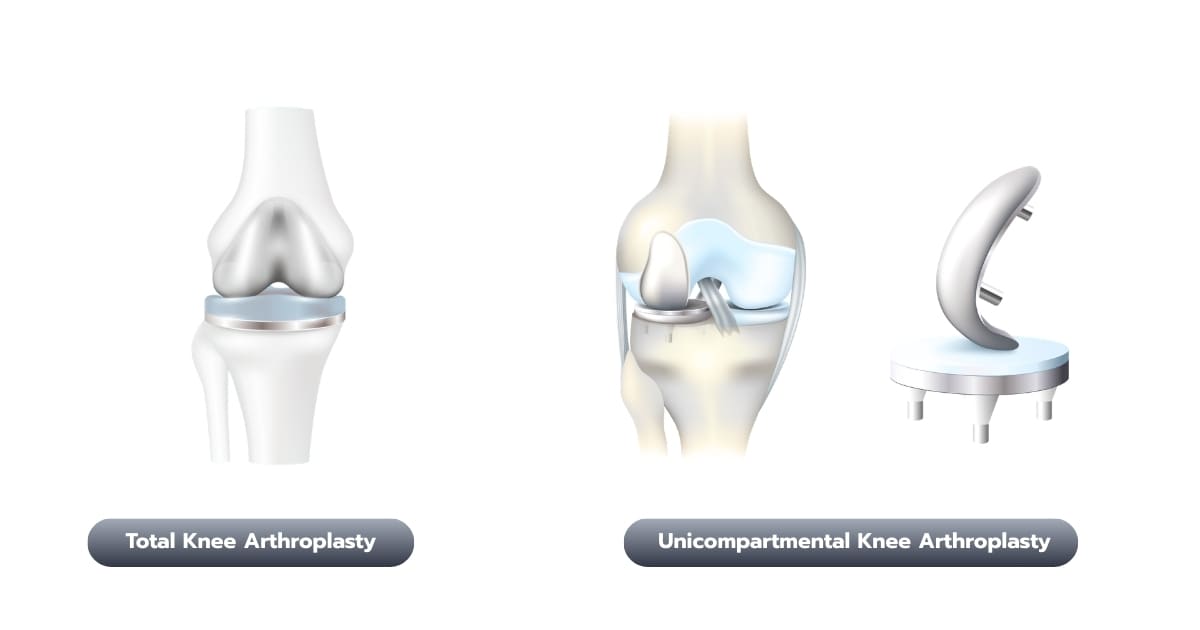
What is partial knee replacement?
The knee joint consists of 3 main parts: the medial compartment, the lateral compartment, and the patellofemoral (kneecap) compartment. Total knee replacement replaces all 3 parts. However, in reality, about 20 – 30% of patients have osteoarthritis in only one compartment, because when the knee degenerates, the cartilage on the inner side typically wears out before the rest of the joint. Partial knee replacement (Unicompartment Knee Arthroplasty – UKA) therefore replaces only the damaged part while preserving the healthy part. The doctor removes the worn joint surface and replaces it with a metal component, while keeping the healthy joint surface. This makes patients feel more natural when walking or doing activities, reduces injury to the tissues around the knee and damage to the ligaments around the knee joint, causes less pain, and enables faster recovery.
Advantages of partial knee replacement
- Preserves the natural knee structure
- Important ligaments remain intact
- A feeling close to the original knee before surgery

What is robotic-assisted partial knee replacement?
Robotic-assisted partial knee replacement (Robotic – Assisted Unicompartmental Knee Arthroplasty) is surgery that removes the worn knee joint surface and replaces it with a metal component, using a robotic-assisted surgery system to help plan the operation in advance via a simulated image displayed on a screen, precisely calculate the leg axis alignment, adjust ligament tension balance, and control the position and size of the knee implant to best fit during surgery. This helps the surgeon more accurately remove the worn surface and place the knee implant in the correct position, reducing deviations in implant placement and achieving the planned treatment goals.
Advantages of robotic-assisted partial knee replacement
- Small incision
- Less blood loss
- Faster recovery
- Less post-operative pain
- Feels like a natural knee
- Balanced walking
- Extends the lifespan of the knee implant
- After surgery, you can start weight-bearing walking sooner and return to activities faster
Knee replacement surgery is not something to be afraid of, and not everyone needs a total knee replacement. For patients with osteoarthritis in only part of the knee, robotic-assisted partial knee replacement helps improve accuracy, preserves as much natural structure as possible, and enables a confident return to daily life—because the goal of treatment is not only pain relief, but also returning to a good quality of life.
A hospital specialized in robotic-assisted partial knee replacement
Hip and Knee Center, Bangkok Hospital International, a hospital for bone and brain care, is ready to treat all knee osteoarthritis problems with an experienced team of specialist doctors and a multidisciplinary team that provides close consultation and care, together with modern tools and technology for robotic-assisted partial knee replacement surgery—so you can move with confidence every day.
Doctors specialized in robotic-assisted partial knee replacement
Dr.Sarit Hongvilai Knee and hip specialist surgeon, Bangkok Hospital International, hospital for bone and brain care
You can click here to make an appointment yourself.