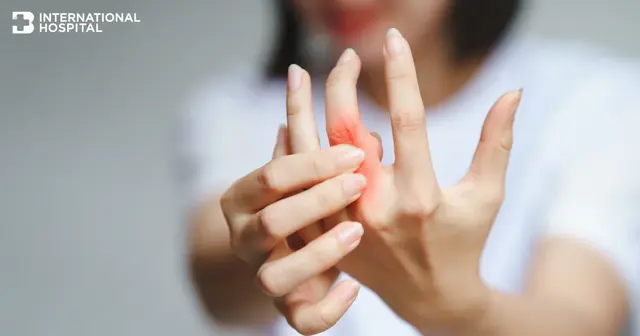

A jammed finger is an injury that can easily occur in everyday life—whether when catching a ball and it strikes the fingertip directly, accidentally bracing your hand on the ground when you fall, or simply shutting a door and your finger hits the edge. Many people think it is minor and will go away on its own, but in reality, jammed finger symptoms have several levels of severity. In some cases, the joint ligaments may tear or there may be an associated fracture. If not cared for properly, it may cause finger deformity or long-term joint stiffness. Knowing the symptoms, first-aid methods, and warning signs that warrant medical attention helps you take appropriate care from the start.
Jammed finger Jammed hand: What is it?
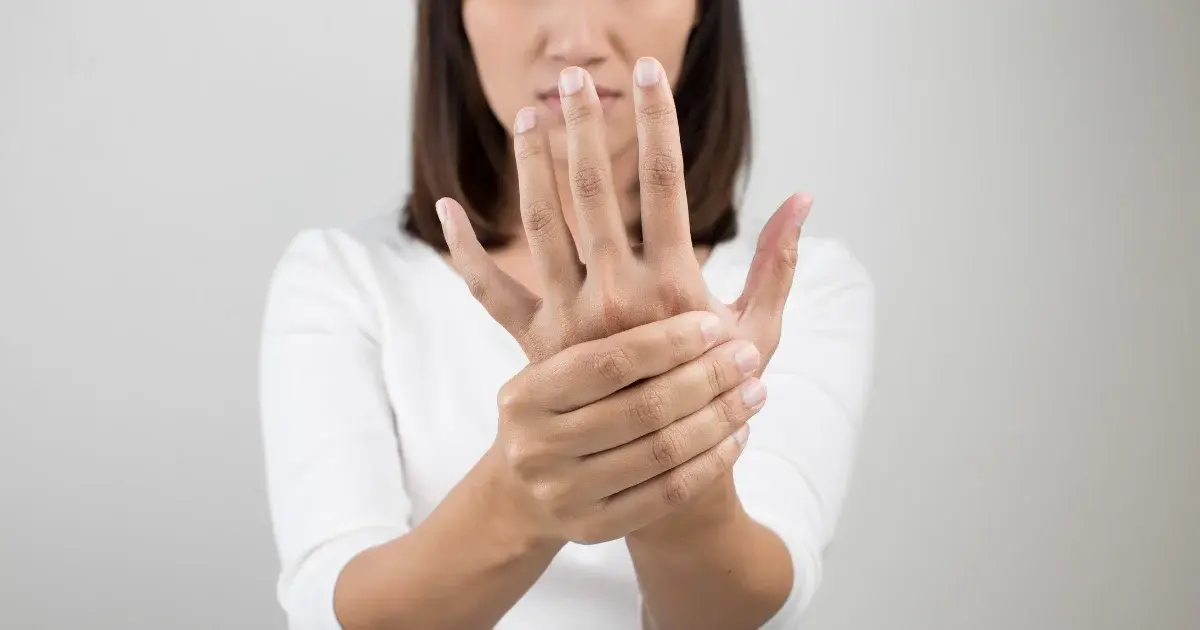
A jammed finger, which some people also call a jammed hand (Jammed Finger), is an injury to a finger joint caused by a straight-on impact to the fingertip. This force drives the finger bones together until the ligaments around the joint are overstretched or torn. Medically, a jammed finger is therefore classified as a type of finger sprain (ligament injury of the finger joint).
The joint most commonly injured is the middle finger joint (Proximal Interphalangeal Joint – PIP), which is the joint in the middle between the base and the fingertip. A jammed finger can occur in any finger, including the thumb, and is commonly seen in people who play ball sports that involve catching, such as basketball, volleyball, or baseball.
Causes of a jammed finger and jammed hand
The main cause of a jammed finger is a force that strikes directly into the fingertip while the finger is extended, causing the joint to bear more compressive force than the ligaments can withstand. Common everyday situations include:
- Sports: missing a catch or pass so that the ball hits the fingertip—this is a common cause among people who exercise.
- Falling and bracing with the hand: body weight transfers to the fingertips and wrist, compressing the finger joints or twisting them in the wrong direction.
- Impact during general activities: for example, the finger hits the edge of a door, table, or wall while walking or handling objects.
- Manual work: work that involves lifting, pushing, or gripping heavy objects may cause unexpected impact to the fingers.
In addition to impact, twisting or bending the finger in an unnatural direction can also injure the finger joint ligaments. Severity therefore depends on both the magnitude of the force and the direction the finger receives it.
How many severity levels are jammed finger symptoms classified into?
Common symptoms of a jammed finger include pain around the finger joint, swelling, redness, difficulty moving the finger or making a fist, and tenderness to pressure. Doctors classify the severity of ligament injury into 3 levels based on the degree of ligament damage, which affects treatment approach and recovery time.
Grade 1: Mild ligament injury
At this level, the ligament is stretched beyond normal but not torn. Patients usually have mild pain and slight swelling around the joint. The joint remains stable, and the finger can still be moved almost normally. This level often improves with rest and proper basic first aid.
Grade 2: Partial ligament tear
The ligament is partially torn, leading to noticeable swelling, increased pain, possible bruising, and limited finger movement. Some people feel the joint is loose or unstable when gripping objects. This level often requires a finger support device and should be evaluated by a doctor.
Grade 3: Complete ligament tear
This is a severe level, with a complete ligament rupture. The joint is unstable and may appear deformed or dislocated from its original position. Patients often have severe pain and swelling and cannot move the finger. In some cases, the ligament pulls off a small piece of bone with it. This level requires prompt medical attention because prolonged splinting or surgery may be needed.
What is the difference between a jammed finger and a broken finger?
A jammed finger and a broken finger can result from similar impacts and share symptoms such as pain, swelling, and bruising, making them difficult to distinguish by sight alone. The key difference is that a jammed finger involves injury to the ligaments around the joint, whereas a broken finger is a bone fracture of the finger bone. The table below summarizes basic points to compare.
|
Topic |
Jammed finger |
Broken finger |
|
Injured structure |
Ligaments around the finger joint |
Finger bone |
|
Pain |
Pain around the joint; often can move the finger somewhat |
Severe pain, especially when pressed or moved |
|
Swelling and bruising |
Swelling around the joint; may have mild bruising |
Marked swelling; obvious bruising |
|
Finger appearance |
Usually remains straight/normal |
May be bent, twisted, or deformed |
|
Confirmation |
Doctor’s examination along with X-ray |
X-ray is required to assess bone alignment |
The key point to remember is that outward symptoms alone cannot confirm whether a finger is fractured. If the pain is severe, swelling does not subside, or the finger looks deformed, you should have a doctor evaluate it and get an X-ray to rule out a fracture.
Basic first aid for a jammed finger or jammed hand
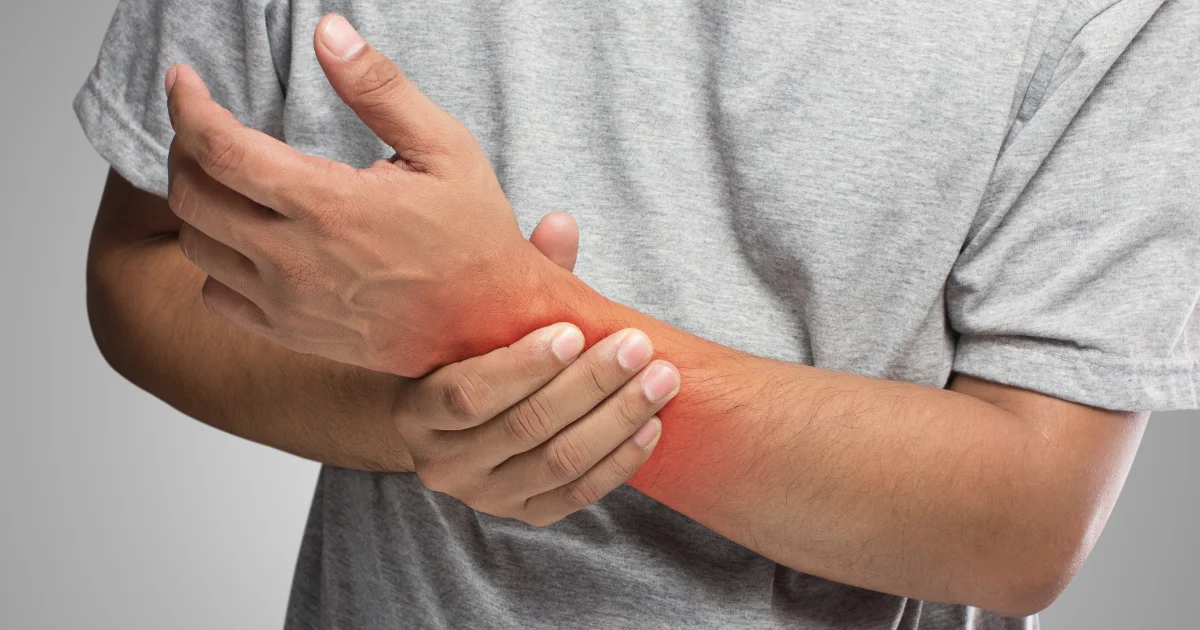
When a jammed finger or jammed hand occurs, first aid in the early period after injury can help reduce pain and swelling. The key principles are to rest the finger joint, reduce inflammation, and prevent reinjury by following these steps:
Rest
Stop the activity as soon as possible, especially sports, and avoid using the injured finger to grasp, lift, or exert force to prevent further stretching or tearing of the injured ligaments. Remove rings or finger jewelry as early as possible before swelling increases, because once the finger swells it may be difficult to remove.
Cold compress
Use an ice pack or cold gel pack wrapped in a thin cloth and apply it to the finger joint for about 15 minutes at a time. Repeat periodically during the first few days after injury. Cold helps reduce swelling and relieve pain. Do not place ice directly on the skin, as it may cause cold injury to the skin.
Use medical tape or an elastic bandage around the finger joint
Taping the injured finger to an adjacent finger (Buddy Taping) with medical tape helps support the joint and limit movements that could cause reinjury. Place a thin piece of gauze or cotton between the fingers to reduce friction and moisture, and wrap snugly but not so tight that the finger becomes pale, numb, or changes color.
Warning signs: When you should see a doctor promptly
Mild jammed finger injuries often improve with self-care, but the following symptoms may indicate a severe ligament tear, dislocation, or fracture and should be evaluated by a doctor promptly to prevent long-term deformity or reduced function.
- Severe, intolerable pain, or pain that does not improve despite rest and cold compresses
- Increasing swelling or extensive bruising
- A finger that is crooked, bent, twisted, or looks deformed compared with before
- Inability to straighten or bend the finger, or inability to make a tight fist
- Numbness, paleness, coldness, or dark purple discoloration of the finger
- No improvement within a few days, or persistently abnormal finger movement after several weeks
Elevate the hand
While waiting to see a doctor or during recovery at home, elevate the injured hand above heart level—for example, rest your hand on a pillow while sitting or lying down. This helps blood and fluid return more easily, reducing swelling and throbbing pain around the finger joint.
Medical treatment approaches for a jammed finger
The doctor will start by taking a history of the injury and examining the finger joint’s appearance, stability, and range of motion, along with an X-ray to check whether there is an associated fracture or dislocation. A treatment plan is then made based on severity. Treatment outcomes depend on the individual and the doctor’s assessment.
Medications for jammed finger symptoms
A doctor may prescribe pain relievers or nonsteroidal anti-inflammatory drugs (Nonsteroidal Anti-Inflammatory Drugs – NSAIDs) to reduce pain and swelling in the early phase. Patients should take medications as advised by a doctor or pharmacist, especially those with underlying conditions such as gastritis/peptic ulcer disease, kidney disease, or those taking other medications.
Finger splint or soft splinting
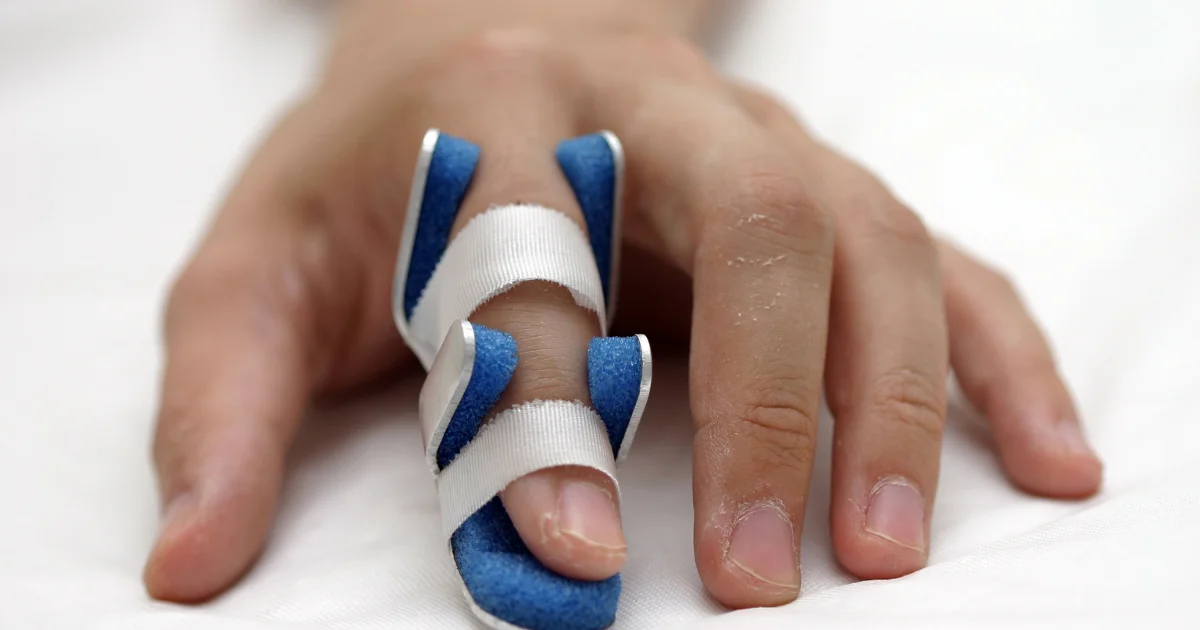
If there is a partial tear or joint instability, the doctor may recommend a finger splint or a soft splint to position the joint appropriately and limit movement while the ligament heals. Duration varies depending on injury severity. Patients should not remove the device on their own before the doctor re-evaluates.
Physical therapy for joint rehabilitation
After pain and swelling decrease, a physical therapist will teach exercises that gradually increase joint motion, practice bending, straightening, and making a fist, and build hand muscle strength to reduce the risk of joint stiffness and help return to daily activities or sports as close to normal as possible.
Surgery to repair ligaments
Surgery is an option when the ligament is completely torn, the joint is dislocated and cannot be reduced, or there is an avulsion fracture where a bone fragment has been pulled off with the ligament. The surgeon will repair the ligament or reattach the bone fragment. Afterward, the patient needs splinting and ongoing physical therapy. Treatment outcomes depend on the individual and the doctor’s assessment.
Care for jammed finger and jammed hand at Bangkok Hospital International
The Bone and Joint Center, Bangkok Hospital International provides diagnostic and treatment services for hand and finger injuries, from jammed fingers and torn finger joint ligaments to finger fractures, by orthopedic specialists working together with physical therapists to plan appropriate treatment and rehabilitation for each patient.
Article summary
A jammed finger or jammed hand is a ligament injury around the finger joint caused by an impact to the fingertip. Severity ranges from mild stretching to complete ligament rupture. First aid—resting the finger, applying cold compresses, buddy taping, and elevating the hand—can help relieve symptoms early on. However, if pain is severe, the finger looks deformed, you cannot move the finger, or symptoms do not improve, you should see a doctor for evaluation and X-ray, because appropriate early treatment reduces the risk of long-term deformity or stiffness.
Frequently asked questions (FAQ) about jammed finger and jammed hand
1. How many days does a jammed finger take to heal?
The timeframe depends on the severity of the injury. Mild jammed fingers often improve within a few days to about 1–2 weeks. Cases with ligament tears or requiring surgery may take several weeks to months, and some people may continue to have slight swelling or stiffness for a period of time.
2. Should you use a hot or cold compress for a jammed finger?
In the early period after injury, a cold compress is recommended because it helps reduce swelling and relieve pain. Heat should not be used while the joint is still swollen and red, because heat may increase swelling. If you want to switch to a warm compress later, consult a doctor or physical therapist first.
3. If you have a jammed finger, can you pull it back into place yourself?
You should not pull the finger back into place yourself, because a finger that looks deformed may also have a fracture or dislocation. Pulling without knowing the injury pattern may further damage ligaments, bones, or nerves. You should immobilize the finger and see a doctor for an X-ray and proper reduction.
4. If you have a jammed finger or jammed hand, can you massage to relieve symptoms?
You should not massage or squeeze the joint area while it is still painful and swollen, because it may worsen inflammation or further tear the injured ligaments. Once symptoms improve, rehabilitation exercises or massage should be done according to the advice of a doctor or physical therapist.
5. If you leave a jammed finger untreated, is it dangerous?
It can have long-term negative effects, especially when there is a ligament tear or an associated fracture. Without treatment, the joint may become stiff, deformed, loose/unstable, or chronically painful, affecting gripping and daily hand function.