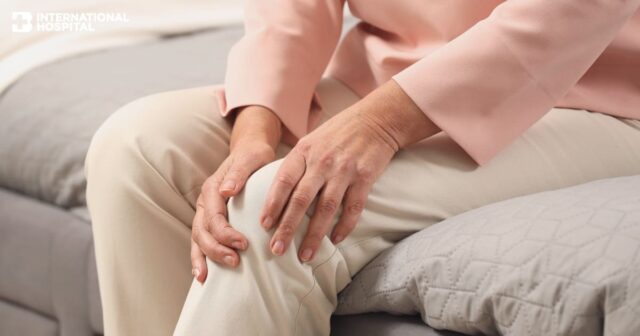






Knee pain, stiff or stuck knee joints, hearing noise in the knees, swollen knees, feeling of weakness or instability in the knees, knee pain when climbing – descending slopes or stairs, pain when sitting on the floor such as sitting cross-legged, meditating or squatting, pain when walking on flat surfaces. Anyone experiencing these symptoms should not ignore them, as you may be at risk of “osteoarthritis” without realizing it. Many might think that this disease occurs only in older people, but did you know that working-age individuals or even teenagers are also at risk?
Understanding the Knee
The knee is one of the most complex joints in the body because it is the joint between the thigh bone and the shinbone, which are the longest bones in the body. Besides, it has to support rotation, folding, and spreading according to the body’s movement needs. Normally, a knee joint will have a gap filled with a very thick fluid called Synovial Fluid, which acts as a cushion for the joint.
However, in those with degenerative conditions, the synovial fluid becomes thicker and less flexible than normal, leading to a loss of shock absorbency when pressure is applied to the knee. The soft bone that serves to protect the ends of the thigh bone and shinbone will then experience impact and friction, causing pain.
Causes of Knee Degeneration
The primary cause of knee degeneration comes from the wear and tear of the cartilage due to heavy usage. It is a disease that occurs from the joint deterioration over time and usage, mostly found in the elderly. However, several factors contribute to the disease, not just one single cause, including
- Being overweight, obese
- Overuse of the knee joint
- A history of severe knee injuries, such as broken bones entering the joint, torn knee ligaments, torn meniscus
- A history of knee infection
- Chronic arthritis diseases, such as rheumatoid or gout
Studies have found that females are at a higher risk of knee osteoarthritis than males, and genetic factors also play a role. If you have parents, or siblings who suffer from knee degeneration, you are at greater risk.
Stages of Knee Degeneration
Knee degeneration is divided into 4 stages, namely
- Stage 1 Minor pain, no change in the shape, but might feel stiffness or friction in the joint.
- Stage 2 The surface of the joint cartilage begins to wear, might need an x-ray examination.
- Stage 3 The joint surface becomes rough, and the joint cartilage begins to deteriorate, leading to increased pain and stiffness.
- Stage 4 The joint cartilage wears away throughout the knee, causing severe pain and high possibility of needing surgery.
Knee Diagnostic
Before treatment, it’s necessary to undergo a diagnosis starting with a complete health history, symptoms, the nature of knee pain, and knee functionality. Then a physical examination, an examination of knee function, muscle strength around the knee, and ligament strength will be conducted. X-Rays are used to view the condition and damage of the knee, and sometimes blood tests, special X-Rays, or MRI might be needed to see the condition of the muscles and different tissues around the bone.
Treating Knee Degeneration
The treatment for knee degeneration depends on the severity of the disease. In early stages, typical pain relievers such as Paracetamol, Aspirin, or anti-inflammatory drugs (NSAIDs) may be used, possibly in combination, along with physical therapy and regular exercise, weight control, and appropriate diet, which may be sufficient to reduce pain.
Another option for these patients is local cortisone injection to reduce the inflammation of the joint, which is a cause of the pain and loss of mobility.
A new option for treating knee osteoarthritis is Viscosupplementation by injecting synthetic joint fluid to replace the deteriorated natural joint fluid, which can reduce or eliminate joint pain for about 6 months or more, reduce joint sticking, and improve joint mobility, helping patients to return to normal daily activities.

Patients with knee degeneration often have issues with knee pain when walking, sitting on the floor, or getting up from sitting, which are common symptoms. If the symptoms are not severe, modifying posture and behavior, such as sitting on a chair instead of the floor, using the arms to help when getting up, or using a cane when walking, as well as strengthening thigh muscles can help alleviate pain. If symptoms are severe or do not improve with posture modification, it is recommended to consult a doctor for diagnosis, treatment, and further advice.
Osteoarthritis and Exercise
Many patients with osteoarthritis worry about exercising. Doctors advise exercising in a way that does not burden the knees, avoiding jumping, impacts, and twisting the knees. Exercises in water, like swimming or walking in water, help reduce the load on the knees, encourage good knee movement, and cycling can also be an option. Strengthening thigh muscles without using weights, like sitting and tensing thighs while lifting toes, can help strengthen muscles and alleviate pain. For patients experiencing pain in the front of the knee, which indicates degeneration of the patellofemoral joint, avoid squatting, stepping up high, or extending the knee against resistance, as it could increase pain and degeneration.

Knee degeneration can be treated for a good quality of life, but it depends on the severity of the knee degeneration in the patient. One factor causing knee degeneration is increasing age, which cannot be changed. However, other risk factors can be avoided by modifying posture and behavior, such as maintaining a standard weight, avoiding heavy and prolonged use of the knee, and exercising to strengthen the thigh muscles.