

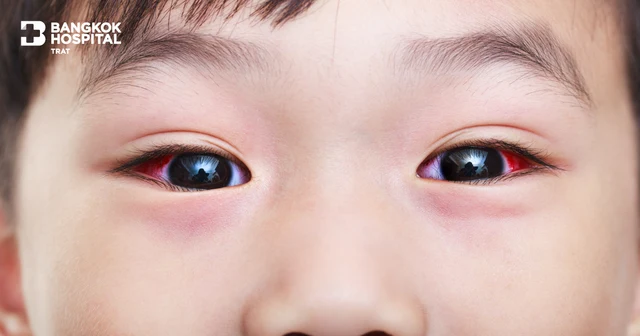
Viral conjunctivitis (red eye) is a common condition, especially in young children and primary school students. It is usually not severe; however, if not treated properly from the early stage, bacterial superinfection may occur and could lead to complications affecting vision.
How is red eye transmitted?
The disease commonly spreads in crowded environments. It can be transmitted through direct contact with tears or eye discharge from an infected person. Most infections occur indirectly through:
- Touching or rubbing the eyes with contaminated hands
- Sharing personal items such as towels, handkerchiefs, eyeglasses, water containers, or other personal belongings with an infected person
- Flies or small insects coming into contact with the eyes
What are the symptoms of red eye?
Symptoms usually appear within 24–48 hours after exposure. Common symptoms include eye irritation, eye pain, excessive tearing, sensitivity to light, eye discharge, swollen eyelids, and redness of the conjunctiva. The condition may start in one eye and spread to the other, or affect both eyes simultaneously. Some patients may also experience mild fever, body aches, or limb discomfort. Most cases resolve on their own within 1–2 weeks if there is no bacterial complication.
How to care for yourself when you have red eye
- If you experience the symptoms mentioned above, you should seek medical attention promptly. A doctor may prescribe antibiotic eye drops or ointment to prevent bacterial complications. Treatment is typically continued for about 7 days. In some cases with fever or headache, symptomatic medications such as antipyretics or pain relievers may be used. If symptoms worsen, you should return to see a doctor immediately.
- Rest your eyes and avoid excessive eye use
- Stay at home from school or work for about 1–2 weeks, or until the symptoms completely resolve. Avoid crowded places such as cinemas or shopping malls, as the infection can spread to others.