


1. What is Type 2 Diabetes?
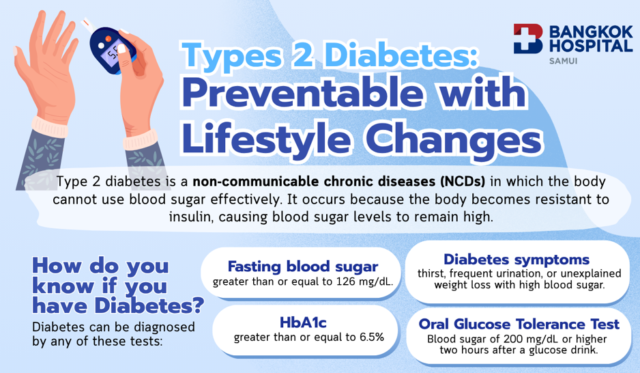
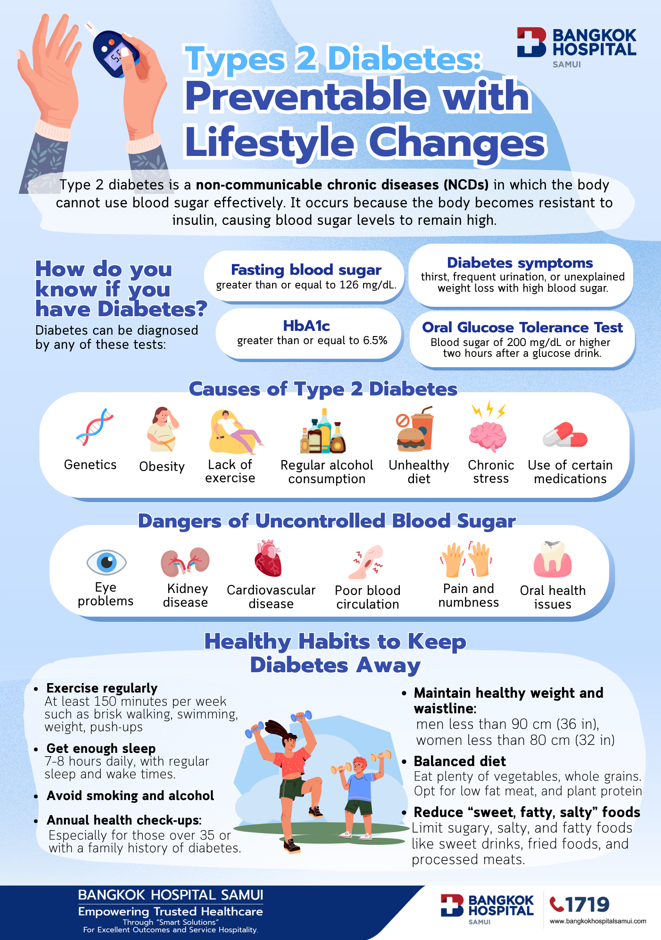
Type 2 Diabetes Mellitus is a non-communicable disease (NCD) in which the body cannot use blood sugar effectively. It occurs due to insulin resistance (a hormone that helps move glucose from the blood into the cells), causing blood sugar levels to remain consistently high. This leads to damage in the blood vessels, heart, kidneys, eyes, and nervous system.
2. Diagnosis of Diabetes
Diabetes can be diagnosed using one of the following four methods:
- Fasting blood sugar (after at least 8 hours of fasting) ≥126 mg/dL.
- Clear symptoms of diabetes (such as frequent thirst, excessive urination, and unexplained weight loss) together with a random blood sugar level ≥200 mg/dL (not necessarily fasting).
- Oral Glucose Tolerance Test: after consuming 75 g of glucose, blood sugar at 2 hours ≥200 mg/dL.
- HbA1C (glycated hemoglobin) ≥6.5% ≥6.5% measured by laboratory testing.
3. Causes of Type 2 Diabetes
- Genetics:Higher risk if parents or siblings have diabetes.
- Obesity: Particularly abdominal obesity, which increases insulin resistanc
- Unhealthy diet: Excess sugar, sweetened beverages, desserts, processed foods, and high-fat, high-salt foods.
- Lack of exercise:Leads to low energy expenditure and higher blood sugar retention.
- Regular alcohol consumption: Damages the pancreas and increases risk.
- Chronic stress:Disrupts hormones and raises blood sugar levels.
Other contributing factors: Infections, gestational diabetes, or long-term use of certain medications such as steroids and contraceptives.
4. Dangers of Diabetes
Persistent high blood sugar levels can damage the kidneys, heart, blood vessels,
- Eye problems (diabetic retinopathy): High sugar damages tiny blood vessels in the retina, causing blurred vision, retinal degeneration, or permanent blindness. eyes, nerves, teeth, and gums. Or teeth, and gums.
- Kidney disease: Diabetics are 10 times more likely to develop kidney failure due to damaged renal blood vessels.
- Cardiovascular disease: Increases risk of atherosclerosis, heart attack, and stroke.
- ปัญหาหลอดเลือดที่ขา เลือดไหลเวียนไม่ดี ปลายเท้าเย็น ขนขาร่วง ผิวหนังเป็นมัน หากแผลติดเชื้อ อาจลุกลามจนต้อง ตัดนิ้วเท้าหรือขา
- Peripheral artery disease: Poor circulation causes cold feet, hair loss, shiny skin, and wounds that can lead to infections and amputations.
- Neuropathy: Numbness or tingling in hands and feet; reduced pain sensation increases risk of unnoticed infections.
5. Self-Care to Reduce Risk of Diabetes
- Maintain healthy weight and waistline: Avoid abdominal obesity. Men should have a waistline ≤90 cm (36 in), women ≤80 cm (32 in).
- Balanced diet:: กินผักให้ได้ครึ่งหนึ่งของจานอาหาร (ประมาณ 50%) เลือกข้าวไม่ขัดสี หรือธัญพืช ผลไม้ไม่หวานจัด และเลือกเนื้อสัตว์ไม่ติดมัน เช่น ปลา ไก่ (ไม่ติดหนัง) ไข่ขาว เต้าหู้
- Reduce “sweet, fatty, salty” foods : Avoid sugary drinks, desserts, fried foods, high-fat dishes, snacks, and processed meats like sausages, bacon, and ham.
- Exercise regularly:At least 150 minutes per week of aerobic activity such as brisk walking, swimming, or cycling, plus strength training (weights, push-ups, resistance bands).
- Get enough sleep:7–8 hours daily, with regular sleep and wake times.
- Avoid smoking and alcohol: Both increase risk of diabetes, heart disease, and vascular complications.
- Annual health check-ups:Especially for individuals over 35 or those with a family history of diabetes.
Type 2 diabetes is preventable with lifestyle modifications—healthy eating, regular exercise, and proper rest. Routine health check-ups are essential keys to lowering the risk and ensuring a stronger, healthier, and longer life.
Sources:
- International Diabetes Federation. Complications. [Internet]. Brussels: International Diabetes Federation; [cited 2025 Aug 22]. Available from: https://idf.org/about-diabetes/diabetes-complications/
- ผศ.พญ. พิมพ์ใจ อันทานนท์. โรคเบาหวาน คืออะไร. [อินเตอร์เนต]. กรุงเทพฯ: สมาคมโรคเบาหวานแห่งประเทศไทย. [เข้าถึงเมื่อ 21 สิงหาคม 2568]. เข้าถึงได้จาก https://www.dmthai.org/new/index.php/sara-khwam-ru/sahrab-bukhkhl-thawpi/health-information-and-articles/health-information-and-articles-2561/2018-diabates-31