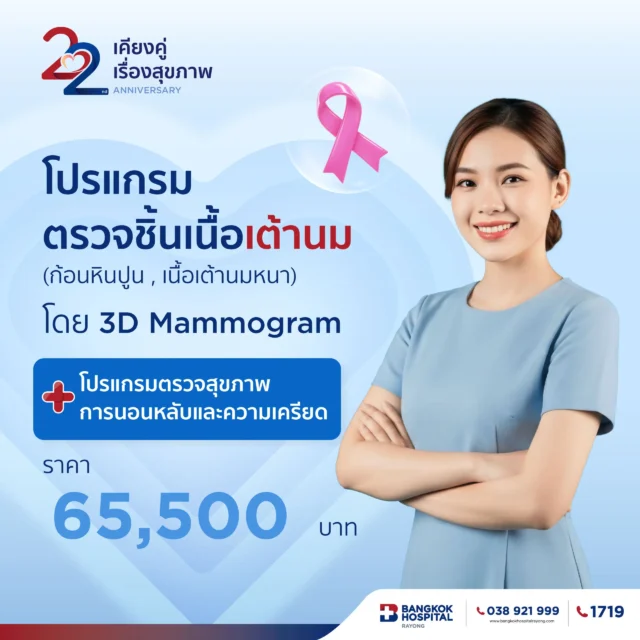
Important information about breast cancer
There is currently no definite way to prevent breast cancer. However, detecting cancer cells at an early stage can help reduce the chances of developing the disease and increase the chances of a complete cure. If cancer cells are found at an early stage, the chances of a complete cure and the risk of recurrence are higher.
Who should get breast cancer screened?
- People with a family history of abnormal genes If a first-degree relative has an abnormal gene, testing should begin at age 25.
- Women aged 40 years and over You should get a breast cancer screening every year.
- People with breast abnormalities For example, if you feel a lump in your breast, experience bleeding from your nipple, or notice any other abnormalities, you should see a doctor immediately.
Preparing for breast cancer screening
- Eating and drinking: You can eat normally, but you should avoid eating until you are very full.
- Avoid using products that may affect the test: Do not apply talcum powder, lotion, or deodorant to the breast and armpit areas as this may interfere with the test results.
- Prepare related documents: If you have had a breast cancer screening at another hospital, you should bring the results and related documents for your doctor to consider.
- Report abnormal symptoms: Tell the radiologist about any symptoms or concerns you have about your breast health for an accurate diagnosis.