

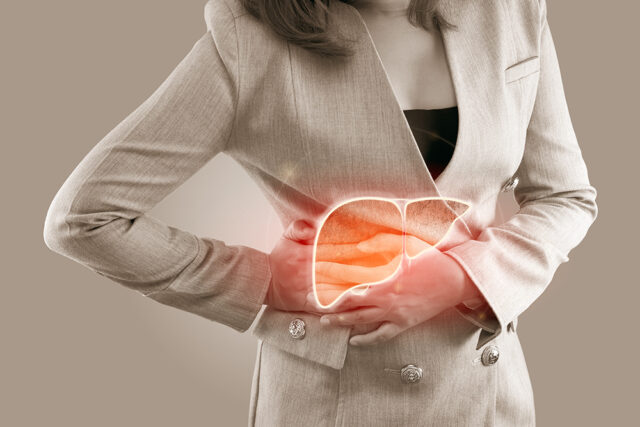
Liver cancer

3 minute(s) read
Liver cancer
Bangkok Rayong Cancer Hospital
Table of contents
  • Types of cancer
  • Cause
  • Symptom
  • Risk factors
  • How many stages are there in cancer?
  • Screening methods
  • Treatment method
  • Preparation before undergoing examination
  • See All

  • What is Liver Cancer?

    Liver cancer is the most common cancer in Thai men. It typically occurs in people aged 30-70 years. It is 2-3 times more common in men than in women, as men have higher risk factors than women. Early-stage liver cancer often has no symptoms. There are two types of liver cancer:
    Primary liver cancer arises directly from liver tissue and is divided into two categories: hepatocellular carcinoma and bile duct carcinoma.
    Secondary liver cancer is caused by metastasis from other cancers, such as lung cancer and breast cancer.

    Causes of Liver Cancer

    1. Patients with a history of Hepatitis B or C
    2. People who regularly drink large amounts of alcohol
    3. People exposed to aflatoxin or mold found in stale peanuts, dried chilies, garlic, and onions
    4. People with fatty liver disease
    5. People with cirrhosis of the liver from any cause, such as fatty liver leading to hepatitis, chronic bile duct inflammation, or genetic diseases that cause iron accumulation in the liver
    6. People who regularly smoke
    7. People with obesity, diabetes, and metabolic syndrome
    8. People infected with liver flukes, a parasite found in contaminated foods such as fermented foods, fermented fish, raw fish, and raw meat, increase the risk of bile duct cancer.

    What are the symptoms of liver cancer?

    1. In the early stages of liver cancer, there are no symptoms.
    2. Feelings include fatigue, loss of appetite, and weight loss.
    3. Feelings include abdominal pain and bloating.
    4. Pain in the right rib cage.
    5. Jaundice (yellowing of the skin and eyes).
    6. Abdominal distension and fluid in the ascites.
    7. Leg swelling and pleural effusion.
    8. Vomiting blood and black stools.

    Factors and Risks of Liver Cancer

    The most common risk factor for liver cancer is hepatitis B infection, which is primarily transmitted from mother to child. However, in developed countries, the primary cause of liver cancer is alcohol consumption.

    How many stages are there of liver cancer?

    1. Stage 1 (Early) and Stage 2 (Intermediate) sometimes cause no or only mild symptoms, such as abdominal pain and bloating, which can confuse patients with gastritis.
    2. Stage 3 (Advanced) and Stage 4 (Terminal) show signs of liver problems, such as jaundice (yellowing of the skin and eyes), ascites, loss of appetite, nausea, and vomiting.

    Liver Cancer Diagnosis and Screening Methods

    Liver cancer diagnosis includes:

    1. History taking and physical examination
    2. Blood test for the liver cancer marker “alpha-fetoprotein (AFP)”
    3. Implantation imaging (such as ultrasound, CT scan, or MRI)
    4. Biopsy

    Liver cancer screening is recommended for those at risk:

    1. Patients with cirrhosis of any cause
    2. Patients infected with hepatitis B or C, or carriers of these viruses
    3. Men over 40 and women over 50, or with a family history of liver cancer due to hepatitis B infection, should see a doctor for an alpha-fetoprotein (AFP) test and a liver ultrasound every 3-6 months.

    Liver Cancer Treatment

    • The principle of liver cancer treatment is that if the tumor is surgically removed, surgery or a liver transplant is recommended. However, if the tumor is very large or multiple, such as 3-5 tumors or more, treatment may include intravenous chemotherapy, oral chemotherapy, or symptomatic treatment in patients in the final stages.
    • However, a common problem is that the general public often neglects screening. Most patients seek medical attention only when they have severe symptoms, such as jaundice (yellowing of the skin and eyes), a severely enlarged abdomen, or fluid in the ascites. These symptoms are already at a stage where surgery is no longer possible.
    • Therefore, screening for gastrointestinal and liver disease is essential. If even minor abnormalities are found, such as loss of appetite, poor appetite, or pain in the right rib cage, a doctor should be consulted for screening.

    Preparing for Liver Cancer Screening

    1. Patients will undergo blood tests to assess liver function, blood clotting, platelet counts, kidney function, and a tumor marker (AFP) blood test.
    2. Patients will undergo a computed tomography (CT) scan, ultrasound, or magnetic resonance imaging (MRI) scan, and may undergo a biopsy.
    3. Fast food and water should be fasted for at least six hours prior to the test.
    4. Patients will undergo preparation, including shaving the groin area where the catheter will be inserted.
    5. Patients will receive intravenous fluids on the day of the test.