Thyroid cancer

7 minute(s) read
Thyroid cancer
Bangkok Rayong Cancer Hospital
Table of contents
  • Types of cancer
  • Cause
  • Symptom
  • How many stages are there in cancer?
  • Screening methods
  • Treatment method
  • Protection

What is Thyroid Cancer?

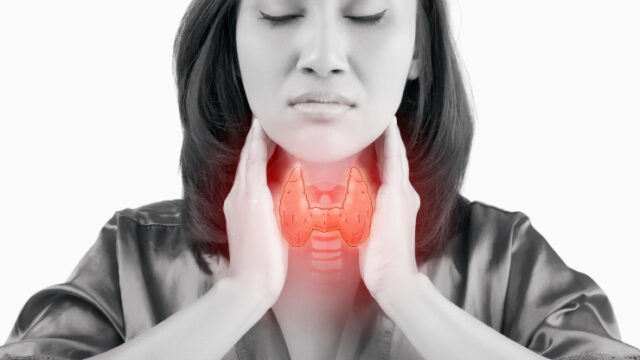
The thyroid gland is an endocrine gland located in the front of the neck, on both the left (left lobe) and right (right lobe), just below the Adam’s apple. Thyroid tissue connects the left and right lobes. The thyroid gland produces hormones that regulate the body’s energy metabolism, body temperature, muscle strength, blood lipid levels, and emotional states. If the thyroid gland fails to regulate normal bodily functions, abnormalities such as goiter, toxic goiter (thyroid disease), and thyroid cancer can occur.

Thyroid cancer is a cancer of the thyroid gland. It can affect both the left and right lobes of the thyroid, as well as the connective tissues on both sides. Thyroid cancer can be divided into two main types:

1. Thyroid cancer in which cancer cells ingest radioactive iodine or radioactive iodine. (Differentiated carcinoma) is the most common type of thyroid cancer, accounting for approximately 90-95% of all thyroid cancers. It is further subdivided into two types: papillary cell carcinoma and follicular carcinoma.

2. Thyroid cancer in which the cancer cells do not absorb radioactive iodine, which is much less common, accounting for approximately 5% of all thyroid cancers. There are several subtypes, including medullary cell carcinoma, anaplastic carcinoma, and others.

Thyroid cancer can occur at any age. Reports indicate that it occurs from ages 10 to 80, and it is more common in women than in men. It is reported that approximately 6 women and 2 men per 100,000 people have thyroid cancer.

Causes/Factors Causing Thyroid Cancer

The exact cause of thyroid cancer is currently unknown, but several factors are involved. These factors include:

1. Age: People aged 25-65 years may be more likely to develop thyroid cancer than other age groups.

2. Genetics: Certain genetic diseases have been reported to be associated with thyroid cancer.

3. Environmental factors: For example, thyroid cells are exposed to radioactive radiation in doses that are not life-threatening, but can cause damage to their genetic makeup, such as those from nuclear power plant accidents and/or atomic bombs. Over a period of 10-20 years (with reports of cases as early as 3-5 years), certain damaged thyroid cells can expand, increasing the risk of thyroid cancer.

The thyroid gland is exposed to high doses of ionizing radiation (ironizing radiation, radiation used in diagnostics and treatment) such as radiation therapy to the head and neck in childhood to treat enlarged thymus glands. (The thymus gland is a gland responsible for the body’s immune system and is located in the upper chest. It is found in children, but disappears in adults.)

4. Gender: Although thyroid cancer can occur in people of all ages and genders, it is three times more likely to occur in women than in men.

5. Dietary iodine levels, which affect thyroid hormone function. Some studies have found that follicular thyroid cancer is more common in areas with iodine deficiency, and papillary thyroid cancer is more common in areas where iodine is added to food and/or drinking water.

6. Pre-existing medical conditions: Certain medical conditions may increase the risk of thyroid cancer, including thyroid disease, obesity, and certain hormonal disorders.

7. Exposure to radiation, such as radiation therapy to the head or neck to treat childhood diseases. Including having been involved in an accident involving a power plant or nuclear weapons may increase the risk of developing this disease. The risk depends on the amount of radiation received. However, adults who have been exposed to radiation have a lower risk of developing thyroid cancer than children.

What are the symptoms of thyroid cancer?

1. Symptoms in thyroid cancer patients are not specific, but often resemble thyroid nodules (thyroid disease) or goiter. These include an enlarged thyroid gland or a palpable lump in the neck (on the thyroid gland). This lump may be single or multiple, and is usually painless.

2. Hoarseness occurs due to the cancerous tumor pressing on or encroaching on the laryngeal nerves adjacent to the thyroid gland.

3. Difficulty breathing or swallowing due to the cancer pressing on and/or encroaching on the trachea and/or esophagus, both organs adjacent to the thyroid gland.

4. There may be swollen lymph nodes in the neck, palpable if the cancer cells have spread to the lymph nodes.

Furthermore, if the cancer has spread to other organs, symptoms may be specific to the organ to which the disease has spread. For example, if cancer has spread to the bone, pain may occur at the location where the disease has spread.

How many stages are there of thyroid cancer?

Staging of thyroid cancer differs from staging of other cancers. The patient’s age is used to determine the stage, as the severity of the disease also depends on the patient’s age. Thyroid cancer stages are as follows:

In patients under 45 years of age, the disease is divided into two stages:

Stage 1: The disease affects only one thyroid lobe or both lobes and has spread to the lymph nodes in the neck.

Stage 2: The disease has spread into the bloodstream (blood) to other organs. Once spread, The most common form of

metastasis is to the lungs, bones, scalp, brain, and liver in patients aged 45 and over. It is divided into four stages:

Stage 1: The tumor is no larger than 2 centimeters.

Stage 2: The tumor is larger than 2 but no larger than 4 centimeters.

Stage 3: The tumor is larger than 4 centimeters and has spread to lymph nodes in the neck adjacent to the thyroid gland.

Stage 4: The tumor has spread to nearby tissues and organs, or to lymph nodes in the neck other than those adjacent to the thyroid gland. The disease has spread to the bloodstream (blood) to other organs. When metastasis occurs, it most commonly involves the lungs, bones, scalp, brain, and liver.

Thyroid cancer is diagnosed by a doctor based on:

1. Symptoms and physical examination, which often reveal a thyroid nodule.

2. Aspiration of cells from the nodule for cytological examination and/or biopsy for pathological examination. This allows for a definitive diagnosis and allows the doctor to determine the type of thyroid cancer.

3. Blood tests to assess thyroid function and tumor markers, as this type of thyroid cancer produces cancer-causing substances that can be used to monitor treatment outcomes.

4. Ultrasound of the thyroid gland and neck lymph nodes to assess thyroid function and determine the extent of disease spread to lymph nodes. This may facilitate aspiration or biopsy for more accurate results.

5. A nuclear medicine thyroid imaging test (radiation used in diagnostics and treatment) called a thyroid scan, which may be performed in some patients at the doctor’s discretion.

6. A whole-body scan is a nuclear medicine test. To determine how much thyroid gland remains after thyroid surgery and to determine if cancer has spread to other organs.

7. Complete Blood Count (CBC) to assess the patient’s general physical condition before treatment.

8. Laboratory blood tests to assess kidney function, liver function, and mineral levels, such as calcium, which may be lower due to side effects of the removal of the parathyroid gland (the gland that regulates calcium balance in the body), a small endocrine gland located next to and beneath the thyroid gland, during thyroid surgery for cancer treatment.

9. Chest X-ray to examine abnormalities in the chest, heart, and lungs, including spread of disease to the lungs.

10. Urine test to assess the patient’s general physical condition before treatment.

Thyroid cancer treatment involves three main approaches:

1. Surgery

This is the first line of treatment. The most common surgical procedure is bilateral thyroidectomy, which offers advantages over partial thyroidectomy. This procedure enhances the effectiveness of radioactive iodine (radioactive iodine) therapy. This treatment is administered after surgery. The radiation destroys any remaining cancer cells in the thyroid gland that cannot be completely removed by surgery, and destroys cancer cells that may have spread to other organs throughout the body. This prevents recurrence and improves the effectiveness of blood tests used by doctors to monitor for recurrence.

This surgical procedure also significantly increases the cure rate. Therefore, in some patients who initially undergo partial thyroidectomy because the tumor was diagnosed as a tumor, a second surgery to remove both lobes of the thyroid is required after the pathological examination reveals thyroid cancer.

2. Radioactive iodine therapy

This radioactive iodine is used to treat the thyroid. Radioactive iodine is a radioactive substance prepared in capsule or liquid form for easy patient administration. This radioactive iodine is used to treat thyroid cancer that may remain after surgery, both in the neck and surrounding tissues. It can also help treat thyroid cancer that has spread to other organs, such as lymph nodes, lungs, and bones. Radioactive iodine may be administered in a single dose or more than once, depending on the severity of the disease and the physician’s discretion.

3. Continuous Thyroid Hormone Administration

Taking thyroid hormones continuously for life allows the body to compensate for the hormones after both lobes of the thyroid are removed. This also helps control thyroid cancer and prevents recurrence. Therefore, patients should continue taking thyroid hormones as recommended by their treating physician. Do not skip doses.

How to Prevent Thyroid Cancer

Currently, there is no effective method for preventing thyroid cancer. However, there are some recommendations that may reduce the risk of developing the disease, including:

  • Avoidance of the environmental causes mentioned above, such as avoiding exposure to radioactive substances Eat foods containing iodine (seafood, salt, curry, fish sauce, salty foods/snacks) in moderation.
  • Avoid eating too much or too little.
     
  • If you have a lump on the front of your neck that moves up and down with swallowing, see a doctor for diagnosis and treatment.