
Bangkok Hospital
Caret Right
Search
CTA Curve
Find doctors icon
Find doctors
Appointments icon
Appointments
Contact icon
Contact
Call undefined
Menu
  • Select Hospital

  • Language & Currency

Doctor not found
Doctor not found
Doctor not found
Doctor not found
Bangkok Hospital
Contact us
View on Google Maps
    Privacy Policy

    |

    Cookie Policy

    Copyright © 2026 Bangkok Hospital. All right reserved


    Network Hospitals Directory
    MEMBER OFBDMS logo

    UroLift: Minimally Invasive Option for Enlarged Prostate Treatment

    5 minute(s) read
    Information by
    Bangkok Hospital Pattaya
    Updated on: 17 Jul 2026
    Recommended Packages
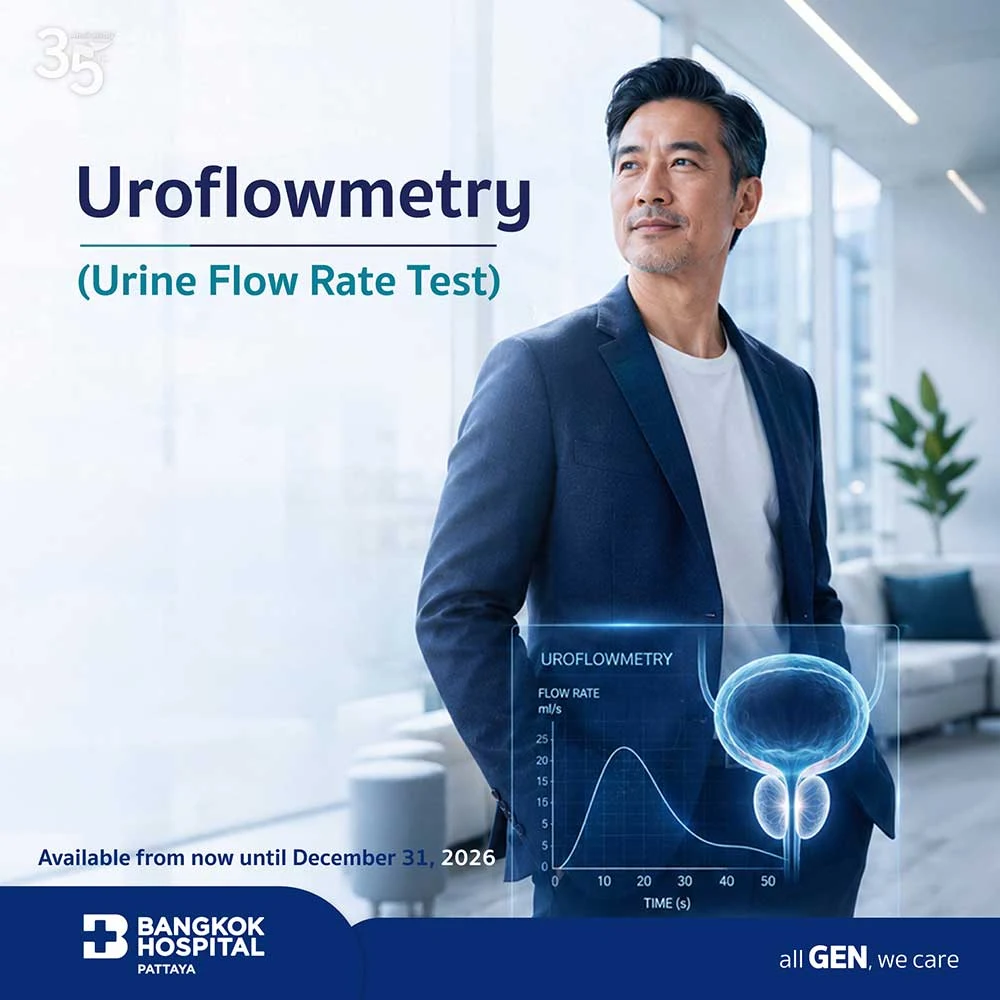
    Uroflowmetry (Urine Flow Rate Test)
    Uroflowmetry (Urine Flow Rate Test)
    UroLift: Minimally Invasive Option for Enlarged Prostate Treatment
    Bangkok Hospital Pattaya
    Updated on: 17 Jul 2026
    Table of contents
    • UroLift: Minimally Invasive Option for Enlarged Prostate Treatment
    • FAQ

    What is an enlarged prostate (BPH)?

    Benign prostatic hyperplasia (BPH) is a non-cancerous enlargement of the prostate gland that commonly affects men from the age of 50 onward. As the inner tissue of the prostate grows, it compresses the urethra — the tube that carries urine out of the body — causing a range of urinary symptoms. By the age of 80, approximately 80% of men will have BPH, though only 40–50% will develop noticeable symptoms.

    One important point: BPH is not prostate cancer and does not develop into cancer. However, both conditions can occasionally be present in the same patient, as they arise in different parts of the prostate.

    What are the symptoms of an enlarged prostate?

    • Difficulty urinating
    • Waking multiple times at night to urinate
    • Weak or slow urine stream
    • Urinary incontinence
    • Feeling of incomplete bladder emptying
    • Frequent urination

    If you are experiencing any of these symptoms, consult a urologist for assessment.

    What is UroLift and how does it work?

    UroLift is a minimally invasive procedure designed to relieve urinary obstruction caused by BPH. Rather than cutting, burning, or removing prostate tissue, UroLift works by permanently retracting the enlarged prostate tissue away from the urethra using small implants, allowing urine to flow more freely.

    The procedure is performed under moderate sedation. Using a scope passed through the urethra, the doctor places 4–6 small implants made from medical-grade stainless steel and flexible nitinol into the prostate. The entire procedure takes approximately 30 minutes.

    UroLift has been approved by the US FDA since 2013 and by Thailand’s FDA since 5 February 2024.

    What are the benefits of UroLift for BPH?

    • Rapid improvement in urinary symptoms
    • No cutting, burning, or heat applied to the prostate
    • No urinary catheter required after the procedure
    • No general anaesthesia — performed under IV sedation and analgesia
    • No impact on sexual function — erection and ejaculation are preserved
    • No overnight hospital stay required
    • Suitable for patients at higher surgical risk
    • Recovery within 3–7 days, with return to normal daily activities

    Who is a suitable candidate for UroLift?

    UroLift is recommended for:

    • Men with moderate to large BPH with a prostate size under 100 grams
    • Men who can still urinate but retain no more than 350 ml after voiding
    • Older patients or those whose general health makes major surgery inadvisable
    • Men who wish to preserve sexual function

    How should I prepare for UroLift?

    • Inform your doctor of all medications, vitamins, and herbal supplements you are taking, as well as any underlying conditions or drug allergies
    • Fast (no food or water) for 6–8 hours before the procedure
    • Arrive at the hospital at least one hour before your scheduled time
    • Bring a family member or companion to accompany you home

    What should I expect after the UroLift procedure?

    Rest and light activity for 2–3 days following the procedure. Normal daily routines can typically be resumed after that, but strenuous exercise and sport should be avoided for 1–2 weeks.

    What are the risks of UroLift?

    UroLift is considered safe and well tolerated. Rare and generally mild complications may include:

    • Blood in the urine
    • Increased urinary frequency
    • Urinary tract infection
    • Implant migration (very rare)

    Prostate Treatment in Pattaya, Thailand

    For men seeking enlarged prostate treatment in Pattaya, Thailand, Bangkok Hospital Pattaya’s Urology Center offers the full range of BPH treatment options including UroLift, managed by an experienced specialist team.

    For appointments or consultations, please contact Bangkok Hospital Pattaya’s Urology Center through any of our available channels. Tel. 0 3825 9999
    What does BPH stand for in medical terms?

    BPH stands for benign prostatic hyperplasia — a non-cancerous enlargement of the prostate gland that commonly affects men from the age of 50 onward.

    Is BPH the same as prostate cancer?

    No. BPH is not prostate cancer and does not develop into cancer. However, both conditions can occasionally be present in the same patient, as they arise in different parts of the prostate.

    What are the most common symptoms of an enlarged prostate?

    The most common symptoms include difficulty urinating, weak or slow urine stream, frequent urination, waking multiple times at night to urinate, urinary incontinence, and a feeling of incomplete bladder emptying.

    What is UroLift and how is it different from surgery?

    UroLift is a minimally invasive enlarged prostate treatment that uses small implants to permanently hold the prostate tissue away from the urethra, restoring urine flow without cutting, burning, or removing any tissue. Unlike traditional surgery, it requires no general anaesthesia, no overnight hospital stay, and no urinary catheter after the procedure.

    How long does the UroLift procedure take?

    The procedure takes approximately 30 minutes and is performed under moderate sedation.

    Is UroLift painful?

    UroLift is performed under sedation and intravenous analgesia, so discomfort during the procedure is minimal. Some patients may experience mild urinary symptoms such as increased frequency or light bleeding in the days following the procedure, but these are generally temporary.

    Will UroLift affect my sexual function?

    No. UroLift does not affect erectile function or ejaculation — one of its key advantages over some other BPH treatments.

    How soon will I see results after UroLift?

    Many patients notice improvement in urinary symptoms relatively quickly after the procedure, with most returning to normal daily activities within 3–7 days.

    Who is not suitable for UroLift?

    UroLift may not be suitable for men with a prostate larger than 100 grams, those who cannot urinate at all, or those with more than 350 ml of urine retained after voiding. Patients with a penile prosthesis, artificial urethral sphincter, or active urinary tract infection are also not candidates. A urologist will assess your individual situation.

    Is UroLift approved in Thailand?

    Yes. UroLift has been approved by Thailand’s FDA since 5 February 2024, and has held US FDA approval since 2013.

    How do I know if UroLift is the right enlarged prostate treatment for me?

    A consultation with a urologist is the best first step. Your doctor will assess your symptoms, prostate size, overall health, and treatment goals to determine whether UroLift or another approach is most appropriate for your situation.

    For more information, please contact

    Urology Center

    E building, 4th floor

    Monday - Sunday
    8:00 am - 5:00 pm

    +66 3825 9986

    [email protected]

    Consult a Specialist Doctor

    See all doctors

    Packages & Promotions

    Uroflowmetry (Urine Flow Rate Test)Uroflowmetry (Urine Flow Rate Test)
    Uroflowmetry (Urine Flow Rate Test)

    490 Baht

    Detail
    More packages

    Health Info

    More health info

    Health Info

    Focal Therapy for Early Prostate Cancer Image
    Focal Therapy for Early Prostate Cancer
    What is Laser Prostate Surgery (HoLEP) and What are the Benefits? Image
    What is Laser Prostate Surgery (HoLEP) and What are the Benefits?
    Stereotactic Body Radiation Therapy (SBRT): A New Approach to Prostate Cancer Treatment Image
    Stereotactic Body Radiation Therapy (SBRT): A New Approach to Prostate Cancer Treatment
    More health info