



What is the pancreas and what does it do?
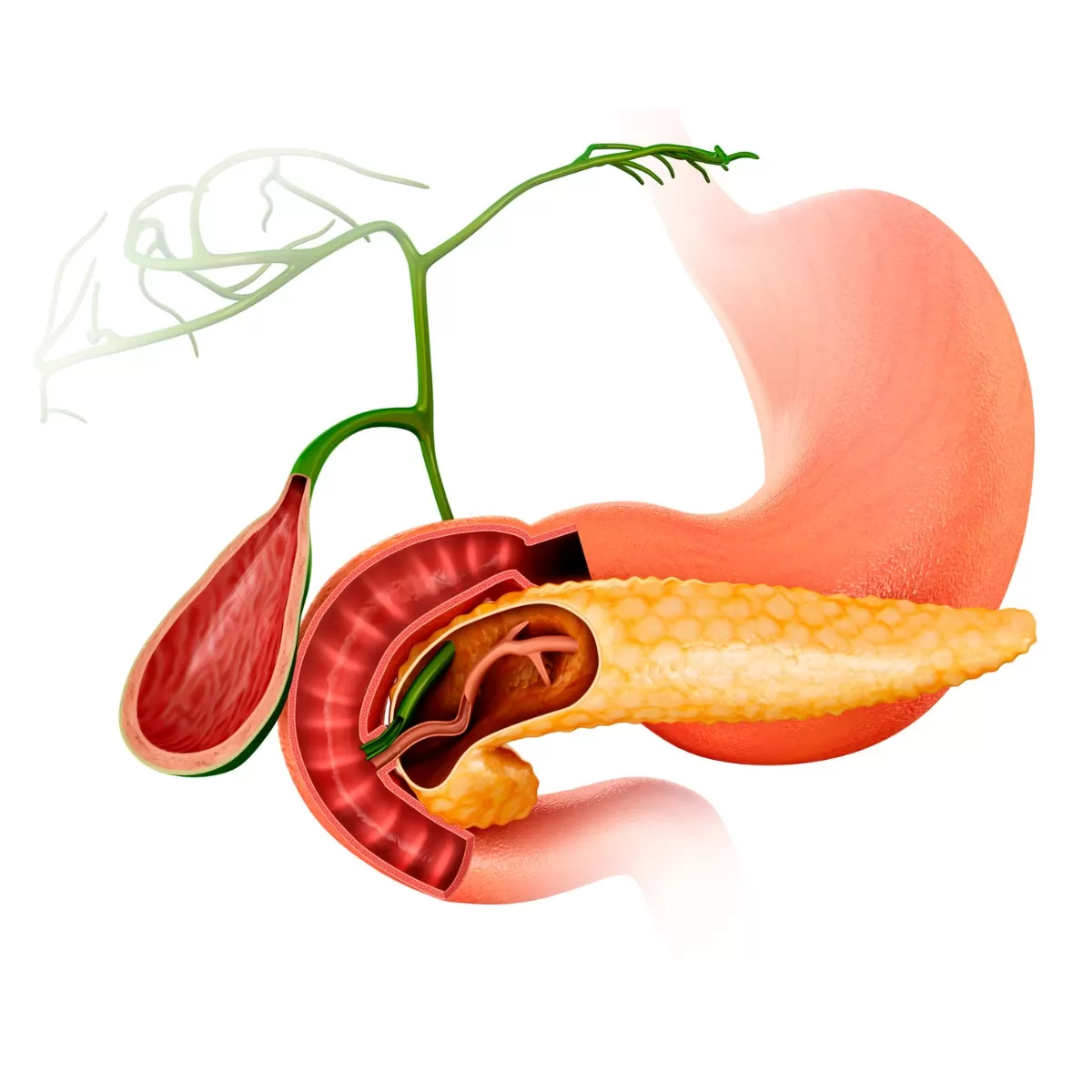
The pancreas is an internal organ in the upper abdomen, roughly pear-shaped and approximately 15 centimeters long, positioned behind the stomach. It plays a vital role in the digestive system – producing digestive enzymes that break down proteins, carbohydrates, fats, and vitamins, as well as insulin, which regulates blood sugar levels. Without a healthy pancreas, the body struggles to digest food and maintain stable blood sugar.
What is pancreatic cancer?
Pancreatic cancer develops when cells in the pancreas grow abnormally and multiply in an uncontrolled way, forming a tumor. Most pancreatic cancers begin in the ducts of the pancreas – the channels that connect to the bile duct. In the early stages, the tumor often produces no noticeable symptoms. By the time symptoms appear and the cancer is detected, it has usually already spread to other organs — which is what makes pancreatic cancer particularly difficult to treat.
Globally, pancreatic cancer ranks 12th among the most commonly occurring cancers according to the World Cancer Research Fund’s 2020 statistics. In Thailand, it ranks 9th among male cancer patients and 8th among female cancer patients, according to the National Cancer Institute’s 2021 hospital-based cancer registry report.
Symptoms of pancreatic cancer
In its early stages, pancreatic cancer typically causes no symptoms. As the disease progresses and begins to affect surrounding digestive organs, the following symptoms may develop:
- Pain in the abdomen, around the sides or the back
- Reduced appetite
- Unexplained weight loss
- Jaundice – yellowing of the skin and whites of the eyes
- Pale or loose stools
- Dark urine
- Fatigue and weakness
- New-onset diabetes arising from a specific pancreatic abnormality
- Blood clots causing pain or swelling in the arms or legs

Risk factors for pancreatic cancer
The exact cause of pancreatic cancer has not been conclusively identified, but the following factors are associated with increased risk:
- Age – most cases occur in people over 60
- Smoking – cigarettes, cigars, and other tobacco products
- Obesity
- Type 2 diabetes, including diabetes caused by pancreatic abnormality
- Chronic pancreatitis (long-term inflammation of the pancreas)
- Inherited genetic syndromes involving gene mutations such as BRCA1 and BRCA2
How does pancreatic cancer spread?
When pancreatic cancer cells reach an advanced stage, they tend to spread to nearby blood vessels and lymph nodes, then to the liver, the lining of the abdominal cavity, and potentially the lungs. Because most patients are not diagnosed until the cancer has already spread, pancreatic cancer remains one of the more challenging cancers to treat successfully.
Diagnosis
When symptoms suggest a possible pancreatic abnormality, a doctor will take a detailed medical history and may recommend one or more of the following investigations depending on what is most appropriate for the patient:
- CT scan (computed tomography) or MRI for detailed imaging of the pancreas and surrounding structures
- Endoscopic ultrasound (EUS) for close-up visualization of the pancreas via a scope
- Blood tests for cancer tumor markers
- Biopsy – removal of tissue for laboratory analysis to confirm the presence of cancer cells
The doctor will select the most appropriate method based on each patient’s individual situation, using results to plan the next steps in treatment.

Treatment
Once test results are available, the doctor can determine the stage of the cancer and the most appropriate treatment approach.
If the cancer has not yet spread and surgery is deemed viable, surgical removal is typically the first-line treatment option. When pancreatic cancer is found at an advanced stage where surgery is not possible, the doctor will consider chemotherapy and radiation therapy as appropriate based on the patient’s condition.
A final note
As noted throughout this article, pancreatic cancer is most often detected at an advanced stage. Most patients come to their doctor with symptoms such as jaundice, fatigue, unexplained weight loss, or unusual abdominal pain. Thorough investigation is needed to determine the underlying cause and arrive at an accurate diagnosis — which is why not dismissing these symptoms and seeking specialist evaluation promptly is so important.

Frequently Asked Questions About Pancreatic Cancer
What does the pancreas do?
The pancreas produces digestive enzymes that break down proteins, carbohydrates, fats, and vitamins, and also produces insulin to regulate blood sugar. It sits behind the stomach in the upper abdomen and plays a central role in both digestion and metabolic function.
What are the early signs of pancreatic cancer?
Pancreatic cancer often has no symptoms in the early stages. When symptoms do appear, they typically include upper abdominal or back pain, jaundice, unexplained weight loss, reduced appetite, pale or loose stools, dark urine, and fatigue. New-onset diabetes can also sometimes be linked to pancreatic abnormality.
Why is pancreatic cancer so difficult to detect early?
Because the pancreas sits deep within the abdomen and early-stage tumors produce no clear symptoms, most cases are not detected until the cancer has already spread to nearby organs or lymph nodes. This is why awareness of risk factors and symptoms is so important.
Who is at risk of pancreatic cancer?
Risk factors include being over 60, smoking, obesity, type 2 diabetes, chronic pancreatitis, and inherited genetic mutations such as BRCA1 and BRCA2. Having one or more of these factors does not mean cancer is inevitable, but it does warrant closer monitoring and earlier medical consultation if symptoms arise.
Can pancreatic cancer spread to other organs?
Yes. When pancreatic cancer reaches an advanced stage, it can spread to nearby blood vessels and lymph nodes, then to the liver, the abdominal lining, and potentially the lungs. The majority of patients are diagnosed at this stage, which significantly affects treatment options and outcomes.
How is pancreatic cancer diagnosed?
Diagnosis may involve CT scan, MRI, endoscopic ultrasound (EUS), blood tests for cancer tumor markers, and biopsy. The doctor selects the most appropriate combination of tests based on the patient’s symptoms and clinical picture, using the results to plan treatment.
How is pancreatic cancer treated?
If the cancer has not spread and surgery is possible, surgical removal is generally the first option. For advanced-stage cancers where surgery is not feasible, chemotherapy and radiation therapy are used. The treatment plan is determined by the stage of the disease and the patient’s overall health.
What symptoms should prompt me to see a doctor?
Seek medical attention if you experience persistent upper abdominal or back pain, unexplained weight loss, jaundice, dark urine, pale stools, or unusual fatigue — particularly if you have one or more risk factors for pancreatic cancer. These symptoms can have many causes, and a doctor’s assessment is the only way to determine what is behind them.
For appointments or consultations, please contact Bangkok Hospital Pattaya’s Gastrointestinal and Liver Center through any of our available channels. Tel. 0 3825 9999
Reference,
Cleveland Clinic. (2023). Pancreatic Cancer. Cleveland Clinic. https://my.clevelandclinic.org/health/diseases/15806-pancreatic-cancer
Mayo Clinic. (2023). Pancreatic cancer: Symptoms & causes. Mayo Clinic. https://www.mayoclinic.org/diseases-conditions/pancreatic-cancer/symptoms-causes/syc-20355421
World Cancer Research Fund. (2022). Pancreatic cancer statistics. https://www.wcrf.org/cancer-trends/pancreatic-cancer-statistics/
สถาบันมะเร็งแห่งชาติ กรมการแพทย์ กระทรวงสาธารณสุข. (ม.ป.ป.) Cancer Registry 2002-2021. National cancer institude. https://www.nci.go.th/th/cancer_record/cancer_rec1.html