

1. General preparation
- Please refrain from consuming alcoholic beverages and energy drinks for at least 24 hours prior to the examination.
- Please refrain from eating for at least 8–12 hours before the examination. Plain water is allowed.
- Please avoid beverages containing caffeine, such as tea and coffee, for at least 8–12 hours prior to the examination, as caffeine may affect blood pressure and heart rate.
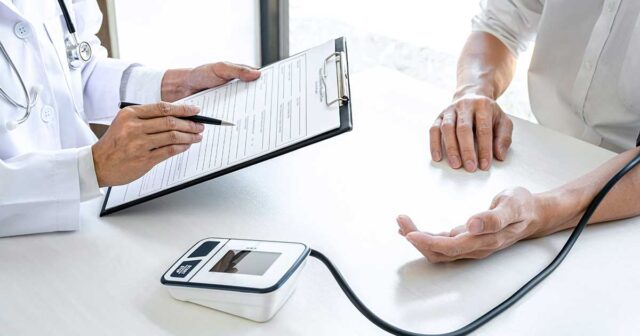
- Adequate rest is recommended, with at least 6 hours of sleep before the health check-up. Insufficient sleep may result in abnormal findings and may interfere with accurate medical assessment, particularly blood pressure, heart rate, and body temperature.
- If you are taking medication to control blood pressure, on the morning of the examination, antihypertensive medication may be taken with a small glass of water, according to your treating physician’s advice.
- If you have diabetes mellitus, please withhold insulin injections or oral antidiabetic medication that is usually taken before breakfast on the day of blood testing to prevent hypoglycemia (low blood sugar).
- If you have past medical history, current medical problem, current medication, or past medical result report, please bring health report, past medical report and current medication with you on the test date to assess your fitness to work. In the case of not bringing past medical report and health report you may need to perform additional tests to assess your fitness to work.
- Please wear loose-fitting clothing that allows easy access for blood collection from either arm.
- After blood collection, please apply pressure to the puncture site with a cotton ball or press on the adhesive bandage for 1–2 minutes to prevent bleeding and bruising.
- If you have a history of needle or blood phobia, please inform the nursing staff prior to blood collection.
- Package testing is a basic requirement under offshore guidelines. If you have a medical condition, the medical examiner may ask you to undergo additional tests to assess your fitness to work.
- The medical examiner will assess according to the standard guideline of the offshore worker examination. If your test results are found to be abnormal or your current disease is not well-controlled enough to work safely offshore, the medical examiner may need to refer you to a specialist doctor for treatment and evaluation. For this process, there will be an additional costs from the estimated price. After consulting a specialist doctor, the medical examiner may be able to assess fitness to work immediately or another appointment may be needed to assess fitness for work after you have had treatment and follow-up.
- Please provide truthful, accurate, and complete information in order to assess fitness to work as accurately as possible. If you conceal a current health problem, past illness, or current medication, and resulted in an inaccurate assessment of fitness to work it may cause emergency evacuation for treatment while at work, or it may result in a life-threatening condition during work.
- Failure to disclose any pre-existing medical conditions or any false information provided will be grounded for immediate dismissal of work or denial of work permission.
2. Preparation for heavy metal and chemical tests
For the accuracy of the test result of heavy metal toxicity related workplace hazards, please follow these instructions:
- Benzene and/or Toluene
- Please avoid juice, dehydrated fruit, pickled fruit, cheese, soft drinks, jelly, and bread for at least 3 days before the test date.
- Please avoid food preservatives for at least 3 days before the test date.
- Arsenic
- Please avoid seafood, seaweed, and herbs for at least 3 days before the test date.
- Please avoid drinking tea for at least 3 days before the test date.
- Mercury
- Please avoid seafood, seaweed, and herbs for at least 3 days before the test date.
- Please avoid drinking tea for at least 3 days before the test date.
- Acetone
- Please avoid products containing acetone (such as hair dye, nail polish, and nail polish remover) and smoke from exhaust pipes or cigarettes for at least 1 day before the test date.
- Hexane
- Please refrain from smoking for at least 1 day before the test date.
- Nickel
- Please refrain from smoking for at least 1 day before the test date.
- Xylene
- Please refrain from smoking for at least 1 day before the test date.
- Please avoid exposure to lacquer for at least 1 day before the test date.
3. Preparation for hearing test
- Please avoid diving, hiking, and traveling by plane for at least 2 days before the test.
- Please avoid exposure to loud noises from machinery, noisy environments, loudspeakers, and usage of earphones for at least 12 hours before the test.
- If you are required to work in a noisy environment, you should use hearing protection and work for no more than 4 hours before the test.
- Please avoid noisy environments and talking on the phone for at least 15 minutes before the test.
- Please ensure that there are no objects that may affect your hearing the during test, such as glasses, hats, and earrings, and keep your hair neatly tied up.
- Please do not bring any communication devices into the examination room as they may interfere with the test.
4. Preparation for occupational vision test
- Please avoid working with bright lights for at least 8-12 hours before the test.
- If you require glasses or contact lenses, please wear glasses or contact lenses during the test in order to evaluate whether your glasses or contact lenses are suitable or not.
- In cases where the examination is conducted for seafarer medical or OEUK medical, and you are wearing contact lenses, please bring your contact lenses case and cleaning solution with you. This is necessary as a vision assessment without contact lenses is required.
5. Preparation for lung function test
- Please avoid exercising for at least 30 minutes before the test.
- Please avoid consuming large meals for at least 2 hours before the test.
- Please refrain from smoking for at least 2 hours before the test.
- Comfortable clothing that are not too tight should be worn.
- Please avoid using bronchodilators- inhaler type- for at least 12 hours before the test and avoid bronchodilator medication- oral type- for at least 24 hours before the test.
6. Preparation for chest X-ray Examination
- If you suspect that you may be pregnant, please inform the nursing staff prior to the examination so that the chest X-ray can be postponed or avoided.
7. Preparation for Ultrasound Examination
- Please drink plain water while waiting for the examination and hold urine prior to the procedure. A full bladder allows clearer visualization of the urinary bladder, prostate gland, uterus, and ovaries.
- Please refrain from eating or drinking for at least 8–12 hours before the examination to allow optimal visualization of the gallbladder and to reduce gas in the stomach and intestines, which improves image quality of internal organs.
8. Preparation for Exercise Stress Test (EST)
- Please refrain from eating for 2–3 hours prior to the test to prevent abdominal discomfort. Plain water is allowed.
- Please avoid beverages containing caffeine, such as coffee, tea, and energy drinks, for at least 12 hours before the test, as they may increase heart rate.
- Please refrain from smoking for at least 4 hours prior to the test, as smoking may increase heart rate.
- Please wear comfortable clothing and footwear suitable for exercise.