


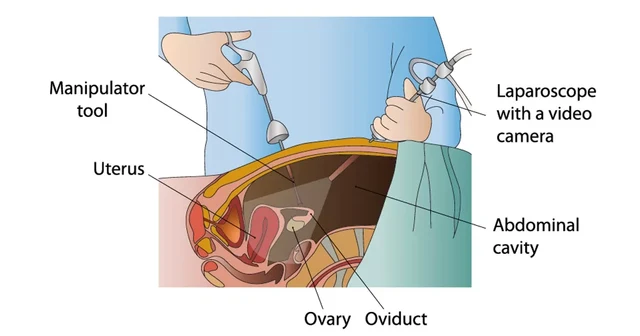
What is laparoscopic gynecologic surgery?
Laparoscopic surgery is a minimally invasive procedure in which carbon dioxide gas is introduced into the abdominal cavity to create working space, and a high-definition video camera along with specialized surgical instruments are inserted through 2–4 small incisions of just 5–12 mm. The surgeon operates while viewing a magnified, high-resolution image of the internal organs on a monitor. General anesthesia with intubation is administered by an anesthesiologist throughout the procedure.
What conditions can be treated laparoscopically?
- Chronic lower abdominal pain
- Endometriosis
- Uterine fibroids (myoma)
- Ovarian or fallopian tube cysts — including cysts occurring during pregnancy
- Ectopic pregnancy
- Tubal ligation (permanent contraception)
- Infertility investigation and fallopian tube assessment
- Early-stage endometrial cancer
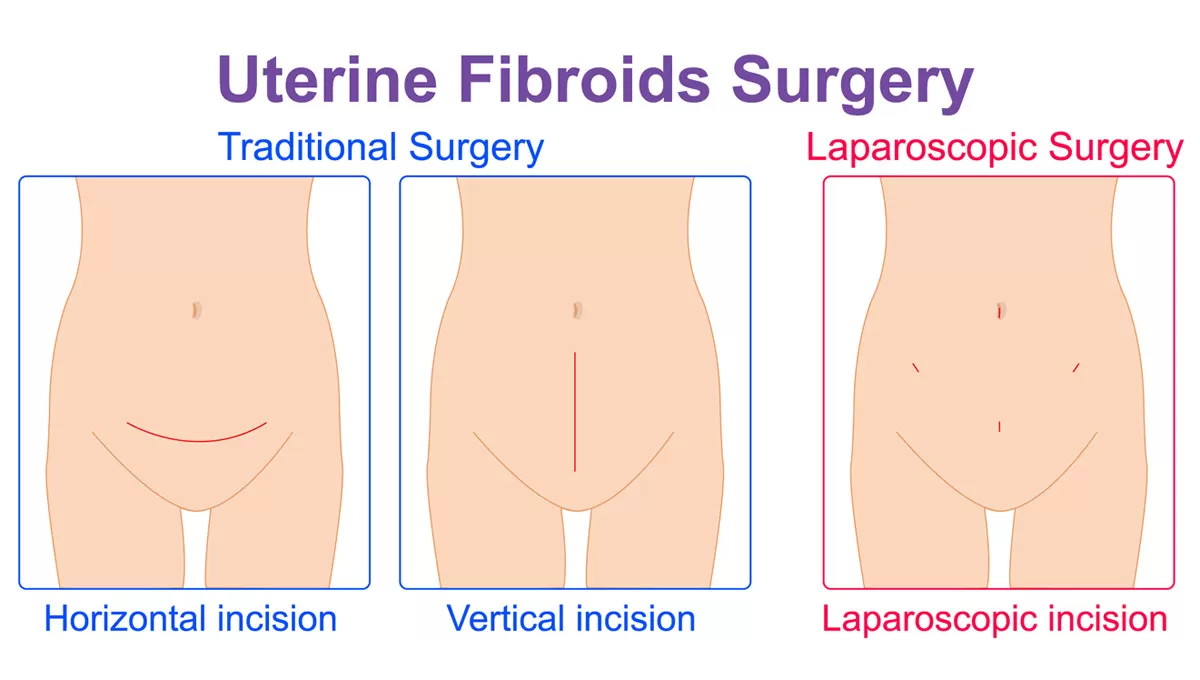
What are the advantages over open surgery?
- Smaller incisions — just 5–12 mm across 2–4 sites, compared to a large abdominal opening
- Less postoperative pain — standard pain relievers are usually sufficient; strong opioids are rarely needed
- Faster recovery — most patients can walk within 1 day, eat soft food once nausea subsides, and are discharged within 1–3 days
- Shorter time off work — most patients return to normal activity within 1–2 weeks at home
- Less blood loss — advanced bipolar and ultrasonic energy devices minimize bleeding, reducing the need for transfusion
- Lower risk of adhesions — less tissue trauma during surgery means fewer post-operative adhesions and related complications
- Lower infection risk — smaller wounds significantly reduce the chance of surgical site infection
- Suitable for patients with higher body weight — laparoscopy can be a viable option when a thick abdominal wall makes open surgery more difficult
What are the limitations?
- Not suitable for all patients — very large fibroids or certain gynecological cancers may require open surgery
- Cannot be used in patients with severe cardiopulmonary conditions such as diaphragmatic hernia, severe lung disease, or serious heart disease, as the procedure requires gas insufflation and a head-down position
- Severe pelvic or abdominal adhesions — from prior infections or multiple previous surgeries — may prevent laparoscopic access
- The procedure generally takes longer than open surgery
- In some cases, findings during the procedure may require conversion to open surgery — for example, if disease is more extensive than anticipated, instruments cannot safely reach the target area, or complications arise after anesthesia
What complications are possible?
- Shoulder ache — common and mild, caused by carbon dioxide gas pressing against the diaphragm. Resolves within 1–2 days with standard pain medication
- Blood loss — usually minimal, but may be greater in complex cases such as severe fibroids or advanced endometriosis, occasionally requiring transfusion
- Injury to adjacent organs — rare but serious. Structures such as major blood vessels, the bowel, bladder, or ureter may be inadvertently injured. If identified during surgery, immediate open repair is performed; in some cases, repair surgery is required afterward
- Nerve-related issues — numbness around incision sites, or temporary leg weakness from positioning and nerve compression during surgery
- Vaginal vault dehiscence — separation of the sutured vaginal wall following hysterectomy, which occurs more commonly with laparoscopic than open surgery. In some cases, herniation through the vagina may require surgical repair
Every surgical procedure carries some degree of risk. Patients are encouraged to fully understand their options before making a decision.
For further information, contact the Women’s Health Center at Bangkok Hospital Pattaya: 0 3825 9999