

What is FibroScan?
FibroScan is one of the most advanced technologies currently available for assessing liver fibrosis — the buildup of scar tissue within the liver. It works on a simple principle: a healthy liver is soft, but as fibrosis develops from conditions such as fatty liver disease or chronic liver inflammation, the tissue becomes progressively firmer and denser. By measuring this liver stiffness, FibroScan can detect early-stage cirrhosis and monitor the progression of fatty liver disease before symptoms become apparent.
Today, FibroScan is used as a non-invasive alternative to liver biopsy — replacing a procedure that requires a needle to extract liver tissue with one that is completely painless, quick, and delivers immediate results.
Why is FibroScan important for fatty liver and cirrhosis?
Fatty liver disease (hepatic steatosis) occurs when excess fat accumulates in the liver. If left unmanaged, it can progress through stages of increasing inflammation and fibrosis, ultimately leading to cirrhosis — a serious condition in which healthy liver tissue is replaced by scar tissue, impairing the liver’s ability to function.
The challenge with both fatty liver and cirrhosis is that neither condition necessarily produces obvious symptoms in the early stages. FibroScan addresses this gap directly — allowing doctors to assess how much fibrosis is present and how far the condition has progressed, without putting the patient through an invasive procedure.
The results from a FibroScan examination help doctors:
- Assess the degree of liver fibrosis and fat accumulation
- Detect early-stage cirrhosis before clinical symptoms appear
- Predict possible complications
- Monitor fatty liver and cirrhosis progression over time
- Guide decisions about next steps in treatment
Because FibroScan causes no discomfort or physical harm, it reduces the risks associated with liver biopsy, eliminates the need for hospitalisation, and significantly lowers related costs.
Does FibroScan hurt?
No. The procedure is completely painless, simple, and fast, with results available immediately. You will feel only a mild vibration on the skin surface at the tip of the probe.
How does FibroScan work?
FibroScan uses ultrasound technology to send a wave into the liver and measure the speed at which it travels through the tissue. A stiffer liver — whether from advanced fatty liver disease or cirrhosis — causes the sound wave to travel faster, producing a higher reading. Results are expressed in kilopascals (kPa), ranging from 1.5 to 75 kPa, and are interpreted by the doctor to determine the extent of fibrosis and guide treatment planning.
What does the FibroScan procedure involve?
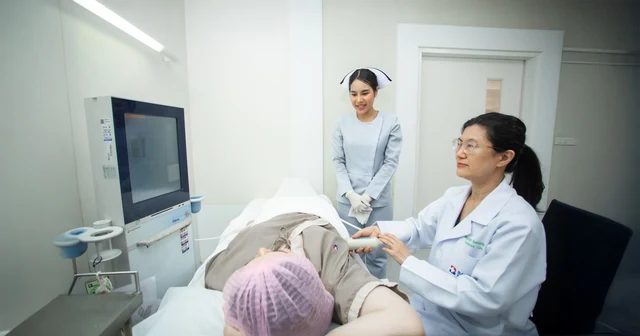
- The patient lies flat on their back with both arms raised above the head
- A small amount of gel is applied to the probe or the skin
- Ten measurements are taken at the same position
- Results are expressed as a numerical value in kPa, which the doctor interprets to assess fibrosis severity — including whether fatty liver has progressed toward cirrhosis — and to plan the appropriate course of treatment
Who performs FibroScan?
FibroScan is best performed by a specialist in liver disease, who is trained to interpret the results accurately and apply them to each patient’s clinical picture.
Who should consider a FibroScan?
FibroScan is particularly relevant for patients with:
- Non-alcoholic fatty liver disease (NAFLD) or non-alcoholic steatohepatitis (NASH)
- Alcohol-related liver disease or a history of heavy alcohol use
- Chronic Hepatitis B or C
- Metabolic syndrome, obesity, or type 2 diabetes with suspected liver involvement
- Elevated liver enzyme results requiring further investigation
- A need to monitor response to treatment for fatty liver or cirrhosis
- A family history of liver disease
For appointments or consultations, please contact Bangkok Hospital Pattaya’s Gastrointestinal and Liver Center. Tel. 1719