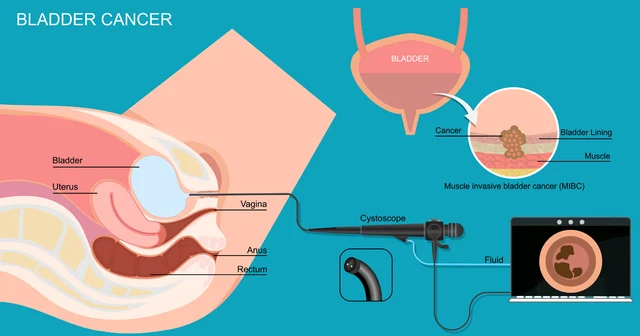
The lower urinary tract is made up of the bladder, urethra, and in males, the prostate. The bladder collects and stores urine, which has passed from the kidneys through the ureter. Once the bladder has reached its capacity of stored urine, the urine then exits the body through the urethra.
Bladder cancer occurs when the cells lining the inner wall of the bladder grow and multiply out of control until they become a mass of cancerous cells – a malignant tumor. In aggressive cases, cancer cells can spread to the deeper layers of the bladder wall, and even to other tissues and organs in the body such as the lymph nodes, bones, lungs, and liver.
Overview
There are many different types of bladder cancer, which are classified according to the type of cell in which the cancer originated. The most common type, accounting for over 90 percent of bladder cancer cases, is known as transitional cell carcinoma or urothelial carcinoma, which is a cancer that develops from the cells of the bladder lining. Another type of bladder cancer, squamous cell carcinoma, is caused by an infection or chronic inflammation in the bladder. It is found in only 4-5 percent of cases. There are also rarer types of bladder cancer as well.
SYMPTOMS OF BLADDER CANCER
- Common symptoms include:
- Hematuria (blood in the urine) is the most common symptom of bladder cancer; usually painless.
- Abnormal bladder habits such as pain during urination, frequent urination, burning, irritation, or urinary incontinence.
- Symptoms caused by cancer cells spreading to other organs such as, lower back pain (on either side of the body), bone pain, enlarged lymph nodes, swollen feet, fatigue, lack of appetite, and weight loss.
STAGES OF BLADDER CANCER
Stages of the cancer are determined according to the depth of invasion of cancer cells, the extent to which it has spread, as well as any abnormal functioning of the organs within the body. Knowing the stage of the cancer is extremely important, as it helps the doctor determine the most appropriate treatment route.
Bladder cancer is divided into 4 stages:
Stage 1 – This is the beginning stage. Cancer at this stage occurs in the bladder’s inner lining, but has not yet invaded the bladder wall.
Stage 2 – Cancer cells have invaded the bladder wall, but the cancer is still confined to the bladder.
Stage 3 – The cancer cells have spread through the bladder wall to surrounding tissue.
Stage 4 – Cancer cells have spread to the lymph nodes and other organs such as bones, liver, or lungs.
RISK FACTORS FOR BLADDER CANCER
- Generally speaking, bladder cancer is more commonly found in people 40 years and older, although it is becoming more common in people younger than 40 as well. It is also more commonly found in men than in women. At present, major factors that may increase the risk of bladder cancer include:
- Smoking, including secondhand smoke, and those who have a history of smoking.
- Regular exposure to certain chemicals over a long period of time, especially those working in the printing industry; or textile, paint, rubber, or leather processing industries.
- Chronic bladder inflammation and irritation, such as urinary tract infections and bladder stones, or long-term use of a urinary catheter, etc.
- Genetics (certain genetic syndromes or disorders) or a family history of bladder cancer.
- Certain medications used in chemotherapy.
DETECTION AND DIAGNOSIS OF BLADDER CANCER
- Bladder cancer can usually be detected in its early stages, due to the fact that many patients will see the doctor as they notice blood in their urine.
- Preliminary screening includes:
- Urinalysis – This is performed in order to detect whether or not there are abnormal red blood cells in the urine, as well as to test for cancer cells that may be suspended in the urine and excreted from the body during urination (urine cytology).
- Bladder Endoscopy (Cystoscopy) – This involves the doctor inserting a cystoscope (narrow tube) through the urethra into the bladder in order to examine the location, size, and shape of the tumor(s), as well as to collect a tissue sample (biopsy) for testing to determine whether or not the cells are cancerous – as well as what kind of cancer it may be and how aggressive it is. This particular method of screening is a very accurate in diagnostic testing for bladder cancer.
- Diagnostic Radiology – This includes an ultrasound of the kidneys, ureter, and urinary bladder (Ultrasound KUB); x-ray examination of the kidneys and urinary tract; and CT scan of the entire abdominal area. Additional testing may also include bone and lung x-rays if the cancer is suspected to have spread to these areas.
PATIENT SELF-CARE
Many people with stage 1 bladder cancer are generally able to detect it and are quick to seek medical attention. And as a result, causes the number of severe cases to remain low. However, although people are quick to seek treatment, it is still a highly recurrent form of cancer. People diagnosed with stage 1 bladder cancer must maintain good care of their physical health and avoid any risk factors that may further the progression, as well as undergo follow-up cystoscopy exams every 3 months or according to their doctor’s orders.
Although bladder cancer is generally able to be detected and treated early, it is still a highly recurrent form of cancer. It’s vital that patients maintain good care of their physical health and avoid any risk factors that may further its progression.