

What is an arrhythmia?
An arrhythmia is an irregular heart rhythm resulting from an abnormality in the heart’s electrical system. The heart’s electrical system is responsible for setting the pace of your heartbeat. A rhythm that is too fast is called a tachycardia, a rhythm that is too slow is called a bradycardia.
What causes an arrhythmia?
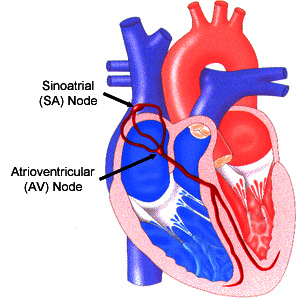
Each contraction of the heart is triggered by electrical impulses sent from the sinoatrial node (SA node) in the right atrium, an upper chamber of the heart. The impulses travel through the atria to the atrioventricular node (AV node), where they are transmitted to the heart’s lower chambers or ventricles.
Arrhythmias may occur due to:
- An abnormal functioning of the cells in the SA node.
- Delays in the conduction or receiving of impulses
Heart-related conditions that may lead to arrhythmias include:
- Damage from a heart attack or atheroselerosis
- Heart defects or congenital heart disease
- Abnormal heart structures or functions, such as those resulting from cardiomyopathy or valvular heart disease.
- Effects from medications
- Other causes including stress, caffeine or alcohol consumption, smoking, reaction to non-prescription medications or a lack of sleep.
What are the different types of arrhythmias?
There are many types of arrhythmias.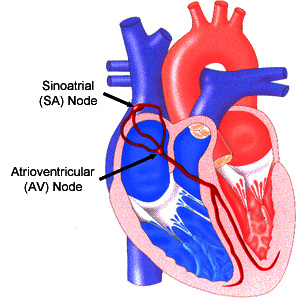
- Sick sinus syndrome is a condition in which the SA node does not fire often enough, causing the heart rate to slow down.
There may be alternating periods of rapid heartbeats. - Sinus arrhythmias are irregular heart rhythms that also begin in the SA node.
- Sinus tachycardia is a rapid heart rate caused by electrical impulses firing faster than normal.
- Heart blockage results when electrical signals to the ventricles are delayed or blocked.
- Premature ventricular contractions occur when an early signal from a ventricle causes a premature heartbeat. This is often felt as a “skipped beat.”
- Ventricular fibrillation results from very fast and uncontrollable electrical signals. They cause the heart to quiver rather than beat.
- Walff-Parkinson-White syndrome occurs when there is an extra connection, or pathway, between the atria and ventricles.
- Atrial fibrillation is the result of rapid and disorganized signals from the atria that prompt the ventricles to contract irregularly.
- Atrial flutter is a specific type of atrial tachycardia in which the atria contract regularly, but extremely rapidly.
- Paroxysmal atril tachycardia is characterized by rapid heartbeats originating in the atria.
- Premature atrial contractions are premature signals in the atrium that cause the heart to beat too soon.
How are arrhythmias treated?
Treatment of an arrhythmia depends on the type of arrhythmia and its severity. Non sustained arrhythmias may only require certain lifestyle changes, such as:
- Reducing caffeine intake
- Limiting the amount of alcohol consumption
- Quitting smoking
- Avoiding certain medications, such as some decongestants
- Using stress management techniques
Medications that may be prescribed include beta-blockers, calcium channel blocke digoxin or antiarrhy-thmics. These medications should be monitored carefully to prevent side effects, which may include increased or more severe arrhythmias. Patients using these medications are encouraged to learn how to take their own pulse in order to detect irregular rhythms.
More invasive procedures may sometimes be necessary, including:
- An artificial pacemaker for bradycardias
- An implantable cardioverter defibrillator for abnormally fast heart rhythms.
- Catheter ablation to destroy abnormal areas of the heart where arrhythmias originate