

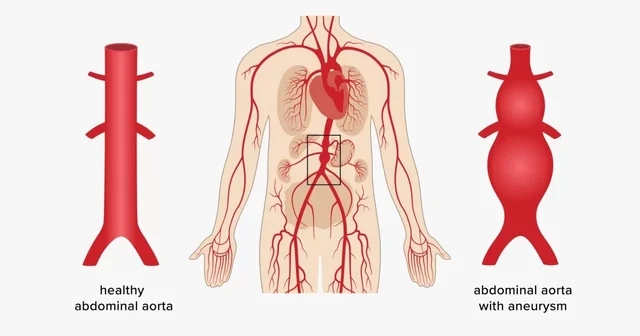
The aorta is the largest artery in the body, running from the center of the chest down through the abdomen, carrying oxygen-rich blood from the heart to the rest of the body. When the wall of the abdominal section of this artery bulges abnormally outward, it is known as an Abdominal Aortic Aneurysm (AAA) – a condition that is as dangerous as it is silent. By the time symptoms appear, the disease is often already severe. Without rapid diagnosis and treatment, it can be fatal.
Who is most at risk?
AAA is most commonly found in:
- Adults aged 65 and above
- Older men who smoke
- Those with existing cardiovascular conditions or other comorbidities
What are the symptoms?
Most people with AAA have no symptoms at all. The condition is frequently discovered incidentally during imaging tests for unrelated conditions. When symptoms do occur, they may include:
- Abdominal pain, back pain, or pain in the side
- A palpable pulsating mass in the abdomen
What causes AAA?
The underlying mechanism is similar to that of coronary artery disease and stroke – arterial hardening and fat accumulation within the vessel wall. Specific risk factors include:
- Smoking – the single most significant risk factor for aortic wall deterioration
- Family history of AAA
- Personal history of coronary artery disease
- History of peripheral artery disease
- Infection or inflammation of the aorta, which weakens the arterial wall
How is AAA diagnosed?
Diagnosis begins with a medical history review and physical examination by a specialist. If an abdominal abnormality is detected, further imaging is ordered – most commonly a CT scan or abdominal ultrasound. These tests not only confirm the diagnosis but also reveal the size and exact location of the aneurysm, enabling precise surgical planning.
How can AAA be prevented?
- Annual health check-ups are recommended for everyone
- Adults aged 65 and above, current or former smokers, or those with known risk factors should additionally undergo abdominal ultrasound screening, with follow-up frequency determined by their doctor
- Reduce modifiable risk factors by quitting smoking, controlling cholesterol levels, and monitoring blood pressure and blood sugar regularly
Early detection is the key to survival. Do not wait for symptoms – by then, it may already be too late.