
Regular exercise has many health benefits, such as lowering the risk of heart disease, stroke, diabetes, and dementia. It also reduces the chance of dying from heart disease and other causes.
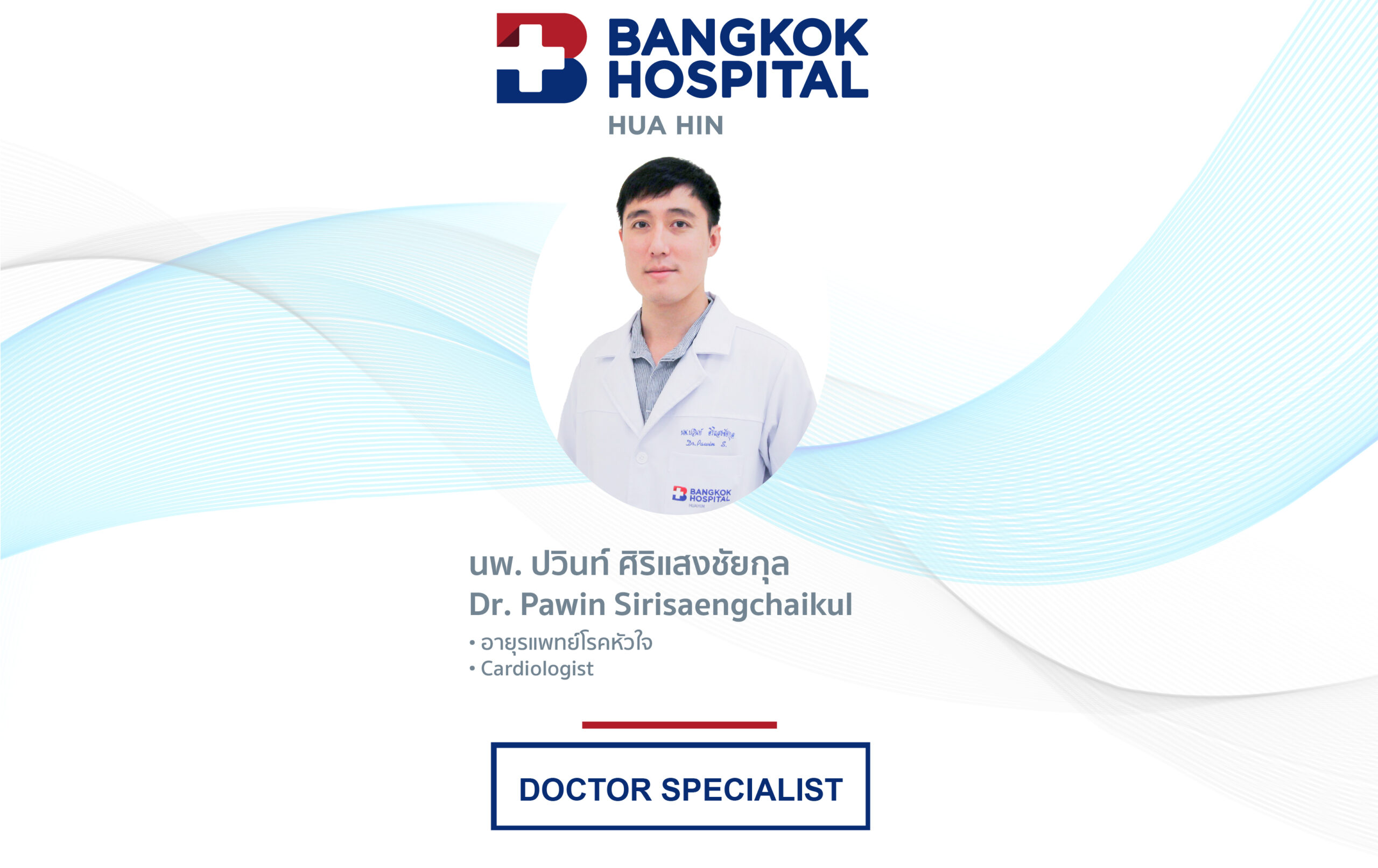
Dr. Pawin Sirisaengchaikul (Medical Licence No. 41159), our cardiologist at Bangkok Hospital Hua Hin shares that the most well-studied and beneficial exercise for heart health is aerobic exercise or cardio. This involves rhythmic, repetitive movements of large muscle groups, such as running, cycling, brisk walking, swimming, dancing, or even household chores and gardening.
We should engage in regular aerobic exercise, aiming for more than 150 minutes per week at moderate-intensity. This can be divided into 30 minutes a day, five days a week. For those who are fit and accustomed to exercise, high-intensity workouts are recommended for more than 75 minutes per week, also spread over five days, with each session lasting at least 10 minutes.

- Moderate-intensity exercise includes activities such as brisk walking (less than 5 miles per hour), cycling at speeds below 10 miles per hour, gardening, and dancing. Your heart rate should be 50-70% of your maximum heart rate, which is calculated as 220 minus your age. For example, at age 30, your maximum heart rate is 190 beats per minute, so 50-70% of this would be 95-133 beats per minute.
- High-intensity exercise includes activities such as running or cycling at speeds greater than 10 miles per hour. Your heart rate should be 70-85% of your maximum heart rate.
You can also check your intensity by your ability to talk during exercise (Talk test) if you can speak in full sentences but are breathing faster, it’s moderate intensity, if you won’t be able to talk comfortably without getting out of breath, it’s high intensity.
For moderate exercise, healthy individuals generally do not need a medical check-up. However, if you plan to engage in high-intensity exercise or if you have symptoms such as chest pain, jaw or arm pain, excessive fatigue, palpitations, or dizziness, it is advisable to consult a doctor for a heart screening.
Heart screening may include various tests such as an electrocardiogram (EKG), ankle brachial index (ABI) and cardio-ankle vascular index (CAVI), an exercise stress test (EST), echocardiogram, CT scan of the coronary arteries, or coronary angiography (CAG). The doctor will decide which tests are needed based on individual assessment.
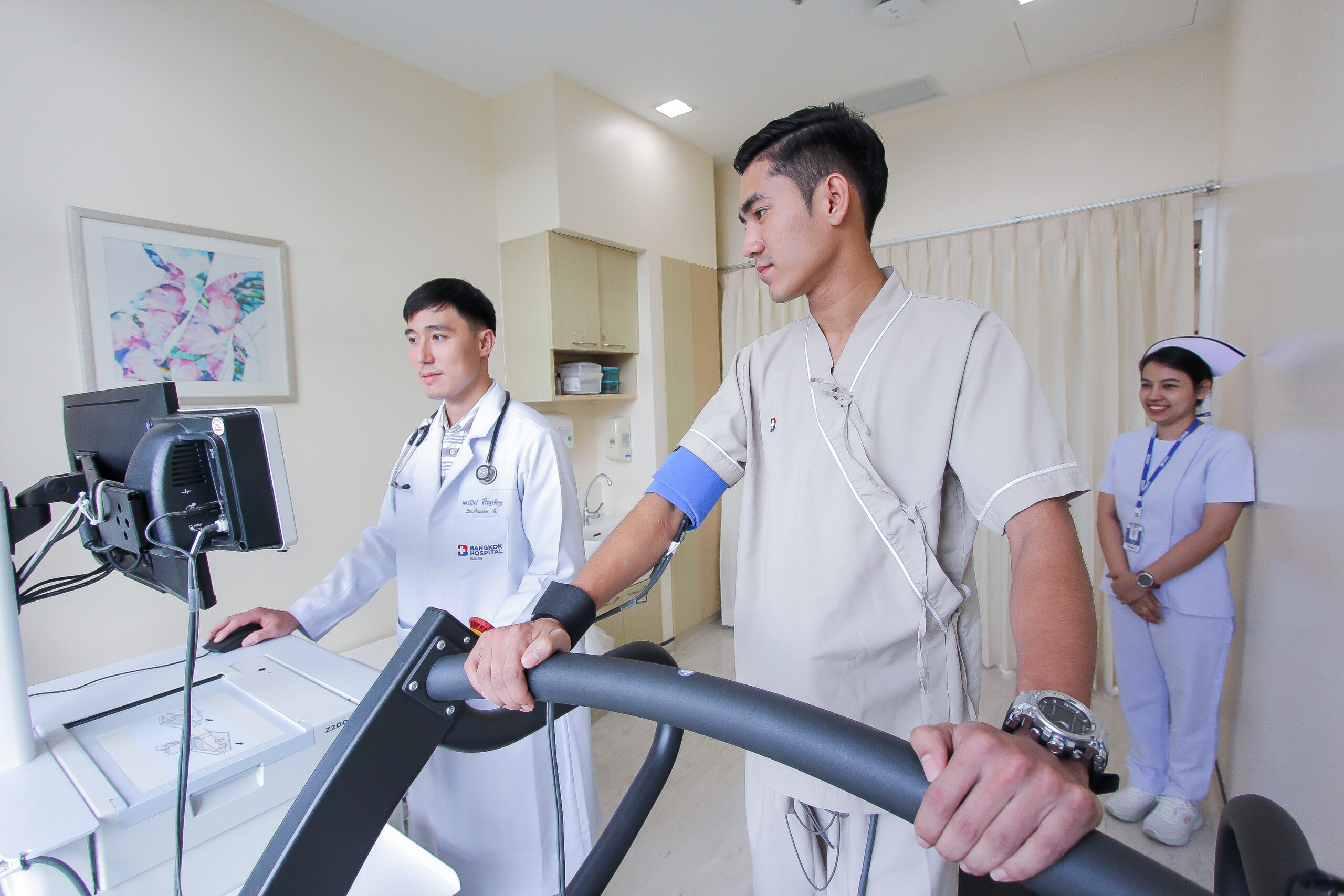
Exercise is divided into four phases: 1) Warm-up 2) Conditioning (aerobic/muscle strength) 3) Cool-down 4) Stretching.
Warm-up involves gradually increases heart workload and oxygen demand to avoid sudden strain. It helps prevent chest pain and improves blood flow to the heart. A proper warm-up should last about 15 minutes and include stretching. It’s also important not to exercise on an empty stomach; eat a meal 2-3 hours before exercising, or a snack that is simple to digest 30-60 minutes before.
Cool-down aims to gradually return the body to a resting state after exercise. It should take around 10 minutes and reduces the risk of dizziness, fainting, and heart ischemia due to sudden drops in blood pressure. During exercise, blood pools in large muscles and veins, and stopping abruptly can decrease blood flow to the heart and brain, causing dizziness and chest discomfort. Cool-down helps slow the heart rate, reduce oxygen use, and allow veins to constrict, improving blood flow back to the heart.
Both warm-up and cool-down can prevent injuries and heart ischemia, while stretching after cooling down further reduces the risk of muscle injuries.
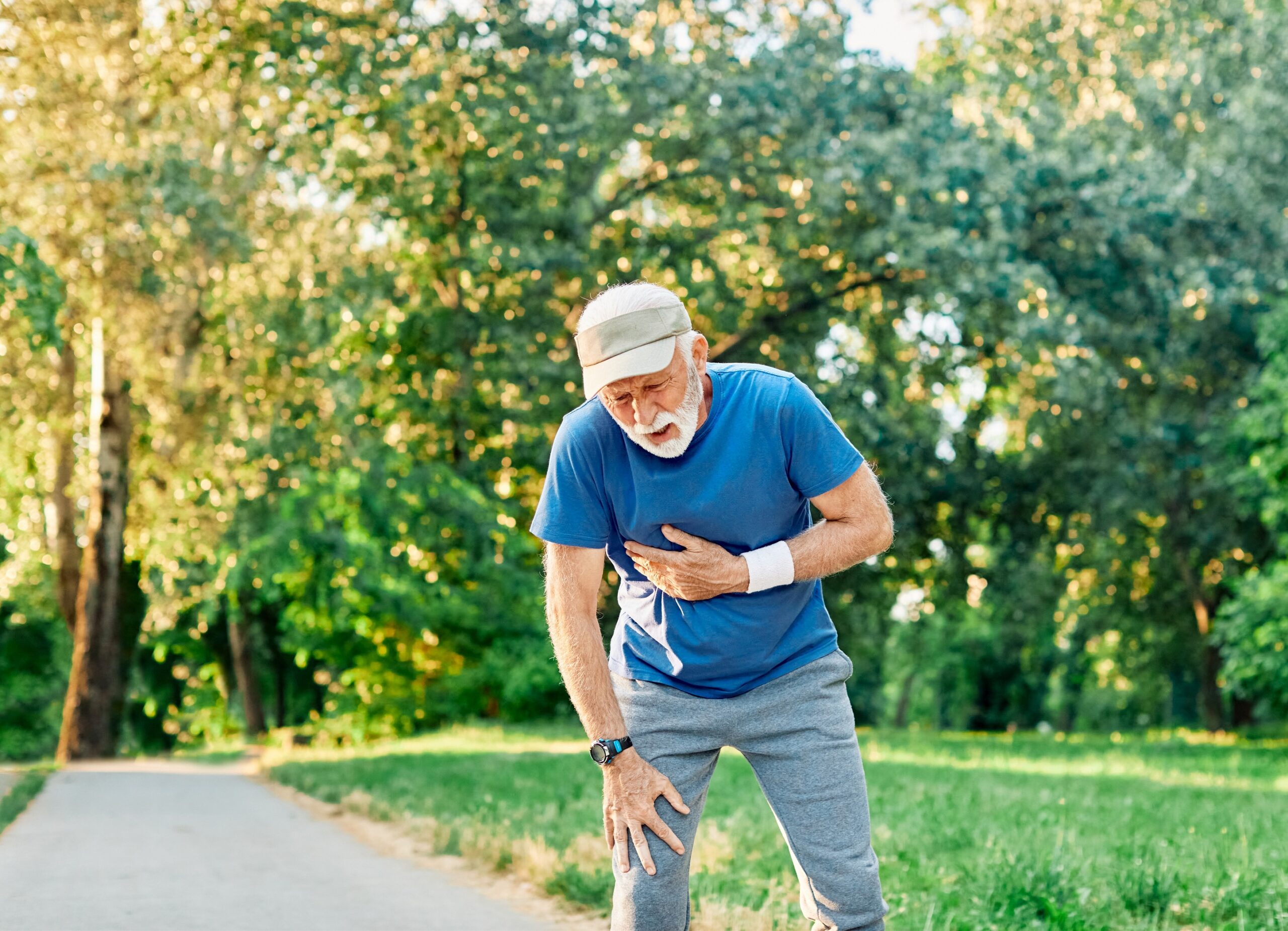
“It’s important to be aware of key symptoms during exercise that may indicate heart ischemia, such as chest pain that spreads to the arm or jaw, and unusual sweating. You might also feel dizzy, palpitations, lightheadedness, short of breath, or extreme tried. If you experience these symptoms, stop exercising immediately. If symptoms do not improve, seek immediate help and go to the hospital, as you might be having an acute heart attack and need urgent treatment.
Please exercise safely for a healthy heart and wellness.” Dr. Pawin concluded.

Reference
Arnett, D. K., Blumenthal, R. S., Albert, M. A., Buroker, A. B., Goldberger, Z. D., Hahn, E. J., Himmelfarb, C. D., Khera, A., Lloyd-Jones, D., McEvoy, J. W., Michos, E. D., Miedema, M. D., Muñoz, D., Smith, S. C., Virani, S. S., Williams, K. A., Yeboah, J., & Ziaeian, B. (2019). 2019 ACC/AHA Guideline on the Primary Prevention of Cardiovascular Disease: A report of the American College of Cardiology/American Heart Association Task Force on Clinical Practice Guidelines. Circulation, 140(11). https://doi.org/10.1161/cir.0000000000000678
Fujiyoshi, A., Kohsaka, S., Hata, J., Hara, M., Kai, H., Masuda, D., Miyamatsu, N., Nishio, Y., Ogura, M., Sata, M., Sekiguchi, K., Takeya, Y., Tamura, K., Wakatsuki, A., Yoshida, H., Fujioka, Y., Fukazawa, R., Hamada, O., Higashiyama, A., . . . Node, K. (2024). JCS 2023 Guideline on the Primary Prevention of Coronary Artery Disease. Circulation Journal. https://doi.org/10.1253/circj.cj-23-0285
American Heart Association recommendations for physical activity in adults and kids. (2024, January 19). www.heart.org. https://www.heart.org/en/healthy-living/fitness/fitness-basics/aha-recs-for-physical-activity-in-adults
Target heart rates chart. (2024, August 12). www.heart.org. https://www.heart.org/en/healthy-living/fitness/fitness-basics/target-heart-rates
***************************************
For more information, please contact :
Heart Center, Bangkok Hospital Hua Hin, ground floor Tel. 032-616-829 (8.00 – 17.00 hrs.)
Call Center Tel. 032-616-800