.png)
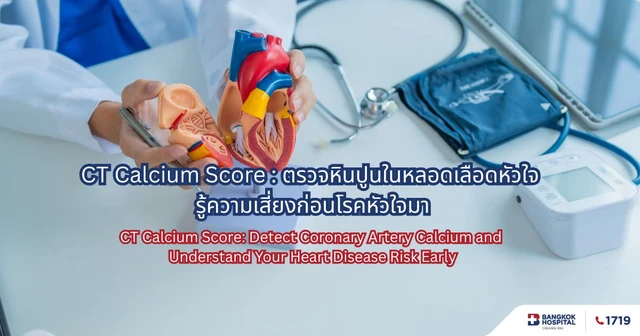
Cardiovascular disease is one of the leading causes of death in Thailand. Many individuals may not experience any symptoms beforehand, yet calcium deposits may already be accumulating in their coronary arteries.
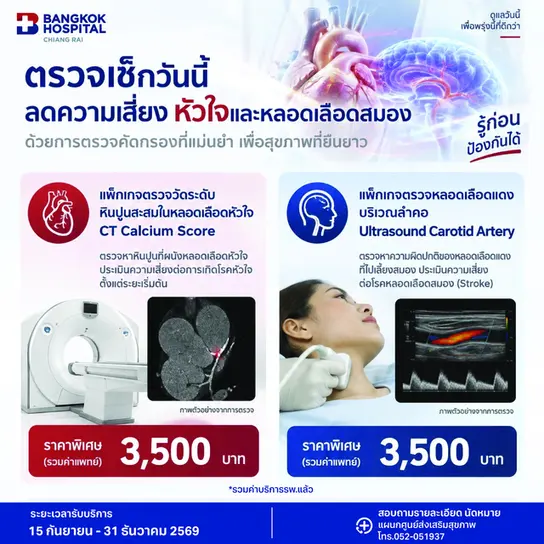
CT Calcium Score is a screening test that helps evaluate the risk of coronary artery disease at an early stage, even before symptoms appear.
This article explains what this test is, who should consider it, and how it may help prevent heart disease.
What is CT Calcium Score?
CT Calcium Score, also known as Coronary Artery Calcium Score (CAC Score), is a CT scan that measures the amount of calcium buildup in the coronary arteries.
Calcium plaque is a sign of atherosclerosis, a condition caused by the buildup of fatty deposits within the artery walls. This condition can lead to:
- Coronary artery disease
- Reduced blood flow to the heart (ischemic heart disease)
- Heart attack (myocardial infarction)
One of the key advantages of this test is that it can identify potential risk before symptoms develop.
How the Test is Performed
The procedure is simple and takes approximately 5–10 minutes.
- The patient lies on the CT scanner table.
- The scanner captures images of the heart area.
- No contrast injection is required.
- No fasting is necessary.
- The scan uses a low radiation dose.
After the scan, the physician will report the result as a Calcium Score.
The score indicates the level of risk for coronary artery disease.
A higher score suggests more calcium buildup, which may indicate a higher risk of developing heart disease in the future.
Who Should Consider This Test?
CT Calcium Score screening is suitable for individuals who do not yet have symptoms of heart disease but have risk factors, such as:
- Age 40 years or older
- High blood pressure
- High cholesterol levels
- Smoking
- Family history of heart disease
- Central obesity (abdominal obesity)
This screening can help physicians plan preventive strategies, such as lifestyle modifications or medication.
Advantages of CT Calcium Score
- Simple and quick examination
- No contrast injection required
- Helps assess heart disease risk at an early stage
Limitations of the Test
Although this test is beneficial, it does have some limitations:
- It cannot provide detailed information about the degree of arterial narrowing
- It is not suitable for individuals who already have chest pain symptoms
If abnormal symptoms occur, patients should consult a physician, who may recommend additional diagnostic tests.