.png)
Q: Should you take probiotics or prebiotics?
A: Ideally, you should include both in a balanced diet.
Probiotics and prebiotics work together to support a balanced gut microbiome, the community of microorganisms living in the digestive system.
What Are Probiotics?
Probiotics are beneficial live microorganisms that may provide health benefits when consumed in appropriate amounts. Their potential benefits include:
- Supporting a healthy balance of gut microorganisms
- Promoting digestive health
- Supporting immune function
- Helping regulate certain inflammatory processes
According to the FAO/WHO definition, probiotics are live microorganisms that provide a health benefit to the host when consumed in adequate amounts.
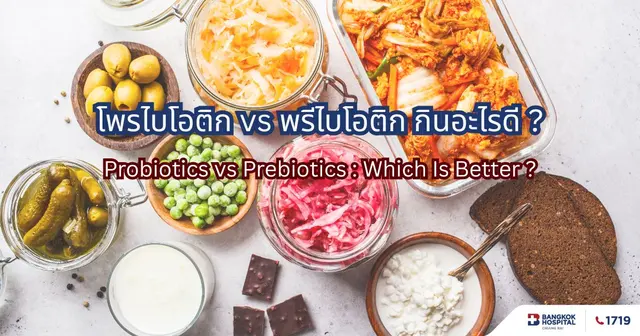
Food sources of probiotics include:
Yogurt, fermented milk, kimchi, natto, kombucha, and certain fermented foods. Products should preferably state that they contain live or active cultures.
What Are Prebiotics?
Prebiotics are food for beneficial gut microorganisms. They are mainly specific types of dietary fiber that cannot be fully digested by the human body but can be used by gut microorganisms, helping beneficial bacteria grow and function effectively.
Food sources of prebiotics include:
Bananas, particularly green or slightly unripe bananas, garlic, onions, asparagus, oats, apples, and other fiber-rich foods.
Probiotics vs. Prebiotics
| Feature | Probiotics | Prebiotics |
|---|---|---|
| What are they? | Beneficial live microorganisms | Fibers or compounds that feed beneficial microorganisms |
| Main function | Help increase or maintain beneficial gut microorganisms | Help beneficial microorganisms grow and function properly |
| Food examples | Yogurt, fermented milk, kimchi, natto, kombucha | Bananas, oats, garlic, onions, asparagus |
| Potential benefits | Support digestion, immune function, and gut balance | Support bowel regularity, fiber intake, and gut health |
| Precautions | Effects vary depending on the strain and amount consumed | Large amounts may cause bloating or gas |
Recommendations for Different Groups
| Group | Recommendation |
|---|---|
| Generally healthy individuals | Regularly consume foods containing both probiotics and prebiotics as part of a varied diet. |
| People who have recently taken antibiotics | Probiotic foods or supplements may help support gut balance. Take them separately from antibiotics and follow medical or pharmacist advice. |
| People with chronic constipation | Gradually increase prebiotic and fiber intake from vegetables, fruits, and whole grains, while drinking enough water. |
| People with irritable bowel syndrome, or IBS | Begin with small amounts and increase gradually, as certain prebiotics may worsen bloating or gas. |
| People with weakened immunity or serious medical conditions | Consult a doctor before taking probiotic supplements. |
Conclusion
Probiotics are the “beneficial microorganisms,” while prebiotics are the “food that nourishes them.” They work together to support a balanced gut environment.
Eating a varied diet that includes fermented foods and natural sources of dietary fiber is a practical way to support gut health. Probiotic or prebiotic supplements are not necessary for everyone and should be selected according to individual health needs.