LUTS (Lower Urinary Tract Symptoms)
1. What Are LUTS, and Who Is Affected? (Epidemiology)
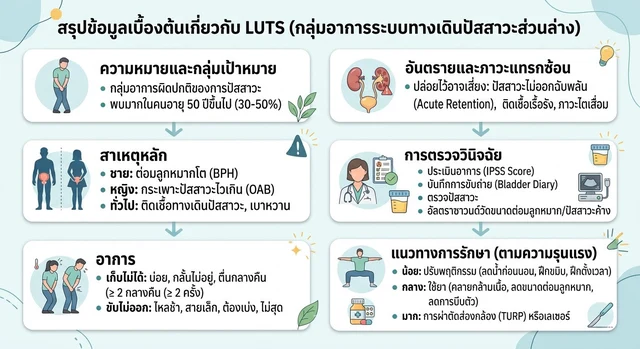
- Definition: A group of symptoms related to problems with urine storage and urination.
- Prevalence: LUTS are common among older adults, affecting approximately 30–50% of people aged 50 and above. Prevalence increases with age.
- Sex: LUTS affect both men and women. In men, symptoms are often more pronounced due to prostate-related conditions.
2. What Causes LUTS? (Etiology)
- In men: A common cause is benign prostatic hyperplasia (BPH), in which an enlarged prostate compresses the urethra.
- In women: Causes include overactive bladder (OAB) and weakened pelvic floor muscles.
- Other contributing causes: Urinary tract infections, bladder stones, diabetes, neurological disorders, and side effects of certain medications.
3. Symptoms and Disease Progression (Natural History)
Symptoms often develop gradually and can be divided into two main groups:
- Storage symptoms: Frequent urination, waking up to urinate at night (≥2 times), and a sudden, strong urge to urinate that is difficult to control.
- Voiding symptoms: Difficulty urinating, a slow or weak urinary stream, straining to urinate, and a feeling of incomplete bladder emptying.
- Disease progression: If left untreated, symptoms may worsen and can lead to serious complications, such as acute urinary retention, recurrent urinary tract infections, bladder stones, or impaired kidney function.
4. Diagnosis
- Symptom assessment: The International Prostate Symptom Score (IPSS) questionnaire is used to assess symptom severity.
- Bladder diary: Record fluid intake, urination times, and urine volumes over 2–3 consecutive days.
- Physical examination and laboratory tests:
- Urinalysis (UA): To check for infection or blood in the urine.
- Blood tests: Such as a prostate-specific antigen (PSA) test in men.
- Ultrasound: To assess prostate size and measure the amount of urine remaining in the bladder after urination.
5. Treatment Options
Treatment is selected according to symptom severity.
1) Mild Symptoms — Lifestyle Modification
- Reduce fluid intake and avoid tea, coffee, or alcohol during the 2–3 hours before bedtime.
- Perform pelvic floor muscle exercises (Kegel exercises) and practise scheduled urination.
2) Moderate Symptoms — Medication
- Alpha-blockers: Relax the muscles around the bladder neck and prostate to improve urine flow.
- 5-alpha-reductase inhibitors (5-ARIs): Reduce prostate size.
- Medications for overactive bladder: Help reduce involuntary bladder contractions.
3) Severe Symptoms or Complications — Surgery
- Endoscopic prostate surgery, such as transurethral resection of the prostate (TURP), or procedures using water vapour or laser technology.