
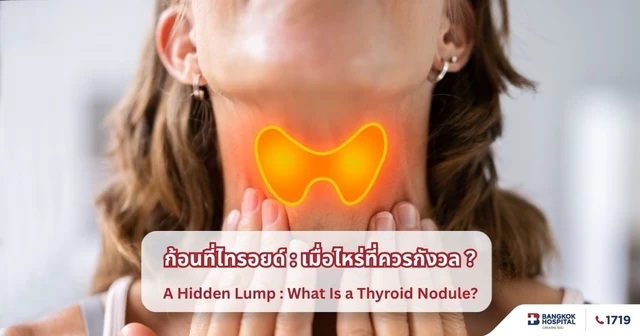
The thyroid is a butterfly-shaped gland located at the base of the neck. It plays an important role in producing thyroid hormones, which regulate the body’s metabolism.
Sometimes, abnormal growth of tissue within the thyroid gland can develop and form a lump, known as a thyroid nodule.
Thyroid nodules are very common. According to clinical information from the American Thyroid Association (ATA), by the age of 60, approximately half of the population will have a thyroid nodule that can be detected by ultrasound.
The reassuring fact is that more than 85–90% of thyroid nodules are benign, meaning they are not cancerous.
Warning Signs You Should Not Ignore
Although most thyroid nodules are small and do not cause symptoms, some may grow large enough to cause discomfort or pressure in the neck.
You should seek evaluation by a specialist if you experience any of the following:
- A visible or palpable lump in the lower part of the neck
- Unexplained hoarseness or a change in your voice
- Difficulty swallowing or a feeling of having a “lump in the throat”
- Difficulty breathing, especially when lying flat
Diagnosis and Treatment
Modern clinical management focuses on accurate diagnosis and targeted treatment in order to avoid unnecessary surgery.
- Thyroid Function Test:
A basic blood test used to assess thyroid hormone levels and determine whether the thyroid nodule is associated with abnormal thyroid hormone production. - Ultrasound:
Ultrasound is the gold standard for the initial evaluation of thyroid nodules. A risk assessment system is used to classify the likelihood of malignancy based on the characteristics of the nodule seen on ultrasound. - Fine Needle Aspiration (FNA):
If a thyroid nodule shows suspicious features on ultrasound, the doctor may use a very fine needle to collect a small sample of cells for examination under a microscope.- The idea of using a needle may cause concern for some patients. However, because the needle used is very small, the procedure generally causes only minimal discomfort. It can be performed quickly in the outpatient department, and patients can usually return home immediately after the procedure.
- The results of the thyroid cell examination help determine the most appropriate treatment plan. If the nodule is confirmed to be benign, unnecessary surgery may be avoided.
- Active Surveillance:
For small, benign thyroid nodules that do not cause symptoms, clinical evidence supports a “watch and monitor” approach, using periodic ultrasound examinations rather than proceeding immediately with surgery. - Surgical Treatment:
Surgery may be recommended if the thyroid nodule is found to have a risk of cancer based on cytology results, is significantly enlarged, or causes symptoms due to compression of nearby structures.
When surgery is performed carefully by an experienced specialist, the risk of injury to the recurrent laryngeal nerve, which lies close to the thyroid gland and directly controls vocal cord function, can be minimized.
If you are concerned about a lump in your neck or a thyroid nodule, you can consult a specialist for appropriate evaluation and treatment at the Ear, Nose and Throat (ENT) Department.