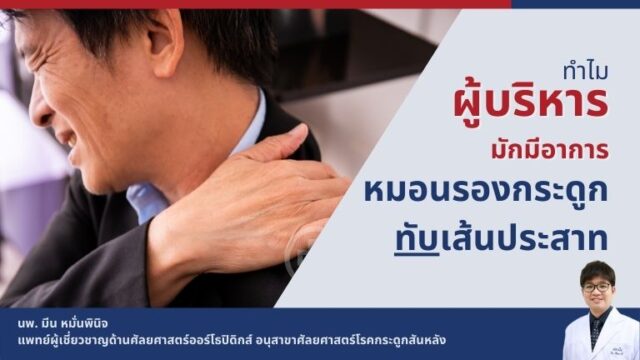
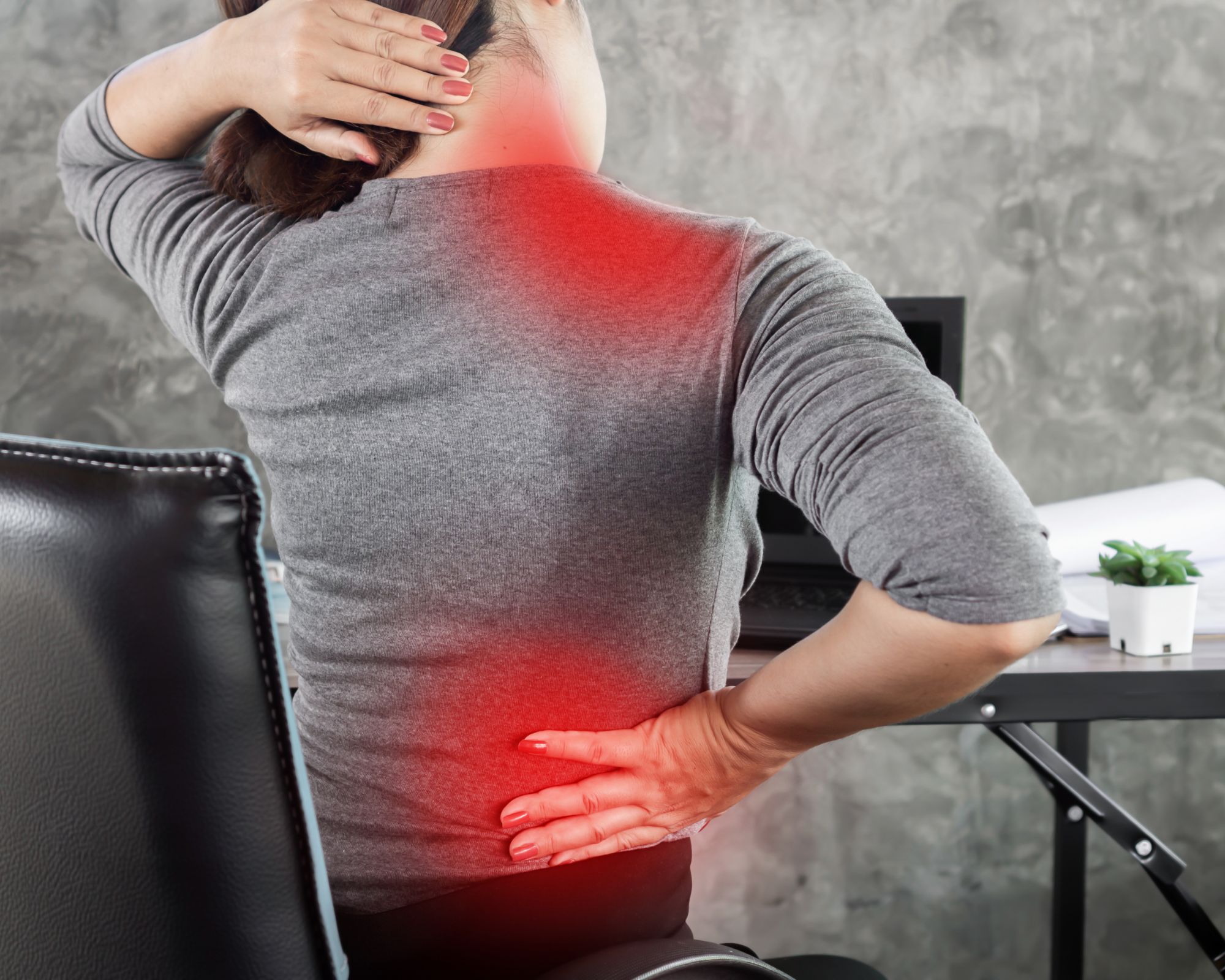
In addition to the flu, the second most popular disease that takes Americans to the doctor is “Back Pain”, particularly in the lower back. Although wedo not have any official statistics,many executives and working people in Thailand visit the doctor complaining of neck or back pain.Along with numbness and muscle weakness, discomfort in the arms, legs, or feet is typically present, which is a signal of “Herniated Disc”.
Preliminary self-exam for the symptoms of herniated disc.
Back pain, lumbar pain that comes and goes.
Pain in the legs, calves, or feet.
Limited mobility with cramp-like numbness that extended all the way to the leg. Needed to take a break before walking.
In patients with severe symptoms, the legs’ muscles can be weakened, and ankle cannot be flexed.
Some people may struggle to control their excretion.
If you try to observe your symptoms and find that there are abnormalities related to the spine as mentioned above. It should not be left to chronic or to treat with improper methods. This may cause further injury to the nerves and surrounding tissues. As a result, medical treatment is difficult and takes longer. You should consult a specialist in the diagnosis and treatment of herniated disc correctly. To make a doctor’s appointment.
55 – 90% of people will experience “Back Pain”, especially in adults.
This popular disease is caused by everyday behavior. Whether it is sitting for a long time, lifting heavy objects, including the cause of various accidents, but if there is any neck or back pain, numbness or muscle weakness, or pain that travels down the arms, legs, or feet. That could be a sign of herniated disc, which can be caused by a variety of causes and varying levels of severity from deterioration of the spinal structure causing it to collapse and press on the nerve until it becomes inflamed. The inflamed nerves show different symptoms of herniated disc, based on how the spine is positioned.
Causes of herniated disc disease.
Caused by ruptured intervertebral discs and thrust out to press on nerves which spinal disc (Intervertebral Disc) is divided into 3 parts.
The middle part that soft like jelly.
The surrounding area that is sticky and thick like a tendon.
The part attached to the spine with cartilage-like.
Which will consist primarily of water in all three components to help in movement and protects the spine from shocks, if the spine is frequently used, mistreated, overloaded, accidents and injuries, as well as degradation with age. The intervertebral discs may rupture and enlarge to the stage that they press on the nerves. This will result in patients having back pain, hip pain, radiating down the leg or foot, as well as having numbness and weakness or some may be severe to the stage that has difficult of excretion controls.
Symptoms of Herniated Disc.
Stage I.
Chronic back pain, which is caused on intervertebral disc degeneration. At first, the pain may come periodically and then it becomes more and more painful.
Stage II.
The disc herniation starts to move or s thrust out in order to impinge on the nerve, up till the ache spread from the neck to the arms or from the back to the legs and feet, with numbness.
Stage II (Severe).
Pain, numbness, and weakness start to get worse as the nerve compression becomes more intense. Until nerve injury and at risk of disability.
Visiting an expert doctor for “herniated disc” diagnosis and treatment.
The doctor will make a diagnosis. Beginning with a history-taking and physical examination,spinal X-rays in various postures and magnetic resonance imaging (MRI) to determine the cause and plan the most appropriate treatment for each patient.
Lose weight and avoid risky activities.
For those who have the disease factors from overweight problems, should start with the right and safe weight loss treatment to prevent herniated discs from getting worse. And should avoid lifting heavy objects or other risky behaviors that may cause harm to the spine.
Behavior changes.
Your doctor may advise making behavioral changes, such as not sitting for more than an hour, avoid stooping and lifting heavy objectsfrequently.
Physical therapy.
Physical therapyis an effective and popular treatment for people with mild herniated discs. This can help reduce pain in various parts of the body and quickly return to their normal life by utilizing back support gear.
Exercise To strengthen the core muscles around the back and abdomen. Including back muscular stretching exercises to lessen the tightness of the back muscles.
Medications A doctor will prescribe muscle relaxants and anti-inflammatory medications. And initial treatment according to symptoms to reduce pain and inflammation.
For the stated medication and physical therapy treatment options are suitable for people with minor symptoms; however, if the patient has significant symptoms, the doctor will make a diagnosis and make additional treatment plans,including epidural steroid injection, selective nerve root block, which is causing pain. And laparoscopic surgery Click for more information.