


Prostate cancer is a type of cancer commonly found in older men. In the early stages, it often shows no clear abnormal symptoms. Therefore, early screening is important to help reduce risk and increase the chance of managing the disease effectively. One standard medical screening method is measuring the PSA level in the blood.
What is a PSA test

PSA, or Prostate-Specific Antigen, is a protein produced by prostate gland cells, both normal cells and cancer cells. Normally, this substance is present in semen, and only a small amount leaks into the bloodstream.
A PSA test is a blood test to measure the level of this protein. If the PSA value in the blood is higher than the standard reference range, it may be a sign of certain abnormalities in the prostate. The doctor will evaluate this result together with other physical examinations for further diagnosis.
Who should get a PSA test to screen for prostate cancer
Screening for prostate cancer by measuring PSA through a blood test is something men should prioritize, especially those with the following risk factors:
- Men aged 50 years and older should have regular annual health checkups and prostate cancer screening.
- Those with a family history, such as a father or biological siblings, diagnosed with prostate cancer should start screening from age 45.
- Those with abnormal urinary tract symptoms, such as difficulty urinating, frequent nighttime urination, incomplete emptying, or blood in urine and semen.
What is a normal PSA level, and what level is considered abnormal
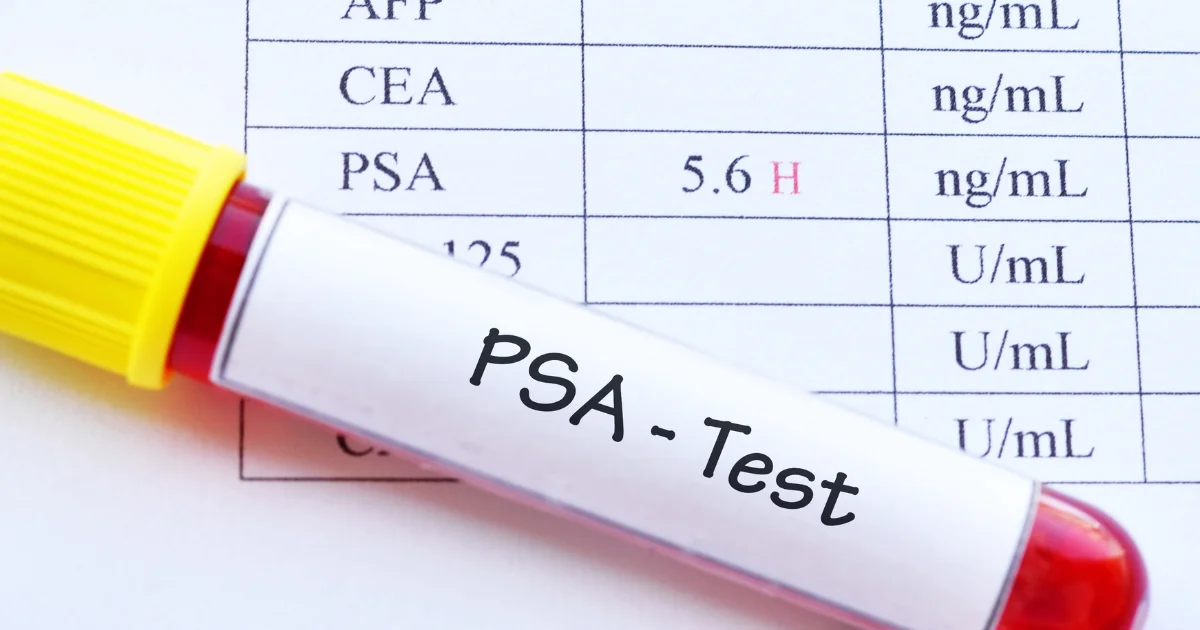
PSA levels in the blood are measured in nanograms per milliliter (ng/mL). The reference range may vary slightly depending on age, prostate size, and each laboratory’s standards. In general, the initial evaluation criteria are as follows:
PSA levels within the normal range
For most men without abnormal symptoms, PSA levels in the blood are usually no more than 4 ng/mL. However, doctors may consider the normal level together with age, because as age increases, the prostate naturally enlarges, which may cause the PSA level to rise slightly without being due to cancer.
PSA levels that indicate risk or abnormality
If the test result shows a PSA level between 4 – 10 ng/mL, it is considered a risk range or a suspicious level. The doctor may consider additional tests using other methods. If the PSA level is higher than 10 ng/mL, it is considered a high risk that may be due to prostate cancer, and an urgent, in-depth diagnostic evaluation is necessary.
If PSA is abnormally high, does it always mean prostate cancer
Many people worry that a high blood value always means cancer. In reality, PSA is a protein produced by the prostate gland, not a substance produced directly by cancer cells. Therefore, an elevated blood level does not always mean prostate cancer, but may be caused by other prostate-related conditions such as benign prostatic hyperplasia (BPH), a condition in which prostate tissue enlarges with age, or prostatitis due to infection in the urinary tract.
Other factors that can increase PSA levels
In addition to abnormalities from various diseases, there are also behavioral and lifestyle factors that can temporarily increase PSA levels in the blood, as follows:
- Increasing age
- Sexual intercourse or ejaculation close to the time of the blood draw
- Exercise that causes impact to the prostate area, such as prolonged cycling
- Injury to the pelvic area
- A digital rectal examination (Digital Rectal Examination) or urinary catheterization shortly before the blood draw
- Urinary tract infection
Preparation before a PSA blood test
To obtain accurate PSA test results and avoid discrepancies, patients should prepare according to the following recommendations:
- Avoid sexual intercourse and ejaculation for at least 5-7 days before the test.
- Avoid strenuous exercise or activities that put pressure on the perineal area, such as motorcycle riding or cycling, for at least 24 – 48 hours.
- If you have urinary tract inflammation, infection, or fever, inform the doctor before the blood draw, because the inflammation should be treated and fully resolved first.
- Patients can eat and drink normally before the blood draw without any need to fast.
Urology Center, Bangkok Hospital, ready to care for prostate conditions
Prostate health problems require informed and attentive care. The Urology Center at Bangkok Hospital provides comprehensive screening, diagnosis, and treatment for urinary tract and prostate diseases. Its strengths include physicians from multiple specialties working together as a multidisciplinary team, supported by medical technology to enable in-depth diagnostic evaluations and treatments appropriate to each individual patient’s physical condition, so that patients can maintain a good quality of daily life.
Article summary
Prostate cancer can be managed and treated with a good quality of life if detected early. Awareness that a PSA test is an important step in health surveillance will help men entering their 50s, or those at risk, receive appropriate screening. Regularly observing bodily abnormalities and having routine health checkups are key to long-term prostate health care.
Frequently Asked Questions (FAQ) about PSA testing
1. Do I need to fast from food and water for a PSA test
A blood draw to test PSA alone does not require fasting from food and water. Patients can eat and drink normally before the blood draw.
2. At what age should men start prostate cancer screening
In general, men should start screening at age 50 and older. However, if there is a direct family history of prostate cancer, screening should be considered earlier, starting at age 45.
3. Besides a PSA blood test, are there other ways to screen for prostate cancer
Doctors often perform a digital rectal examination (Digital Rectal Examination) together with the blood test. If abnormalities are found, an ultrasound or magnetic resonance imaging (MRI) may also be considered.
4. Does sexual intercourse before the test affect the PSA result
It can affect the result. Ejaculation from sexual intercourse or masturbation can temporarily increase PSA levels in the blood. Therefore, such activities should be avoided for at least 24 – 48 hours before the blood draw.
5. Do regular medications affect PSA test results
Some medications, especially those used to treat benign prostatic hyperplasia and certain hair-loss medications, may suppress PSA levels in the blood to as low as half of the actual value. Therefore, patients should bring their regular medications or inform the doctor of the medications and supplements they are taking before the blood test to ensure the most accurate interpretation.