




Feeling a lump in the neck can occur in all genders and at any age and may be caused by many conditions. Observing abnormalities and seeing a doctor for prompt diagnosis is important because it not only helps reduce disease severity but also lowers the risk of complications, restores confidence in daily living, and supports correct and timely health care.
What is a neck lump?
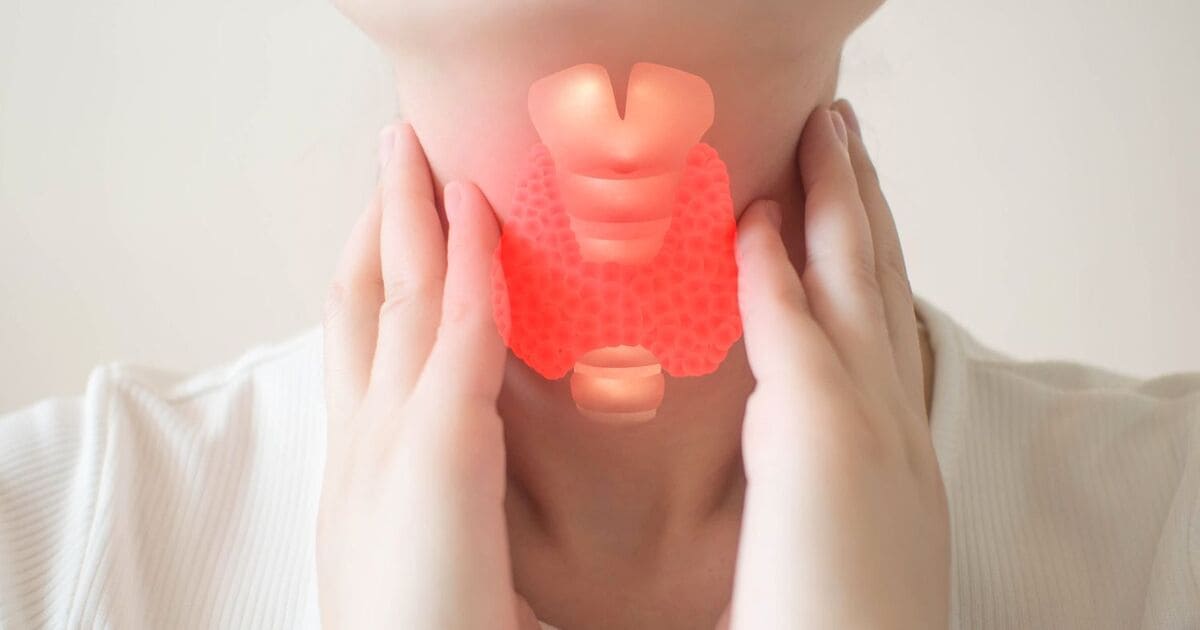
A neck lump (Neck Mass) is a lump that can be felt or seen in various areas of the neck, such as the side of the neck, under the chin, under the ear, or the Adam’s apple area. It can range from small to large and can be found at any age. Most neck lumps cause no symptoms and are not life-threatening, but some may be warning signs of a condition that requires urgent medical attention.
What causes a neck lump?
A neck lump can have many causes, including:
- Thyroid nodule (Thyroid Nodule) Common in adults. The lump is located at the front of the neck, is not painful, and moves up and down when swallowing. It is usually benign, but in some cases it may carry a risk of thyroid cancer. If the lump is painful, grows rapidly, or causes difficulty swallowing, it is necessary to undergo further evaluation promptly.
- Enlarged lymph nodes (Lymphadenitis) The lump is often found on the side of the neck, under the jaw, or above the collarbone. It is firm and not painful, and multiple lumps may be present at the same time. It often continues to enlarge. If the lump grows quickly along with fever, weight loss, or fatigue, it may be a sign of cancer. You should consult a doctor for diagnosis immediately.
- Neck cyst (Neck Cyst) Usually appears as a sac of fluid or fat that forms in the neck area and can become inflamed. It may be present from birth or occur after an infection, blockage of sebaceous glands, or thyroid abnormalities. It is most commonly found in younger people.
- Benign mass such as a fatty lump (lipoma) or a lump from the salivary glands; it typically grows slowly and causes no symptoms.
- Head and neck cancer A neck lump that gradually enlarges and is not painful, with chronic mouth sores, persistent hoarseness, and difficulty swallowing. Although it is uncommon, if symptoms occur you should see a doctor promptly because it may progress severely.

What kind of neck lump should you see a doctor for?
- First time you feel a lump in the neck
- The neck lump grows rapidly
- The neck lump is hard and has little mobility
- Pain in the neck lump or tenderness when pressed
- Persistent hoarseness
- Difficulty swallowing
- Difficulty breathing
- Enlarged lymph nodes
- Unexplained weight loss
The earlier a neck lump is evaluated after it is first noticed, the more it helps identify the cause and plan appropriate care.
Does a neck lump indicate a risk of cancer?
Neck lumps are often discovered incidentally and can cause concern about thyroid nodules or thyroid cancer. However, finding a neck lump does not necessarily mean it is cancer. It may arise from the thyroid gland, lymph nodes, cysts, or benign masses. Nevertheless, if you feel a lump in your neck, you should see a doctor promptly to determine the cause and receive appropriate care and treatment.

How is a neck lump diagnosed?
- Medical history and physical examination Duration of the lump, associated symptoms, underlying diseases, and family history. The doctor will carefully palpate the neck lump.
- Neck and thyroid ultrasound Using high-frequency sound waves to evaluate the location, size, characteristics, and number of lumps in order to assess the condition and cancer risk.
- Blood tests If thyroid disease is suspected, the doctor may check hormone levels such as TSH, Free T4, Free T3 to assess thyroid function and evaluate blood counts.
- Fine-needle aspiration (FNA) If a tumor or cancer is suspected, the doctor will use a small needle to aspirate cells from the lump for pathological examination for clarity.
- CT Scan To assess the size, location, and spread of the lump.
- MRI (Magnetic Resonance Imaging) When indicated that the lump has extended into complex areas.
- Tissue examination (Excisional Biopsy) To confirm abnormalities when a clear diagnosis cannot be made by other methods.
If the neck lump is a thyroid nodule, how can it be treated?
If the neck lump is diagnosed as a thyroid nodule, treatment options include:
- Active surveillance
- Medication, in cases related to hormonal abnormalities
- Thyroid ablation (Thyroid Ablation)
- PEI (Percutaneous Ethalnol Injection) for thyroid cysts, by injecting ethanol into the thyroid cyst to help shrink the lump without surgery
- Thyroid surgery, for large neck lumps that compress nearby organs or when cancer is suspected
- Radioactive iodine treatment in patients with indications

Do all neck lumps require surgery?
Neck lumps do not always require surgery; it primarily depends on the cause and symptoms as assessed by a specialist. If it is not severe, periodic follow-up with ultrasound may be sufficient. If it becomes more severe, the doctor may perform thyroid ablation (Thyroid Ablation) or surgery to improve symptoms.
Can a neck lump go away on its own?
A neck lump may go away on its own depending mainly on the cause. If it is due to inflammation or infection, such as swollen lymph nodes, it may subside on its own. However, if it is due to thyroid abnormalities, cysts, or tumors, it should be evaluated by a specialist to receive correct treatment as soon as possible.
A hospital specializing in thyroid care and treatment
THYROID COMPLETE CARE, the Diabetes, Thyroid and Endocrine Center, Bangkok Hospital provides comprehensive thyroid care with a highly experienced multidisciplinary thyroid team, modern technology, and a multidisciplinary team ready to plan treatment and provide close consultation—from diagnosis and treatment through long-term follow-up—helping restore a good quality of life so patients can return to living confidently again.
Physician specializing in thyroid care and treatment
Dr. Natthanon Maneesathien Endocrinology and Metabolism Physician, Bangkok Hospital
You can click here to make an appointment yourself.