
Good health is a strong foundation for body and mind of women of all ages. Not only will it let them have a healthy life, but it may also help prevent unwanted disorders. Therefore, vigilance lets you take charge of your health at every stage of your life.
Women’s Health Care
There are 3 stages of women’s health care:
- Childhood – prepuberty (pre – menstrual period)
Lifelong good health starts early! If you have a solid start at this age, you tend to have a good health in every stage of your life. Usually, parents are the main driver during prepuberty stage. It is recommended that children get doctor’s recommended vaccination, eat all 5 food groups, choose age-appropriate activities, and exercise regularly. Lastly, HPV vaccine is recommended starting from age 9 years old and up to build effective immunity against cervical cancer. - Reproductive age (menstrual age)
The start of the first menstrual cycle marks womanhood as their reproductive system is fully developed. This period is usually from 15 – 50 years old and can be divided into:- Early stage of reproductive age (20 – 30 years old)
This is the strongest stage when women are the most active and radiant. The metabolism works well and exercise can be performed to the fullest capacity. It is recommended that you eat all 5 food groups, avoid high fat and high carb food, and get good enough sleep so that your growth hormones can flow fully during the night to control the development of all bodily functions. This will help prolong youthfulness and help slow down aging. This stage is the golden period for you to bear children and recover quickly after giving birth. Some women may suffer from menstrual cramps, it is recommended that you have a detailed checkup with your gynecologist. Moreover, sexually active women should have regular pelvic exams and cervical cancer screening as per doctor’s advice. - Late reproductive stage (30 years old and up)
During this stage, women will begin to develop wrinkles while your metabolism decreases. Thus, it is important to control your diet by reducing sugar, salt, and fat to lower the risk of high blood cholesterol, hypertension, diabetes, and cardiovascular and cerebrovascular diseases. Get plenty of rest and exercise regularly, but not too rigorously to prevent osteoarthritis. Most importantly, get an annual health check and be mindful of any abnormal bodily changes. If you notice something out of the ordinary, it is best to consult your doctor. - Perimenopause to menopause (40 years old and up)
Just before menopause, women will experience declines in their bodily function. If you have taken good care of yourself from a young age, you may be able to prolong regression. Annual checkup is highly recommended including regular internal exams. Add more calcium to your diet because the bones will weaken as you age. Warning signs of menopause are irregular menstruation, agitation, emotional sensitivity, mood changes, hot flashes, vaginal dryness, lower or lack of sex drive, etc. So, prepare for your physical and psychological changes. If anything feels out of place, please consult your OB/GYN immediately.
- Early stage of reproductive age (20 – 30 years old)
Care for Women’s Mental Health
Good mental health is as important as physical health because stress or poor mental health will affect physical well-being. The 21st century women take on many roles in their lives so it is important to decompress. Some easy techniques are:
- Positivity helps dispel obstacles and problems with ease.
- Don’t compare yourself to others. Everyone follows their own path and defines their own happiness. Do not compare yourself to others. Be mindful and use social media cautiously.
- Clear communication is integral in today’s age, especially within your immediate family. Do not overlook the importance of open communication to build a stronger bond. Be attentive and do not be presumptuous.
- Have a good listener in your life. Sometimes when you cannot vent to your immediate family, having a trustworthy friend who will not betray your confidence but ready to lend an ear will help make life easier for you.
- Unwind with a hobby. Make time for your hobby on a daily basis to unwind after a long tiresome day. Just make sure that it is not illegal and it does not harm anyone.
Symptoms That Should Not Be Ignored
If you have any of the following symptoms, please consult your OB/GYN immediately.
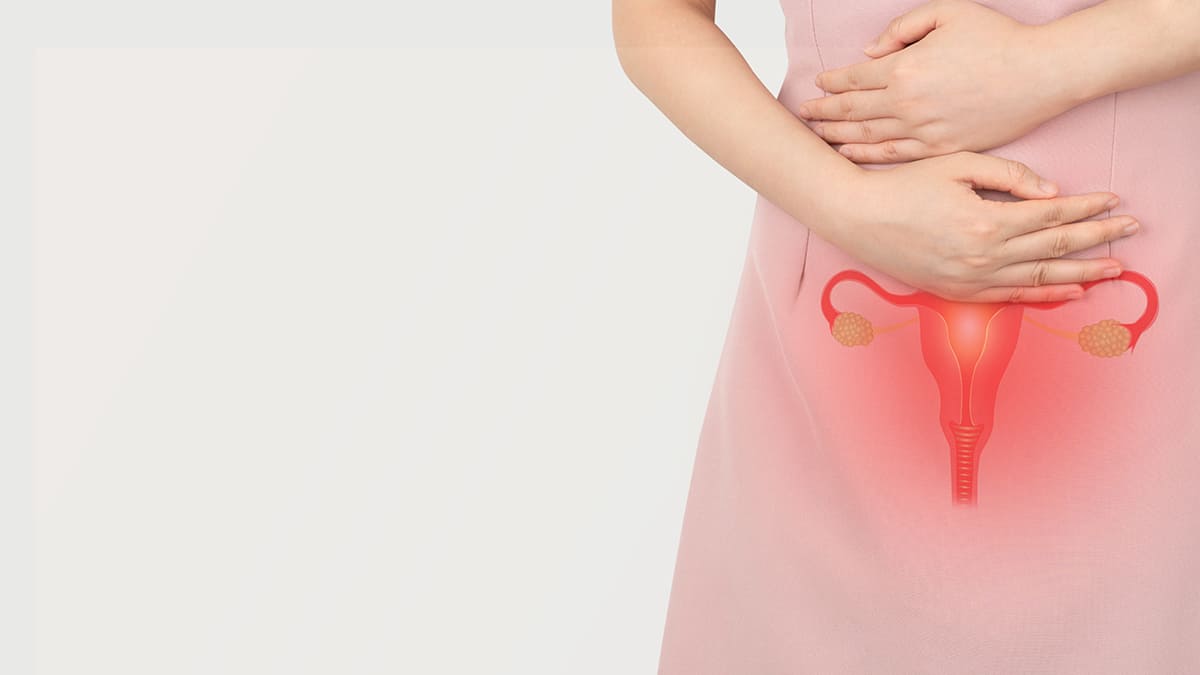
- Lower abdominal pain. The most frequent symptom that requires a visit to OB/GYN for most women is lower abdominal pain. Depending on the type of pain, your OB/GYN can properly diagnose.
- Severe menstruation pain. Persistent menstrual pain that gets worse or does not dissipate with medication. It can be unbearable and disruptive to your daily routine.
- Excessive menstruation. Instead of using 2 – 3 sanitary napkins per day, you might need 7 – 8 instead. Although each cycle may be different, but if you experience irregular or excessive menstruation, please consult your OB/GYN.
- Frequent urination. Getting up more than twice per night to urinate may be signs of a cyst that is taking up the space in the abdomen.
Don’t Overlook These Gynecologic Disorders
Lower abdominal pain or pelvic pain, irregular menstruation, excessive bleeding, and frequent urination may be signs of some common gynecologic disorders:
- Leiomyoma, fibromyoma, fibroid, or myoma uteri are benign cysts of the smooth muscles in the uterus. They tend to be round and are commonly found in 6 out of 10 women. Symptoms will depend on the position of the cyst.
- Intramural fibroids can grow within the uterine cavity or can protrude outside the uterus. It may grow slowly or remains unchanged. Most common symptoms are painful menstruation, excessive menstruation, frequent urination because of protrusion into nearby organ. It is rare that these fibroids will turn cancerous, accounting for less than 1% of such case. Thus, they do not need to be surgically removed, but can be followed up annually to monitor the growth. If it is just a normal cyst, it will not grow very fast. But if it does, then surgery is recommended.
- Endometriosis is when the tissue lining the uterus grows outside the uterus, such as in the uterine wall or other nearby places causing bleeding during menstruation. The affected area will swell leading to uterine contraction and more menstrual pain. The uterine will also become enlarged. If endometriosis grows in the ovary or fallopian tubes, it will cause chocolate cysts. Patients will have more menstrual cramping followed by infertility. This condition can be treated with pain mediation, hormone therapy, or surgery.
- Ovarian cysts consist of two types: cysts that form from ovarian tissues and dermoid cysts or teratomas which consist of various types of tissues such as hair and bone. These may cause acute lower abdominal pain that comes and goes due to the twisting of the ovaries. The severity depends on the type of cyst. You should consult your OB/GYN immediately for comprehensive diagnosis. Most of these ovarian cysts can be removed by surgery. Interestingly, they can be cancerous or non-cancerous. Thus, it is best to contact your OB/GYN as soon as possible.
Proper care from the beginning is detrimental for the longevity of women’s reproductive health. Particularly, HPV vaccine can be administered to adolescence to prevent cervical cancer and reduce the severity. It is important to get an annual health check up to screen and diagnose as soon as possible.