

Bedroom problems are more common than many men think—and they mean more than you might realize. Erectile dysfunction is not a disease in itself, but a “sign” your body is sending you. Understanding this sign not only helps your sex life, but also helps protect your heart, long-term health, and peace of mind.
What is erectile dysfunction?
Erectile dysfunction (Erectile Dysfunction or ED) is a condition in which the penis cannot become erect or cannot stay erect long enough for satisfactory sexual intercourse, occurring persistently. The key word is “persistent” because almost every man has had nights when erections were not fully firm due to fatigue, stress, alcohol, or illness—which is normal. It is considered a medical problem only when it recurs repeatedly and continuously for weeks or months.
This condition is very common. About 4 in 10 men aged 40 have some degree of erectile dysfunction, rising to nearly 9 in 10 men aged 70 and older. Importantly, erectile dysfunction is no longer only an older man’s problem, because it is now found in about 1 in 10 men under 40 as well.
Most importantly, for most men erectile dysfunction is not a disease in itself, but a “warning sign” that something in the body is abnormal. Erectile dysfunction is often an early warning that there may be deeper underlying health problems, such as vascular issues, hormonal problems, or hidden psychological factors.

What causes erectile dysfunction?
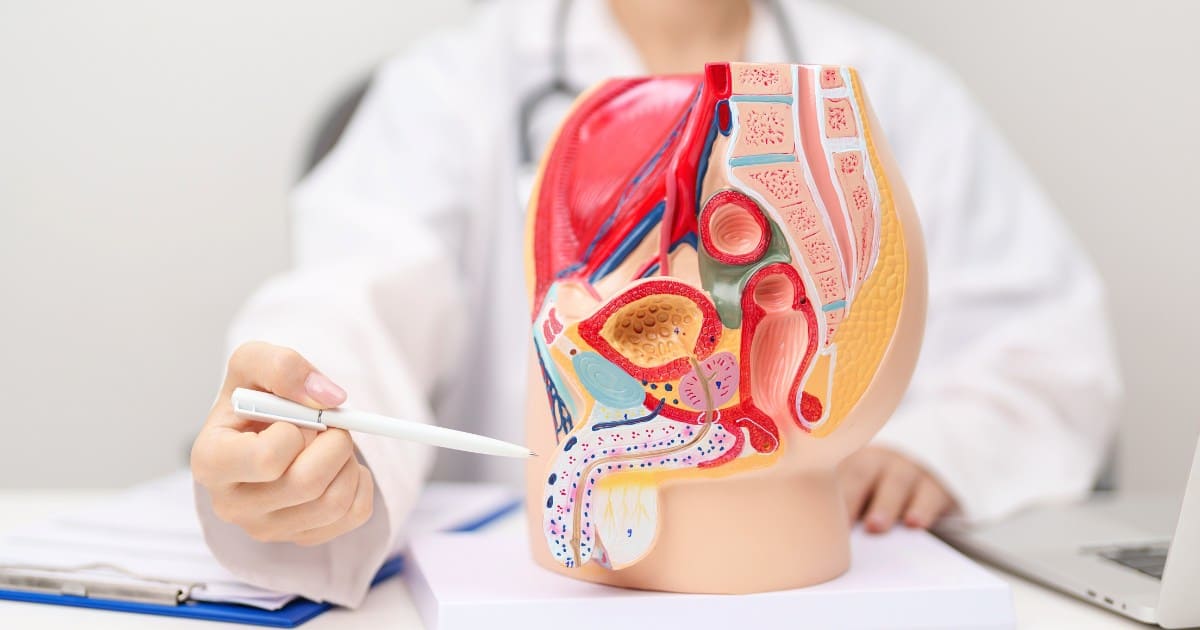
An erection is the result of multiple systems working together—brain, nerves, hormones, and blood vessels. When sexual arousal occurs, the brain sends signals through nerves to the penis, triggering the release of nitric oxide (Nitric Oxide) that relaxes the smooth muscles inside the penis. Blood then flows in to fill the penile chambers. The pressure then compresses the veins, so the penis becomes erect. After sexual activity, the muscles contract, blood flows out, and the penis returns to its normal state.
Because many systems must work together, a problem at any single point can cause erectile dysfunction. The main causes can be grouped as follows:
- Vascular problems The most common. High blood pressure, high cholesterol, diabetes, and atherosclerosis narrow the blood vessels, reducing blood flow to the penis.
- Nerve problems Diabetes, spinal cord injury, neurological diseases, or surgery in the pelvic or prostate area may disrupt the nerve signals that control erections.
- Hormonal abnormalities Low testosterone, thyroid disorders, or other hormonal problems can reduce libido and worsen erections.
- Psychological and emotional factors Stress, anxiety, depression, relationship problems, and performance anxiety often create a cycle that reinforces physical issues.
- Medications and lifestyle behaviors Smoking, heavy alcohol use, and illicit drugs all negatively affect erections. Some medications, such as certain blood pressure medicines or antidepressants, may also contribute. Do not stop medications on your own without consulting a doctor.
- Other chronic diseases Kidney disease, liver disease, obesity, and obstructive sleep apnea (snoring-related sleep disorder) are all associated with erectile dysfunction.
In reality, most men have multiple contributing causes rather than a single cause, so the true causes should be thoroughly investigated.
Risk groups for erectile dysfunction
All men can develop erectile dysfunction, but high-risk groups include:
- Age over 40 years (risk increases with age)
- Diabetes, high blood pressure, or high cholesterol
- Overweight or increased waist circumference
- Smoking, heavy alcohol use, or drug use
- Lack of exercise
- Sleep apnea or chronic insufficient sleep
- Low testosterone
- Accumulated stress, anxiety, or depression
- History of pelvic/prostate surgery or long-term use of certain medications

What are the symptoms of erectile dysfunction?
- No morning erection
- No erection when stimulated
- Erection does not last long enough for intercourse
- Reduced sexual desire
How is erectile dysfunction diagnosed?
- The doctor takes a history of sexual desire, erection characteristics, frequency of intercourse, and medical history.
- Physical examination to assess abnormalities of the genitalia and testicular size; a prostate exam may be performed.
- Blood tests to evaluate underlying conditions such as blood sugar, blood lipids, and liver and kidney function.
- Assessment for vascular narrowing that may affect erections.
- Screening for prostate cancer.
- Testing testosterone and related hormones in patients with decreased sexual desire.
- In severe cases, the doctor may evaluate abnormalities in penile blood vessels (Penile Doppler ultrasound).
Approaches to treating erectile dysfunction
- Lifestyle modification The foundation of treatment. Exercise, weight loss, dietary changes, quitting smoking, and getting enough sleep can clearly improve symptoms, especially in younger men or those with metabolic syndrome.
- Control chronic diseases (NCDs) such as controlling blood sugar, blood pressure, and lipids; correcting low testosterone often improves erections. If a regular medication is contributing, the doctor may adjust it.
- Oral medications (PDE5 inhibitor group) such as sildenafil and tadalafil, help relax penile muscles and improve blood inflow. They should be taken before intercourse, about 30 minutes – 1 hour beforehand, but may not work for everyone. A key precaution is that they must not be used with nitrate medications for heart disease; they should be used only under a doctor’s guidance.
- Intraurethral suppository Helps the penis become erect. Suitable for those who do not respond to oral medication, and may be combined with other treatments. Medication inserted via the urethra lasts about 30 – 60 minutes and a constriction ring is required to maintain the erection. Possible side effects include urethral irritation; the testicles may ache; there may be bleeding from the urethra.
- Vacuum device (Vacuum Constriction Devices) Uses a plastic cylinder placed over the penis . When air is pumped out to create a vacuum, blood flows into the penis, producing an erection. To maintain use after removing the cylinder, a constriction ring must be placed at the base of the penis to prevent blood from flowing back into the body.
- Intracavernosal vasodilator injection (Intracavernosal Injection – ICI) Used when there is no response to oral medication. A vasodilator is injected directly into the penis, relaxing the muscles and producing an erection within about 10 minutes, without requiring sexual stimulation. Currently, the hospital provides injections in the Alprostadil group.
- Regenerative therapy with PRP (Platelet – Rich Plasma) is an option in which the patient’s blood is processed to concentrate platelets and plasma, then injected at multiple points of the penis such as the base, shaft, and tip. Unlike vasodilator injections, PRP does not produce an immediate erection but aims to restore tissue, so results are gradual. Improvements may begin within 2 – 4 weeks and continue over 2 – 3 months. However, PRP for erectile dysfunction remains an option with evidence still under study and is not yet a standard treatment under international guidelines.
- Penile implant surgery (Placement of Penile Implant) Used in patients with severe symptoms who cannot be improved with other methods or who do not respond to treatment. Surgery must be planned and performed only by experienced specialists, because the device is fully implanted in the body. After surgery, mild swelling and pain may occur. Follow the doctor’s instructions strictly.
- Low-intensity shockwave therapy (Low – intensity Shockwave Therapy) (also referred to in many places as low-frequency sound wave therapy) is a technology that delivers low-energy shockwaves from outside to the penis, aiming to stimulate new blood vessel formation and tissue regeneration, improving penile blood flow. Generally, treatment is once a week for about 6 consecutive weeks. Academic evidence is still under study. Systematic reviews suggest it may help improve erections to some extent, but the magnitude of benefit is not yet clinically clear, so it is not considered a standard treatment in international guidelines. Consult a doctor for individual suitability.
- Psychological counseling If stress, anxiety, or relationship problems are present, consultation with a psychiatrist together with a partner is recommended for better outcomes.

What are the complications of erectile dysfunction?
Research has found that men with erectile dysfunction have a higher risk of cardiovascular disease as follows:
- About 45% higher risk of overall cardiovascular disease
- About 50% higher risk of coronary artery disease
- About 55% higher risk of myocardial infarction
- About 36% higher risk of stroke (Stroke)
In addition, erectile dysfunction is associated with diabetes and diabetic complications. The impact is not only physical—many men lose confidence, feel stressed, irritable, and anxious about disappointing their partner, while the patient’s partner may feel rejected or become anxious, leading to a cycle of silence. Therefore, identifying the cause early helps prevent complications associated with erectile dysfunction.
Erectile dysfunction may be a health warning sign
Erectile dysfunction may be a warning sign of serious disease that should not be overlooked, because the blood vessels supplying the penis are smaller than the coronary arteries and therefore often become narrowed or blocked first.
- When fat accumulates along vessel walls, the vessels supplying the penis are affected first, causing erectile dysfunction years before coronary artery disease shows symptoms such as chest pain or heart attack.
- Research has found that more than 2 in 3 men with coronary artery disease experienced erectile dysfunction before cardiac symptoms occurred.
- Erectile dysfunction may be the first sign before being diagnosed with diabetes.
- When erectile dysfunction occurs, it should be viewed as a warning sign of an abnormality that warrants prompt medical evaluation.

How can erectile dysfunction be prevented?
- Exercise regularly
- Maintain weight, blood pressure, blood sugar, and lipid levels within appropriate ranges
- Eat a heart-healthy diet emphasizing vegetables, fruits, whole grains, fish, nuts, and olive oil
- Quit smoking and stop drinking alcohol
- Get enough sleep
- Manage stress appropriately
- Have an annual health check-up every year
Foods and behaviors to avoid to maintain sexual performance
- Highly processed foods and fast food
- Sugary drinks and large amounts of desserts
- Large amounts of refined white carbohydrates such as white rice and white bread
- Too much red meat and processed meat
- Very salty foods
- Alcoholic beverages and cigarettes
Emphasize vegetables, fruits, whole grains, fish, legumes, nuts, and healthy oils such as olive oil—an eating pattern that is beneficial for both the heart and blood vessels.
Hospitals specialized in caring for and treating erectile dysfunction
The Urology Center at Bangkok Hospital is ready to provide care and treatment for erectile dysfunction with a team of experienced specialist doctors, modern equipment, and a multidisciplinary team ready to provide close support and counseling—so you can regain confidence in male sexual health every day.
Doctors specialized in caring for and treating erectile dysfunction
Dr.Soarawee Weerasopone Urologic Surgeon, Urology Center, Bangkok Hospital. Specialized in men’s sexual health and sexual medicine, covering erectile dysfunction, male hormonal disorders, penile curvature (Peyronie’s) and penile implant surgery, including laparoscopic and robotic surgery.
You can click here to make an appointment yourself.
For more information, contact
Urology Center
Floor 3 Building C Bangkok Hospital
Open daily 08.00 – 15.00 hrs.
0 2310 3009, 1719
Frequently Asked Questions (FAQ)
Is erectile dysfunction a normal part of aging that must be accepted?
Erections can indeed change with age, but erectile dysfunction is not something you have to endure. No matter your age, it can be improved, and it often points to treatable causes. You should consult a doctor rather than leaving it untreated.
If I have erectile dysfunction, does it mean I will have heart disease in the future?
Not always, but erectile dysfunction is an accepted early warning sign of cardiovascular disease. That is a good reason to check blood pressure, blood sugar, and cholesterol to manage risk early.
Can erectile dysfunction be cured?
Treating the underlying cause of erectile dysfunction helps many men regain better erections, especially younger men who change their lifestyle. For those who do not fully recover, symptoms can still be well controlled.
Are erectile dysfunction medications dangerous?
When used under the guidance of a specialist doctor, they work well for most men. However, they must not be used with nitrate medications for heart disease, and you should never buy and take these medications on your own. You must see a doctor before using them.
Can low testosterone cause erectile dysfunction?
Low testosterone can contribute to erectile dysfunction and decreased libido, but it is only one of many causes. A morning blood test helps assess hormone levels, and treatment is available when levels are truly low.
Do weight loss and exercise really help erectile dysfunction?
Yes. Many men—especially those who are overweight or inactive—can see clearly improved erections with regular exercise, weight loss, and better diet, while also protecting the heart.
Can erectile dysfunction go away on its own?
If symptoms occur only occasionally, they often resolve on their own. But if they are persistent, there is often an underlying cause that prevents them from resolving and they may worsen if left untreated.
Reference:
- Shamloul R, Ghanem H. Erectile dysfunction. Lancet. 2013;381(9861):153-165.
- Ergun O, Kim K, Kim MH, et al. Low-intensity shockwave therapy for erectile dysfunction. Cochrane Database Syst Rev. 2025;7:CD013166.
- Rew KT, Heidelbaugh JJ. Erectile dysfunction. Am Fam Physician. 2016;94(10):820-827.
- McVary KT. Clinical practice. Erectile dysfunction. N Engl J Med. 2007;357(24):2472-2481.
- Rajfer J, Aronson WJ, Bush PA, Dorey FJ, Ignarro LJ. Nitric oxide as a mediator of relaxation of the corpus cavernosum in response to nonadrenergic, noncholinergic neurotransmission. N Engl J Med. 1992;326(2):90-94.
- Gandaglia G, Briganti A, Jackson G, et al. A systematic review of the association between erectile dysfunction and cardiovascular disease. Eur Urol. 2014;65(5):968-978.
- Mostafaei H, Mori K, Hajebrahimi S, et al. Association of erectile dysfunction and cardiovascular disease: an umbrella review of systematic reviews and meta-analyses. BJU Int. 2021;128(1):3-11.
- Terentes-Printzios D, Ioakeimidis N, Rokkas K, Vlachopoulos C. Interactions between erectile dysfunction, cardiovascular disease and cardiovascular drugs. Nat Rev Cardiol. 2022;19(1):59-74.
- American Diabetes Association Professional Practice Committee. 4. Comprehensive medical evaluation and assessment of comorbidities: Standards of Care in Diabetes—2026. Diabetes Care. 2026;49(Suppl 1):S59-S85.
- Burnett AL, Nehra A, Breau RH, et al. Erectile dysfunction: AUA guideline. J Urol. 2018;200(3):633-641.
- Lee H, Hwang EC, Oh CK, et al. Testosterone replacement in men with sexual dysfunction. Cochrane Database Syst Rev. 2024;1:CD013071.
- American Psychiatric Association. Diagnostic and Statistical Manual of Mental Disorders. 5th ed, text revision. Washington, DC: American Psychiatric Publishing; 2022.
- Gao J, Zhang Y, Li H, Gao P, Zhang X. Different evaluations exist between men with erectile dysfunction and their female partners when using erectile hardness model: an interesting, observational, and cross-sectional field survey. Biomed Res Int. 2019;2019:8176387.
- Dong JY, Zhang YH, Qin LQ. Erectile dysfunction and risk of cardiovascular disease: meta-analysis of prospective cohort studies. J Am Coll Cardiol. 2011;58(13):1378-1385.
- Salonia A, Bettocchi C, Carvalho J, et al. EAU Guidelines on Sexual and Reproductive Health. European Association of Urology; 2025.
- Yuan J, Zhang R, Yang Z, et al. Comparative effectiveness and safety of oral phosphodiesterase type 5 inhibitors for erectile dysfunction: a systematic review and network meta-analysis. Eur Urol. 2013;63(5):902-912.
- Padma-Nathan H, Hellstrom WJ, Kaiser FE, et al. Treatment of men with erectile dysfunction with transurethral alprostadil. N Engl J Med. 1997;336(1):1-7.
- Yuan J, Hoang AN, Romero CA, Lin H, Dai Y, Wang R. Vacuum therapy in erectile dysfunction: science and clinical evidence. Int J Impot Res. 2010;22(4):211-219.
- Porst H, Burnett A, Brock G, et al. SOP conservative (medical and mechanical) treatment of erectile dysfunction. J Sex Med. 2013;10(1):130-171.
- Levine LA, Becher EF, Bella AJ, et al. Penile prosthesis surgery: current recommendations from the International Consultation on Sexual Medicine. J Sex Med. 2016;13(4):489-518.
- Ancha N, Eldin M, Woodle T, et al. Current devices, outcomes, and pain management considerations in penile implant surgery: an updated review of the literature. Asian J Androl. 2024;26(4):345-352.
- Epifanova MV, Gvasalia BR, Durashov MA, Artemenko SA. Platelet-rich plasma therapy for male sexual dysfunction: myth or reality? Sex Med Rev. 2020;8(1):106-113.
- Masterson TA, Molina M, Ledesma B, et al. Platelet-rich plasma for the treatment of erectile dysfunction: a prospective, randomized, double-blind, placebo-controlled clinical trial. J Urol. 2023;210(1):154-161.