





Dark yellow urine is something many people can notice in their daily lives—especially in the morning after waking up, or after working outdoors all day. Sometimes the color becomes lighter again when drinking more water, but sometimes the dark color persists for several days, causing concern about whether it is simply dehydration or a warning sign of liver disease, kidney disease, or urinary tract disease. Understanding what urine color means helps you take appropriate care of yourself and know when you should see a doctor.
Dark yellow urine a warning sign of abnormalities in the body
Dark yellow urine is a condition in which urine is a deep yellow color resembling amber or honey. The yellow color of urine comes from urochrome (Urochrome), which is the result of the breakdown of old red blood cells in the body. Normally, the kidneys filter waste and regulate water balance. When the body has enough water, urine is diluted and light yellow. But when the body receives too little water, the kidneys reabsorb more water, making the urine more concentrated and therefore darker. Dark yellow urine is therefore often the first sign that the body is telling you it needs water. However, if the dark color does not become lighter even after drinking enough water, or if there are other symptoms such as yellow skin, yellow eyes, painful/burning urination, or lower back pain around the waist, it may be a sign of an abnormality in the liver, kidneys, or urinary tract and should be evaluated by a doctor.
What can cause dark yellow urine
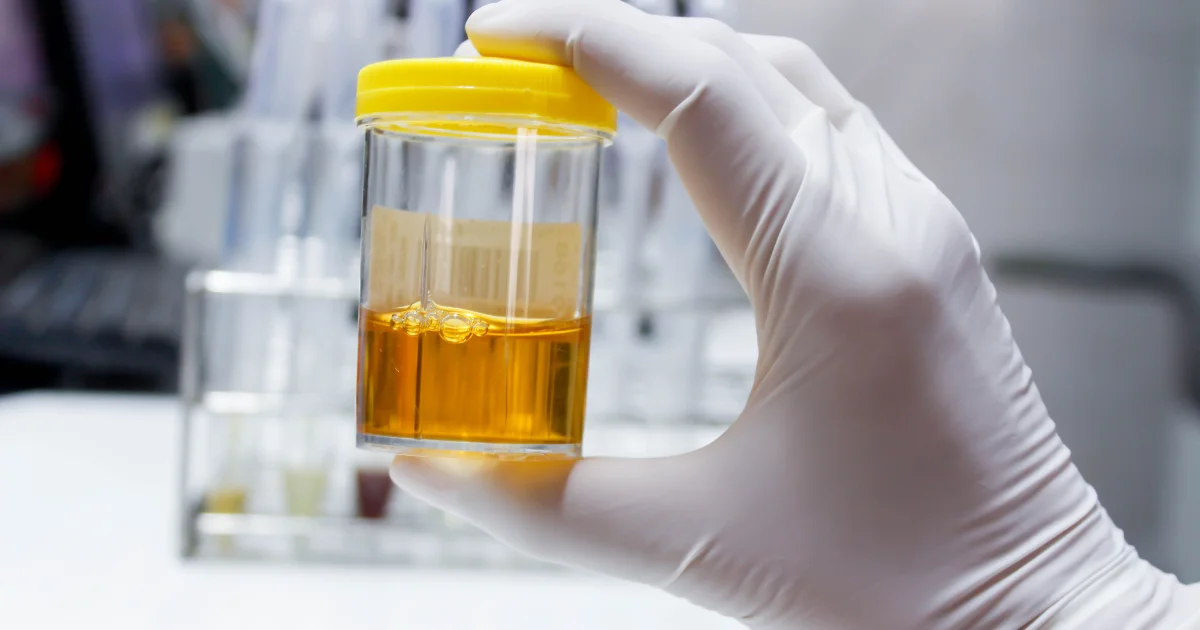
Dark yellow urine can be caused by many factors, ranging from daily habits that are easy to adjust to illnesses that require treatment. Distinguishing the initial cause helps you assess whether you should adjust your behavior on your own or undergo an examination. Common causes can be divided into 3 main categories as follows.
1. Dehydration from drinking too little water or losing a lot of sweat
Dehydration is a common cause of dark yellow urine. It often occurs in people who do not drink enough water during the day, those who work or exercise in the sun and sweat a lot, as well as those with fever, diarrhea, or vomiting, which causes the body to lose water faster than normal. In addition to darker urine, there may also be dry mouth, thirst, fatigue, dizziness, and decreased urination. Older adults and young children should be especially cautious because they may feel thirsty later than their body actually needs.
2. Continuous use of certain medications, nutrients, and vitamins
Some medications and vitamins can directly affect urine color. A common example is B-complex vitamins, especially vitamin B2, which can make urine bright yellow or dark yellow when the body excretes the excess. In addition, some drug groups—such as certain anti-tuberculosis drugs, medications for relieving painful/burning urination, and some laxatives—may turn urine dark yellow to orange. Foods high in beta-carotene such as carrots and pumpkin, if eaten in large amounts continuously, may also make urine slightly darker. These cases are usually not dangerous, but you should not stop medications prescribed by a doctor on your own. Consult a doctor or pharmacist if you are unsure.
3. Urinary tract disease, hepatitis, and chronic kidney disease
If urine remains dark even after drinking enough water, or if there are other accompanying symptoms, it may be a sign of a disease that requires treatment. Each condition often has different associated symptoms, helping doctors and patients identify the cause more clearly. Conditions that may be found include the following.
- Urinary tract disease: Urinary tract infection or stones in the urinary tract may cause urine to become darker, cloudy, have a strong odor, or contain blood, along with painful/burning urination or back pain.
- Hepatitis: When the liver functions abnormally or the bile duct is obstructed, bilirubin (Bilirubin) is excreted more in the urine, causing urine to turn dark yellow to tea-like brown. This is often found together with yellow skin, yellow eyes, and pale-colored stool.
- Chronic kidney disease: When kidney function declines, the ability to filter waste and regulate urine concentration becomes abnormal. In later stages, it often causes urine to become more diluted and lighter rather than darker. Signs to watch for include unusually foamy urine, decreased urine output, and swelling in the legs or around the eyes.
Get to know 7 urine colors that can be used to observe warning signs from the body

Urine color is a basic health indicator that everyone can observe daily. Each color may reflect the amount of water in the body, foods, medications taken, or internal abnormalities. Knowing the meaning of each color helps you determine whether what you see is normal or whether you should see a doctor. It can be divided into 7 main groups as follows.
1. Clear urine
Urine that is almost as clear as water usually occurs from drinking more water than the body needs or taking diuretics. If it happens only occasionally, it is generally not worrisome. But if urine is clear all the time along with frequent urination and unusually increased thirst, it may be a sign of diabetes or diabetes insipidus, and further evaluation is recommended.
2. Light yellow to dark yellow urine
Light yellow to straw-yellow urine is the color seen when the body is adequately hydrated. Dark yellow urine often indicates that the body is beginning to become dehydrated, or it may result from B-complex vitamins. A simple way to observe is to drink more water for 1–2 days. If the color becomes light yellow, it is usually general dehydration. But if the color remains dark, you should watch for other accompanying symptoms.
3. Red or pink urine
Red or pink urine may be caused by deeply colored foods such as beetroot, red-fleshed dragon fruit, or certain medications. However, an important cause is hematuria (blood in the urine), which may come from urinary tract infection, kidney or bladder stones, enlarged prostate, or tumors in the urinary tract. If you notice red urine without having eaten such foods, you should see a doctor for evaluation even if there is no pain—especially in smokers or older adults, who have a higher risk of bladder cancer.
4. Orange urine
Orange urine may result from more significant dehydration, taking certain medications such as some anti-tuberculosis drugs or medications for relieving painful/burning urination, or high-dose vitamin B2. But orange urine occurring together with yellow skin, yellow eyes, or pale-colored stool may be a sign of liver disease or bile duct obstruction and should be evaluated promptly.
5. Dark brown urine
Dark brown urine, resembling tea or cola, may be caused by severe dehydration. Eating fava beans in people with G6PD enzyme deficiency, which causes red blood cell breakdown, or certain medications can also be causes. However, causes that require caution include liver and bile duct disease, as well as rhabdomyolysis that may occur after excessively intense exercise. This condition can affect kidney function, so you should seek medical care promptly if you notice brown urine together with severe muscle pain, weakness, or yellowing of the skin.
6. Blue or green urine
Blue or green urine is uncommon. It is usually caused by food coloring, certain substances used in medical tests, or some medications. In some cases, it may result from infection with certain bacteria in the urinary tract. If the color does not return to normal within a few days after stopping suspected foods or medications, you should consult a doctor.
7. Cloudy white urine
Cloudy white urine is often a sign of a urinary tract infection, which commonly comes with painful/burning urination, frequent urination, or a strong odor. It may also be caused by stones in the urinary tract or mineral crystals in the urine. If cloudy urine persists or is accompanied by fever, you should have a urine test.
Diagnostic evaluation for urinary tract diseases
When a patient sees a doctor due to abnormal urine color, the doctor will start by taking a history regarding water intake, foods, medications and vitamins taken, and associated symptoms. The doctor will then choose appropriate tests for each individual, which may include:
- Urinalysis: Checking for red blood cells, white blood cells, protein, glucose, bilirubin, and urine concentration.
- Urine culture: Used to identify the type of bacteria when a urinary tract infection is suspected.
- Blood tests: To assess kidney and liver function, such as creatinine (Creatinine) and liver enzyme levels.
- Imaging tests: Ultrasound or computed tomography (CT Scan) to evaluate the kidneys, ureters, and bladder and to look for stones or abnormal masses.
- Cystoscopy: Used in cases of blood in the urine with unknown cause, to directly examine the inside of the bladder.
Treatment approaches for urinary tract diseases
Treatment for dark yellow urine and abnormal urine color depends on the cause identified by the doctor. Dehydration usually improves by increasing water intake. For color changes caused by vitamins or medications, the doctor may adjust the dose or change the medication if necessary. Common conditions have the following main approaches:
- Urinary tract infection: Treated with antibiotics according to the type of organism, along with adequate hydration and taking the full course of medication as prescribed.
- Urinary tract stones: Small stones may pass on their own. Larger stones may be treated with shock wave lithotripsy (ESWL) or endoscopic treatment with laser.
- Liver and bile duct diseases: Treated according to the cause, such as antiviral drugs for viral hepatitis or correcting bile duct obstruction.
- Chronic kidney disease: Control comorbidities such as diabetes and high blood pressure, adjust diet, and monitor kidney function regularly.
- Tumors or enlarged prostate: May be treated with medication or surgery; current options include minimally invasive surgery or, in some cases, robot-assisted surgery.
In all cases, the treatment approach depends on the doctor’s assessment for each individual.
Basic urinary tract care for good health

Caring for the urinary tract does not have to be complicated. Small daily habits can help reduce the chance of dark yellow urine, infections, and urinary tract stones. Basic health care guidelines include the following:
- Drink enough water: Drink clean water throughout the day and increase intake when the weather is hot, when exercising, or when you have a fever. Use light yellow urine as a guide (patients with kidney disease or heart disease should consult a doctor about an appropriate amount of water).
- Do not hold urine for long periods: Holding urine for a long time increases the chance for bacteria to grow in the bladder.
- Reduce salty foods and drinks containing caffeine or alcohol: Helps reduce the workload on the kidneys and reduces water loss.
- Take vitamins and supplements only as necessary: Do not take more than the recommended dose, and always inform your doctor during medical visits.
- Maintain genital hygiene: Especially for women, clean from front to back to reduce infection.
- Annual health checkups: Urinalysis and kidney and liver function tests help detect abnormalities early, such as personalized health checkups at the Health Design Center.
Urinary Tract Disease Center, Bangkok Hospital
The Urinary Tract Disease Center at Bangkok Hospital provides care for patients with urinary tract diseases, from investigating the causes of abnormal urine color, urinary tract infections, and stones to prostate diseases and urinary tract tumors. Care is provided by Bangkok Hospital’s urologic surgeons, together with treatment options such as robot-assisted surgery and laser therapy, which can reduce incision size and recovery time in suitable patients. In all cases, the treatment approach depends on the doctor’s assessment for each individual.
Article summary
Dark yellow urine is most commonly caused by dehydration or taking certain vitamins and medications, and it often returns to normal after drinking enough water or stopping the cause. However, if the dark color does not fade, or if it occurs together with yellow skin, yellow eyes, painful/burning urination, blood in the urine, or lower back pain around the waist, it may be a sign of liver disease, kidney disease, or urinary tract disease. Regularly observing urine color, drinking enough water, and seeing a doctor when abnormal symptoms persist can help detect and treat disease early.
Frequently asked questions (FAQ) about dark yellow urine
1. If dark yellow urine occurs, will drinking lots of water make it return to normal?
If dark yellow urine is caused by dehydration, the color usually becomes lighter within a few hours after adequate water intake. But if you drink more water and the color remains dark, or if there are other symptoms, you should see a doctor to determine the cause.
2. If I take vitamin B and my urine becomes dark yellow, is it dangerous?
In general, it is not dangerous because it is the excretion of excess vitamin B2 that the body does not use through the urine. However, you should take vitamins at the recommended dose and consult a doctor or pharmacist if taking them together with other medications.
3. Dark yellow urine together with yellow eyes is a sign of what disease?
This may be a sign of jaundice caused by liver disease, hepatitis, or bile duct obstruction, which raises bilirubin levels in the blood. You should see a doctor promptly for blood tests and liver function evaluation to determine the true cause.
4. What is the difference between dark yellow urine and orange urine?
Dark yellow urine is often caused by dehydration or vitamin B, while orange urine may be caused by a higher degree of dehydration, certain medications, or abnormalities of the liver and bile ducts. If the orange color does not go away after drinking enough water, you should see a doctor.
5. What symptoms mean I should see a doctor for evaluation?
You should see a doctor if dark urine persists for more than 2–3 days despite adequate water intake, or if there are accompanying symptoms such as blood in the urine, dark brown urine, yellow skin, yellow eyes, fever, painful/burning urination, lower back pain around the waist, or unusually decreased urine output.